How to pick a school where your child won’t experience the slow violence of everyday classroom racism.
By Ranita Ray, sociologist and author (SLOW VIOLENCE)
By the time I found myself touring schools for our recently turned 5-year-old, I had already read all the stories and spent three years inside two schools in one of the nation’s largest school districts.
Based on my research as a sociologist who studies education, I found myself battling deep anxiety just at the thought of our kid inside the classroom.
I have seen the best of schools; I have also seen the worst.
For my child, my spouse and I toured schools in our city widely and left no stone unturned.
I’ll be honest, as an education researcher, I was also curious to experience all types of tours — public schools, different types of charter schools, and private schools.
I had discovered during the tenure of my research that simplistic debates around public or private, test scores, and the charter school choice can often be misleading.
I am here to give you a rubric of which you’re not yet aware — and also, perhaps, to help you decide how to pick a good school for your own child.
I am here to give you a rubric of which you’re not yet aware.
There are a number of familiar ways for parents to pick a school.
For example, we often hear that if you’re a public school advocate, your decision will be easy. If you fall on the side of charter school debate that is critical of the resources it drains from public schools, you should avoid them.
And if test scores are important to you, then you should try to find a home in a “good” school district noting the GreatSchool ratings or send your children to private school.
Or people will tell you that school ratings don’t matter because parents’ income and children’s race and gender are the biggest predictor of school performance, and so you should invest in sending your children to schools that have kids from all walks of life so they can learn in a diverse setting and soak up liberal values.
But integrated schools aren’t automatically better at serving everyone.
For one, this view of “diversity” often defaults to cast marginalized peoples as existing to make some children better culturally educated.
But I can tell you that there is one truth about the classroom that education researchers, advocates and journalists, barring a few exceptions, have largely ignored or glanced over: the hidden epidemic of slow violence of everyday harassment inside our nation’s classrooms.
There is a hidden epidemic of slow violence of everyday harassment inside our nation’s classrooms.
I first confronted the slow violence in American classrooms when I set foot in an elementary school in Las Vegas as a researcher eight years ago.
There, I followed a cohort of 4th graders through 6th grade and spent many days a week with them inside the classrooms and corridors where they spent more time than their homes.
Based on what I’d learned at that point during my studies, I had expected to write about resource strains and accidental racial segregation.
Instead, I was astounded by an unexpected reality of what these kids were experiencing: routine indifference, cruelty, various forms of harassment, and pervasive everyday racism in the classroom from adults charged with the care of our children.
I witnessed teachers mock disabled students or their co-worker’s’ “accents” in plain view of children. I came across teachers who wanted a white history month or openly expressed disgust toward poor Black and immigrant families.
And these are not isolated rare incidents, they happened routinely; and they also happen across the nation. For example, Black teachers routinely face discrimination inside schools and teachers engage in anti-immigrant harassment openly. Teachers are like regular US Americans when it comes to prejudices they hold.
I wrote about what I found in my research (Research finds Black, immigrant girls of color face hostile classrooms) and in news outlets (It Never Seems to Be a Good Time to Talk About Teachers’ Racism)
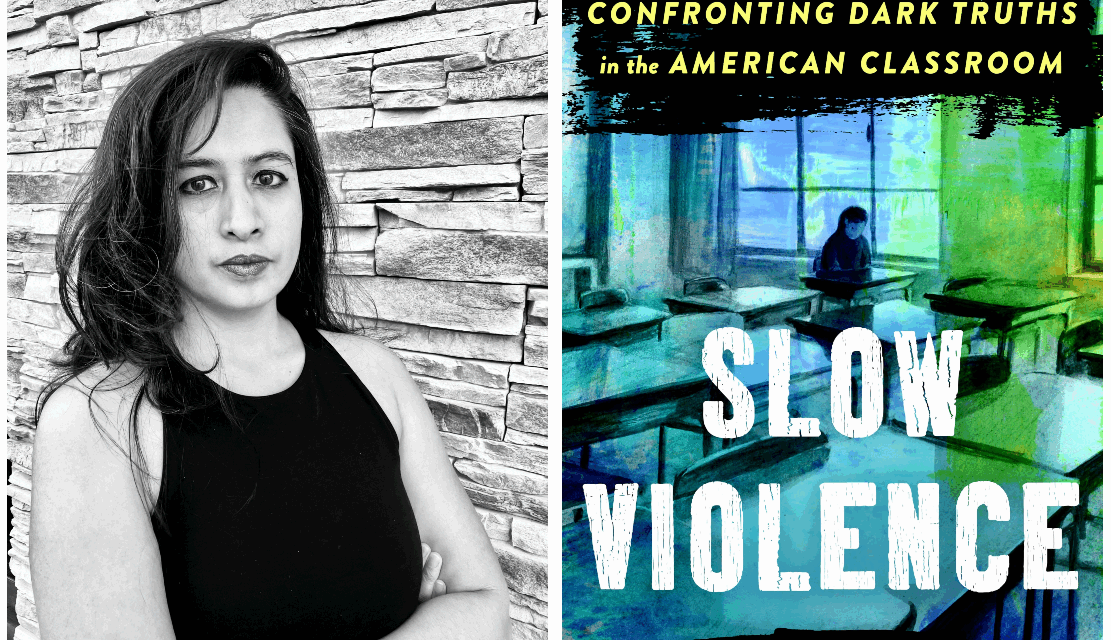
Following these kids and giving weight to their view of our educational system is the focus of my upcoming book Slow Violence: Confronting Dark Truths in the American Classroom.
I was astounded by an unexpected reality of what these kids were experiencing: routine indifference, cruelty, various forms of harassment, and pervasive everyday racism.
Eight years later, I am experiencing what I learned in the throes of a different undertaking—one in which my research is colliding with my role as a mother.
What school should I choose for my children, given everything I’ve learned about how the day-to-day experiences of kids impact their academic and emotional wellbeing? How will my kid be viewed in light of his identities, strengths, and challenges? How do I shield my child and other children from the harsh realities of what happens inside classrooms?
As I toured the many possibilities, what matters most to me is whether the school was a place of joy for all children — a place where they are valued as human beings and not objectified as test-scores on display like trophies in a gym.
Parents fundamentally want their children to be happy and healthy, and I’m no different which is why it was important to me that our child would, first and foremost, find joy inside school.
It was important to me that our child would, first and foremost, find joy inside school.
How would I know if a given school would offer my child the joy he deserves? I landed on the following questions to ask, drawing on my skills as a researcher to make sure that they painted a behind-the-scenes picture:
Teachers: What do the teachers value? What do they see as their main task inside the classroom? What do they like about teaching in that school and what is their biggest challenge?
Elementary school children will often spend all day with one adult. Teacher answers offer insight into how they feel about their profession, and more specifically, their school. And it might even reveal whether they will treat all children with dignity and love.
Safety: Are the children given the space to not only develop critical thinking (how to think, not what to think) but also mobilize those skills to shape their environment?
In one school I toured, upper elementary children had mobilized to replace disposable utensils in the cafeteria with environmentally friendly options. I was pleased to know that the children weren’t afraid to speak up.
Test scores: How much focus does the school place on testing and academic achievement? Do they publicly reward children who follow rules and get good scores?
These questions present as neutral, but if schools prioritize disciplined children and ranking their intellects — both are recipes for emotional harm. Yes, the focus on testing is a global issue, but some schools embrace it more than others. Personally, I look for schools where the personnel understand that intellectual ranking of children should be minimized.
Recess: Do they value recess and free time? I inquired whether children were excessively surveilled and judged for how they used free time, how much agency they had, and whether they were punished by taking away recess/free time.
Play and rest are essential for the wellbeing of our children. Research has conclusively established that taking away recess is harmful.
Staff diversity: Does the school employ Black, brown, queer, and immigrant teachers?
The teaching force is overwhelmingly white (80 percent), so this is a rarity. But, if I felt like I couldn’t get the picture by looking around, I could ask administrators what they do to try and recruit teachers who reflect the student body of their school.
Interactivity: would my child regularly interact with numerous adults throughout the day? The more departmentalized learning is, the better.
On the day to day, the more teachers children interact with, the better off they are. When teachers, who are regular people with limits, begin to dislike a child, it can alter the child’s whole life. To mitigate this, consider teaching your children that the teacher is also a person and that teachers make mistakes; and trust your children if they raise concerns.
This might come off as extremely vigilant and even critical of school personnel. But, in fact, I think it gives teachers and administrators grace to regard them as humans with strengths and flaws. It lightens the weight on them when you do this—and when you make a knowing school choice for your kid.
As a parent, it is overwhelmingly important to face up to the fact that fallible human beings will have full authority over your child — throughout most of the day, most of the week, and most of the year.
You may be wondering what type of school we chose; our child will start kindergarten this August, just as my new book is coming out. Believe it or not, we are still undecided.
But, at least, I now have the answers to evaluate carefully as I try to do the best by our child, like all other parents.
Ranita Ray is Associate Professor of Sociology at the University of New Mexico, where she holds an endowed chair. Her latest book, Slow Violence: Confronting Dark Truths in the American Classroom (St. Martin’s Press/Macmillan), out in August 2025, is an untold story of what happens behind closed classroom doors inside American public schools. Slow Violence was shortlisted for the 2024 Lukas Work-in-Progress Prize.
Previously from Ray: Why’s there so little coverage of everyday teacher racism?
Previously from The Grade
Fear, complicity, and guilt get in the way of covering school segregation
Why education reporters need antibias training
No, asking questions about remote learning isn’t ‘teacher bashing’
Lessons from the media’s coverage of the 1996 Ebonics controversy
New York City 1968 was a community insurrection, not a teachers strike
White media barely noticed when 100,000 Black educators were displaced