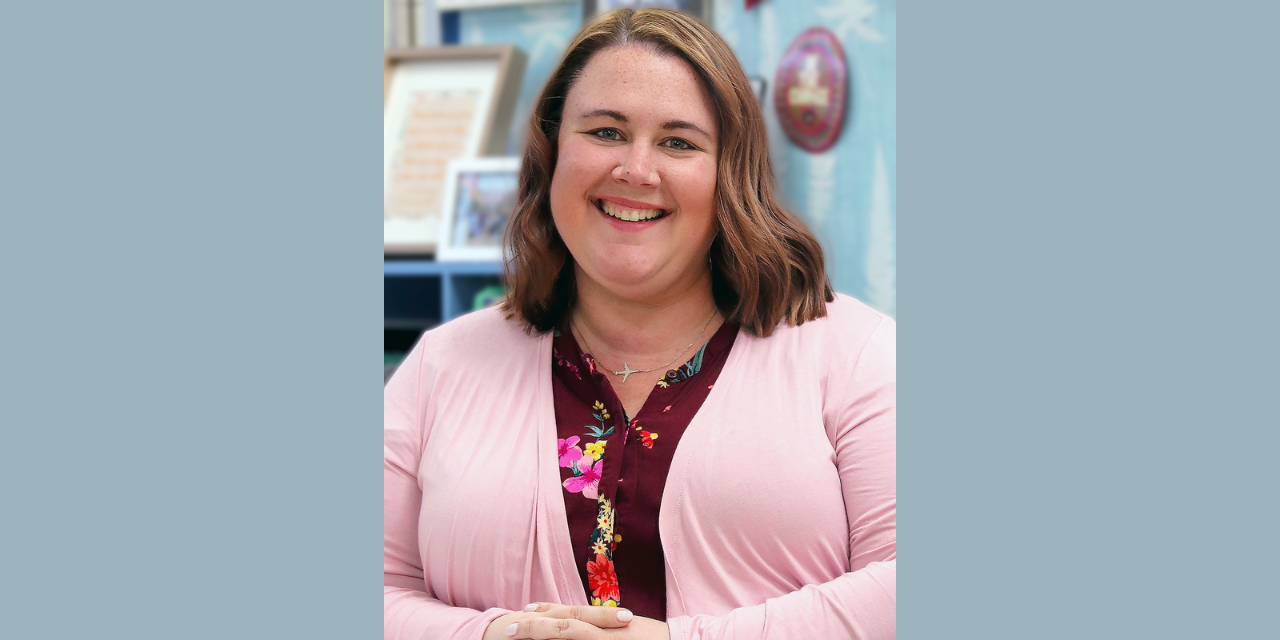
Pennsylvania teacher Ashlie Crosson was named the 2025 National Teacher of the Year by the Council of Chief State School Officers (CCSSO) last April.
Crosson teaches English 10 and Advanced Placement language and composition at Mifflin County High School in Lewistown, Pennsylvania, the same rural district she attended as a student. She revived the high school’s journalism program.
A Fulbright Teacher for Global Classrooms fellow, Crosson teaches an elective class Survival Stories, which looks at global humanitarian crises from a youth perspective.
We interviewed Crosson ahead of her keynote speech at the 2026 Educators Rising National Conference in June. She told us about her education journey, how she encourages students to find their voice, and the impact of being a teacher.
What inspired you to become a teacher, and did you always know this was your path?
Teaching was not always my plan. I entered college studying journalism, but I changed my major almost immediately. I am a first-generation college student, and it was my teachers and guidance counselors who helped me make that dream happen. They saw my potential before I saw it myself, and they invested so much in my success. I decided to become a teacher because I wanted to give to another generation what had been given to me.
You’ve emphasized helping students find their voice. What does that look like in practice in your classroom?
Projects! So many projects! Digital projects, hand-crafted projects. Partner projects, independent projects. We are constantly collaborating, building, crafting, and communicating. I’m an English teacher, but I want students to find their voice by discovering the unique ways they are most comfortable and successful in conveying their ideas. If we can help our learners develop their creativity and their confidence, then they won’t just find their voice — they’ll be ready to use it for the things they care about most.
As a first-generation college student, how has your journey influenced your expectations for and support of students?
I want every student to feel with certainty that their education system supports their goals and prepares them for their future. Whether that’s a four-year college, a technical program, the workforce, the armed services, or a creative pursuit, we must make sure our young people know they deserve to find their own way in the world — and that their education is the key to those dreams. Our expectations must be balanced with our support because that’s how we cultivate a generation of courageous, confident, and capable people.
How can teachers advocate for their students and communities beyond the classroom?
There are so many ways! First and foremost, your voice will always have the strongest impact in your own community. It’s important that teachers build strong relationships with families, local leaders, and community stakeholders because so much good can happen for our students when communities come together for their schools. Beyond that, I encourage educators to seek professional learning groups that will inspire their own growth. Our teachers unions, university programs, national fellowships and cohorts — every group I join energizes me to be a better teacher and a stronger advocate than I was the day before.
How can young educators use their voices to make an impact early in their careers?
Using your voice starts in your own school. Joining a committee, coaching a sport, or advising a club are good ways to start having a positive impact on education. The reward is huge, because you’re not just growing your own skillset, you’re also directly supporting the people who matter most: your students.
I have seen our young teachers here in Pennsylvania have incredible, tangible influence through our state teachers union, and I encourage every young educator to stay connected to their university. Offer to participate in an alumni panel or guest visit a methods class. Your experience as a new teacher is invaluable first-hand testimony for those who are coming into this profession right behind you.
What advice would you give to students who are thinking about becoming teachers but feel unsure?
There is no place more magical than a classroom. The work is hard, but good work always is. The impact of a teacher is not hypothetical or theoretical. We inspire real humans, and we change real lives. In doing so, we serve our country and craft our future. I can’t think of a more beautiful way to spend a life.
This interview was edited for length and clarity.
This article appears in the Summer 2026 issue of Kappan, Vol. 107, No. 7-8, p. 5.