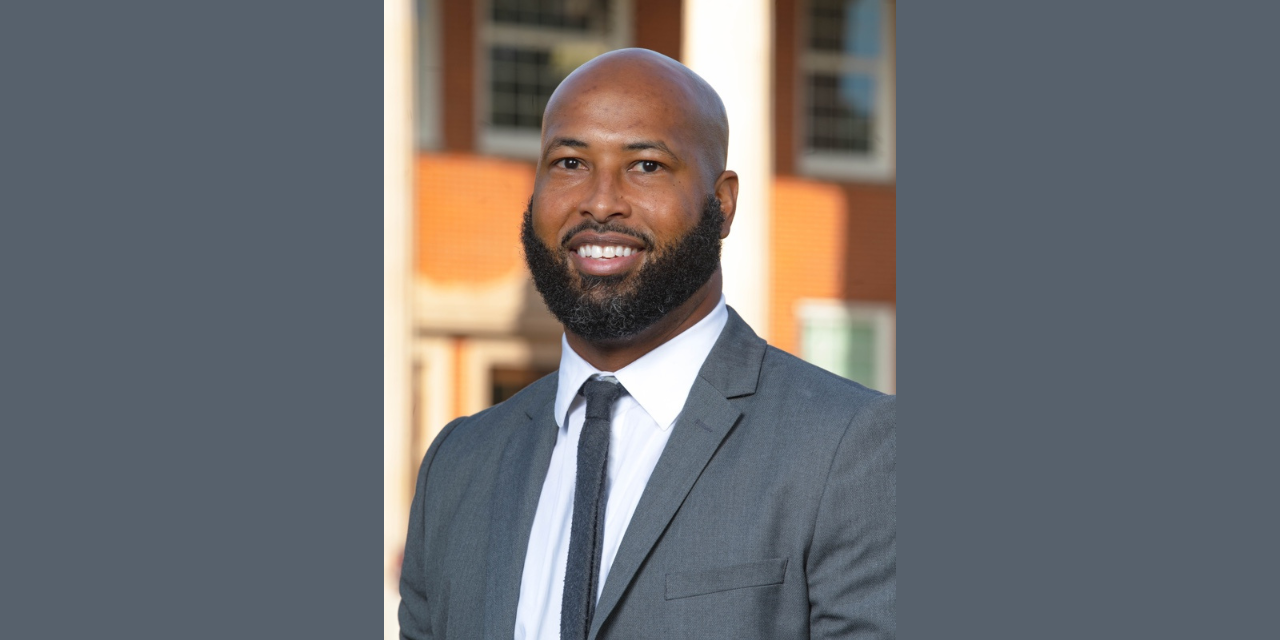
Bryan Butcher Jr., a seventh-grade math teacher at Beaumont Middle School in Portland, was named the 2025 Oregon Teacher of the Year. A Portland native, Butcher attended local public schools. Following graduation from Morehouse College, he joined Teach for America and began his teaching career with Excellence Boys Charter School. He returned to his hometown 12 years ago. Butcher is well known for his emphasis on effort and high expectations in his classroom, helping students feel safe to take academic risks.
Butcher will be a keynote speaker at the 2026 Educators Rising National Conference in Portland in June. He spoke with us about overcoming math anxiety, keeping a journal as a new teacher, and teaching as an art form.
What inspired you to become a teacher?
I am not the person who woke up and thought, “I’m going to be a teacher.” I always knew I wanted to work with youth and with kids. I would keep finding myself in those positions. I would be a coach for a Little League team in high school. I’d referee a game. I’d teach skills at a baseball camp. I became a tutor at one of our community centers, helping kids get better at math or do better in science. In my junior year of college, I thought, “Let’s see if teaching really is going to be a thing that I’m always thinking about and planning for.” I was reflective about it, and I realized that teaching is in line with my skill set as a person.
How do you help students who come in with math anxiety?
When we see math in the movies or when looking at the stock market, it feels intimidating. Honestly, math at its foundation, whether it’s the stock market or writing a linear equation, is about how one thing impacts another. It’s about relationship. Creating familiarity is a method used to relieve anxiety. Can I give my students some kind of platform that they feel strong and sturdy so they’re willing to take a leap, to take a chance? That’s what I try to do, whether it’s through humor or whether it’s through realness. I bring items from their corner store. I ask, “How much are those bags of chips? How much is the candy? OK, what if I wanted to buy enough for five people, eight people, or the whole school? Now let’s create an equation that allows me to do that.”
How can teachers — especially newer ones — step into leadership roles in their schools and communities?
You are a leader when you walk into your classroom. I remember my first day teaching as a first-year teacher, and I had 26 students looking up at me and I said, “Whoa, this is real.” Teaching itself is a leadership position. Go out and strive to do as much as you can and what your heart desires. Know that by just teaching in your classroom, you are impactful. That is leadership.
What does it mean to make an impact as teacher, and how can early-career educators start doing that right away?
Making sure that you are consistent, making sure that you are encouraging, and having an expectation that you believe that they can do more are extremely helpful. You put expectations out there, and then you show them how to get there. When students know you believe in them, you get the buy-in. That’s when you get the kids to stretch themselves. Even though they don’t really want to be stretched, they’ll do it even more. That’s really awesome to see.
What advice would you give new teachers on how to build their confidence?
Get comfortable taking feedback. Don’t personalize it but think about how you can work through it. But in my first year of teaching, I wanted to quit. It was difficult, it was fast paced, and it just felt like being in like a time warp. One thing that I did to help settle myself was to keep a journal to help me be reflective. I’d write something that was good that day, something I could do better, something that made me smile, and something I needed to remember for next time. I did that journal every single day for a month and a half. Then I did it a couple of times a week and then it turned into every now and then. I wasn’t doing the entries anymore, but I was still being reflective. Keeping that journal trained me to be reflective all the time. Am I showing up prepared? Am I delivering the content how I need to? Make sure you highlight those things that make you smile and those things that are positive because we’re also our biggest critics. We see what didn’t go well, but we also need to pay attention to what does go well. I’d also suggest that you go watch other teachers. There’s always things to do, right? I like to think of teaching as an art form, and art is never done.
This interview was edited for length and clarity.
This article appears in the Summer 2026 issue of Kappan, Vol. 107, No. 7-8, p. 6.