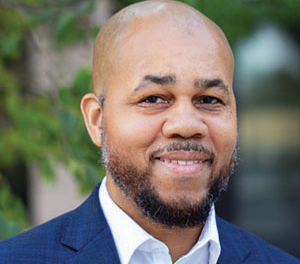
Andrea Vest Ettekal is an assistant professor of youth development at Texas A&M University. She conducts research on positive youth development through out-of-school-time programs, she teaches undergraduate and graduate courses on youth development programs and services, and she is also the section editor for feature articles in the Journal of Youth Development. She is dedicated to bridging research and practice through her scholarship and values all contributions that enhance the lives of youth. She earned her Ph.D. in family and human development from Arizona State University, and she now lives in College Station, Texas, where she and her husband savor the complexities and joys of parenting a toddler.
Phi Delta Kappan: Before we dig into the research on the benefits of participating in the school orchestra, student government, the robotics club, the swim team, and other extracurriculars, can you give a quick overview of the size and shape of this sector? In the United States, for instance, roughly how many kids participate in such activities?
Andrea Vest Ettekal: Given that most programs don’t take attendance and a lot of kids drift in and out of them, it’s impossible to get a precise count. But the Afterschool Alliance estimates that roughly 8 million school-age children and youth participate in some form of after-school programming, and we’ve seen a steady increase in participation over the last decade — at least until the pandemic. Still, there’s an estimated 25 million children who say they would be in a program if there were one available to them. That includes at least some of the roughly 7 million kids who are totally alone and unsupervised after school. To give you an idea of the demand, for every child in an after-school program, there are three other children waiting to get in. So, there are still a lot of kids who might love to join a club or be on a team or work on the school newspaper or learn an instrument, but who can’t participate for one reason or another.
It’s worth nothing, though, that participation peaks around age 12. If kids haven’t gotten hooked on an activity or two by then, then they probably won’t get involved in anything later on. And not only do younger kids tend to be more involved, but they also tend to be involved in a broader range of activities than older kids. For instance, a 6th grader might play soccer and basketball, sing in the school chorus, work on the yearbook, and be in the chess club. But around 7th or 8th grade, kids tend to develop a heavy interest in unstructured leisure time, so they cut some of the clubs loose. That’s also when a lot of kids begin to specialize in just one or two activities. Maybe they’ll drop the basketball and focus just on soccer, or they’ll quit the hiking club to spend more time building robots.
Kappan: How does participation vary by race, class, and gender?
Ettekal: Overall, middle-class, suburban white kids tend to be overrepresented in after-school programs, while kids of color and those from low-income backgrounds are much more likely to miss out.
In some rural areas, kids simply don’t have a lot of options. Generally speaking, though, if kids aren’t involved, it’s either because they can’t find a spot in the program they want, or because they can’t afford equipment and supplies, they lack transportation, or they need to work or take care of family responsibilities. Also, in many cases, kids sign up for a club or a sport and go to a few meetings or practices, but then stop going because they feel like they just don’t belong there. For instance, maybe they’re the only Latinx kid participating, or the only boy, or the only kid who isn’t affluent, and they don’t feel welcome in the group.
Some of my own research has focused on after-school participation among Latinx youth, specifically to understand why they have the lowest participation rates of any student population. A significant reason, I’ve found, is that most youth programs have a particular ethos that many Latinx youth find unappealing. Nationally, 80-90% of the adults who lead after-school programs are white, so these programs tend to be grounded in white, middle-class assumptions about individualism and the need to compete with your peers and to get ahead by outperforming them. Whether we’re talking about sports, the arts, student organizations, or other kinds of activities, that’s often the cultural framework, and it turns off a lot of young people who put more value on collaboration and shared identity, including many of the Latinx kids I’ve studied.
As to participation among boys and girls, the rates are similar, though girls tend to be more involved in in the arts and boys are more involved in sports. That has gradually changed over the last few decades, and it’s increasingly common to see girls involved in sports and technology clubs and the like and to see boys involved in art and music. But gender stereotyping remains pretty common.
Kappan: When it comes to participation in extracurricular activities, how does the U.S. compare to other parts of the world? Do things look more or less the same in other countries, or do we stand out in some way?
Ettekal: We’re definitely an outlier. In the U.S., we started to create youth programs in the early 1900s, mainly in response to fears about the amount of time kids were spending on the streets (once they were no longer working in factories). So, the YMCA, for example, was meant to give young people — specifically lower-class young people — a safe place to go, somewhere they could stay out of trouble. And in the meantime, rich kids got music and riding lessons and French tutors.
That disparity has always been baked into our approach to youth programs. The priority has always been to keep poor kids off the street but to provide affluent kids with enrichment. And we still see this today. Many working-class parents look to after-school programs mostly to keep their kids safe when they’re not at home. But upper-middle-class parents tend to see programs as opportunities for their children to develop special talents and skills, network, build their resumes, and add to their college applications.
If you look to Europe, for example, you see a very different approach, where the mission is to promote the well-being of all kids — not just affluent kids, but everybody. In Sweden and Finland, especially, they treat the opportunity for enrichment as if it were a basic human right, like they treat access to health care and higher education. Youth programs and activities are free, easy to find, and much more highly utilized than in the U.S., with much less disparity in their quality. And while the range of activities is similar — sports, music, chess clubs, and so on — there’s more of a sense of inclusiveness and less pressure for kids to perform and show that they’re the best musician or the champion debater or whatever.
I can’t speak to programs in Latin America or Africa, but in a lot of Asian countries, you see a similar emphasis on providing all kids with equal opportunities for enrichment. Some school systems make it obligatory to participate, though. After-school programs aren’t considered part of the curriculum — for instance, they aren’t assessed — but children are expected to attend. So, extracurricular programs are very highly utilized, but there’s evidence that the requirement to participate hinders kids’ motivation and engagement. Programs can seem like an extension of the regular day, not a place for free choice and exploration.
Kappan: For kids in the U.S., what do we know about the benefits of participating in programs and activities? For instance, how does participation in extracurriculars affect their social and emotional development, health, academic performance, and other outcomes?
Ettekal: Let me hedge a little by saying that while the research in this field is becoming more rigorous, it has been somewhat uneven in the past. A lot of studies have shown correlations between participation and positive outcomes, but I can’t point to a lot of experimental, peer-reviewed journal articles that establish causality, showing that if you join a club, play on a team, or act in the school play, that will help you succeed in other areas. We can draw on decades of program evaluations and observations by practitioners, and that literature gives us a strong foundation on which to build. But we’ve only just begun to figure out how specific activities lead to specific outcomes. For instance, does participating in theatrical productions help children develop a stronger sense of empathy, and, if so, why? Drama teachers have some ideas about this, but the empirical researchers haven’t caught up with them yet.
That said, participation in extracurriculars is strongly associated with positive youth development in general, with particularly well-established links between extracurriculars and stress reduction, lower rates of depression, better coping skills, and improved mental health overall. We also see strong links with higher academic achievement in K-12 education, as well as higher rates of college-going and adult employment. These associations are strongest for children and youth who participate in programs that connect to academic content, such as student government and STEM-related clubs. However, participating in any kind of program is linked to both short- and long-term benefits for academic performance. Also, these links persist when we account for selection effects. In other words, if students who join after-school programs do better in school, it’s not just because they’re more affluent. When you compare students from similar backgrounds, the ones who participate in extracurriculars are more likely to do better on various measures.
Kappan: But you’ve written that participation in youth sports, in particular, has some downsides, right?
Ettekal: That’s true. And, by the way, sports are far and away the most popular kind of extracurricular activity — nationally, 70% of children and youth participate in at least one sport.
The good news is that participation in sports has been strongly linked to some kinds of positive character development, including gains in dedication, perseverance, grit, and especially work ethic and personal responsibility. On the other hand, sports don’t seem to do much to promote respectfulness, honesty, integrity, and other kinds of moral development, and they’ve been linked with some negative outcomes, including increased stress and aggression.
In my own research, I’ve found that different sports tend to be linked to somewhat different outcomes. For example, according to the data I’ve collected, students who participate in football and basketball see the least growth in moral development, while participation in tennis and track and field is connected to significantly better outcomes in this area. In general, the pattern seems to be that the more competitive the atmosphere, the more negative the outcomes. And in a lot of places, certain sports have become super competitive. For example, the football culture in Texas, where I live, is particularly intense, driven by a win-at-all-costs mentality that’s not at all conducive to moral development. Plus, high school games draw huge numbers of spectators, which doesn’t help. In effect, kids are encouraged to be aggressive and dominant, showing no empathy, and then they’re put on stage, which only increases the pressure to behave in these ways.
It’s probably no surprise, but according to the research, if you want to maximize the positive and minimize the negative outcomes of participating in sports, the key is for coaches to give at least some priority to moral development. For instance, we know that it helps for coaches to change how they talk about their opponents. Instead of telling players to visualize their competition as the enemy or to think of the game as a search and destroy mission, they can play up their admiration for the opponent. You see that a lot in martial arts tournaments, for example, where the sporting culture tends to encourage mutual respect among rivals. You can’t argue that kickboxers or judoka are “soft” or that respecting their opponents takes anything away from their performance. But visualizing their rivals in this way is probably better for their moral development.
Kappan: Does the research show that participation in extracurriculars and out-of-school activities is associated with any other negative outcome?
Ettekal: Not really. For years, people have speculated that it’s harmful for kids to be overinvolved in activities, but there’s no evidence that this is the case. On the other hand, evidence suggests that it does tend to have negative effects on parents. Rushing from dance class to soccer to play rehearsals doesn’t seem to stress kids out, but it can make their parents miserable. I suppose you could say that it harms kids indirectly, in that they can experience lower-quality parenting, but that’s kind of a stretch.
Kappan: In their 2019 book In Search of Deeper Learning, Jal Mehta and Sarah Fine described what they learned from observing instruction at high schools that claim to be providing rich classroom instruction, where students have plenty of opportunities to master complex ideas, be creative, and study material that’s personally meaningful to them. Overall, they were disappointed, finding that even at these schools, most kids spend a lot of time filling out worksheets and being lectured at. But at every school, they did see at least a few examples of truly powerful and engaging instruction. And what’s interesting is that they saw it much more often in electives and extracurriculars than in core subject-area classes. As somebody who studies extracurriculars and out-of-school programs, do you find this surprising?
Ettekal: I don’t think it’s surprising to find that great instruction is rare, whether we’re talking about the core curriculum or after-school programs. When it comes to after-school programs, keep in mind that most staff are paid very little, if anything. Many of them teach a subject like history or math earlier in the day, before they coach the baseball team or run the debate club. But even if they’re effective classroom teachers, they probably haven’t had much training in how to be an effective coach, how to run a club, or — most important — how to design and facilitate activities that support positive youth development. And when it comes to figuring out how to structure an activity so that it meets a broad range of social and emotional needs, very few after-school staff get much help.
Even so, while after-school staff face a lot of challenges, it’s not surprising that this is where Mehta and Fine saw the most frequent examples of high-quality, student-centered, developmentally supportive instruction. To be honest, though, it’s cheating to compare the instruction that goes on in after-school programs to what happens in history or math class. Extracurriculars are self-chosen and interest based. They offer a lot of opportunities to be creative, make your own decisions, have fun with peers, and chill out with adults. And if you don’t like the people, enjoy the activity, or experience much efficacy and autonomy, then you can leave. Basically, the conditions are about as ripe for good teaching and learning as we can reasonably expect. The after-school workforce isn’t better prepared or adept than content-area teachers, but the after-school context more easily lends itself to a powerful educational experience.
The after-school context more easily lends itself to a powerful educational experience.
Kappan: Can you share a favorite example of a school or district that has a particularly impressive approach to extracurricular and out-of-school programming?
Ettekal: I’ve always been impressed by the work of the Harlem Children’s Zone. Their model has proven to be hard to replicate, but to my mind it’s the best example we have of a truly whole-child approach, where youth development is fully integrated with education, health care, and other priorities. The most frustrating thing about most youth programming is the extent to which after-school staff tend to be confined to their own silo, with very few opportunities to connect to teachers in the core subject areas or school counselors or parents, and so on. But HCZ was extremely careful to establish relationships among all of the people who work with the same kids. And it’s not that the extracurriculars are linked to the core curriculum — it’s more that all of the adults are linked to each other. So, it’s not unusual for the 4th-grade teacher to call the after-school program sponsor to check in on a student who seemed depressed earlier in the day, or for the orchestra director to make sure students have finished their homework, or for the nurse to ask kids about the robot they’re building in the STEM club.
Kappan: I know it’s too early to report any research findings about the long-term effects, for students, of missing out on extracurricular activities during the pandemic, but do you have specific concerns about this or any recommendations for the coming months and years?
Ettekal: I tend to be pretty optimistic about kids’ resilience. As hard as it has been to miss out on sports, clubs, the marching band, and other activities — not to mention academic learning and hanging out between classes — most students are going to bounce back and be OK. I don’t mean to diminish how hard the last 14 months have been, though. On average, kids will probably be fine, but plenty of individual children and youth have had really traumatic experiences, in part because they’ve lost the personal meaning and social support they used to find in the football team or community service or whatever they were involved in.
Of course, the pandemic has exacerbated all of our existing disparities in education. So, if there’s anyone I’m most worried about, it’s the 25 million kids who didn’t have access to an after-school activity before the pandemic. When students can go back to the activities they love, that’ll be great. But that’s not enough. When the pandemic’s over, we need to find ways to offer high-quality programs to all of the young people who want them.
Going forward, we also have some important choices to make about the kinds of programs we want to offer. Over the last decade or so, K-12 education has finally gotten on board with social-emotional learning and other goals that go beyond just teaching academic content, and that has translated to more interest in after-school programs and out-of-school learning. Still, a lot of policy makers still think of these programs as fluffy and fun but not necessary. And right now, with all the concerns about students’ “learning loss” during the pandemic, there’s a lot of pressure to put all the focus back onto academics, rather than investing in clubs and teams and school plays and field trips. Extracurricular programs have always had to fight for every penny, but in the coming months, they’ll probably have to fight even harder than usual.
But I’m hopeful that youth programming will come out of the pandemic stronger in at least one way. In response to how difficult things have been for our students, maybe we’ll all become a little more willing to focus on the social and developmental benefits of these programs, while putting a little less pressure on kids to compete with each other and show who’s the best dancer or the best chess player or whatever. You know, it’s OK if a student can’t make it to every practice or every rehearsal. Instead of stressing young people out even more than they already are, let’s remind ourselves that the real purpose of these activities is to enrich their lives.
ABOUT THE AUTHOR

Rafael Heller
Rafael Heller is the former editor-in-chief of Kappan magazine.