Brown University’s Department of Sociology and Annenberg Institute for School Reform Professor John B. Diamond discusses unequal access for students within suburban schools and districts, opportunity hoarding, and the tendency to listen to the loudest voices.
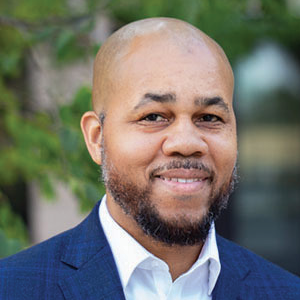
John B. Diamond
Suburban high schools are the envy of the education world. Many are well-funded, staffed with veteran teachers, housed in well-maintained facilities, attended by motivated students, and supported by parents and the community.
However, within those schools, not all students are thriving.
John B. Diamond looks at that phenomenon in his 2015 book, Despite the Best Intentions: How Inequality Thrives in Good Schools, with his co-author Amanda Lewis. Diamond is a professor of sociology and education policy in Brown University’s Department of Sociology and Annenberg Institute for School Reform.
Despite the Best Intentions examines how racial inequality thrives in racially diverse and wealthy suburban schools. Diamond and Lewis focus on Riverview High School, a pseudonym for a racially diverse suburban high school with a persistent racial achievement gap. The book won the Eduardo Bonilla-Silva Award from the Society for the Study of Social Problems Division of Racial and Ethnic Minorities. A second edition will be published in 2023.
A sociologist of race and education, Diamond studies the relationship between social inequality and educational opportunity, examining how educational leadership, policies, and practices operate through school organizations to shape students’ educational opportunities and outcomes.
Diamond spoke with Phi Delta Kappan about unequal access for students within schools and districts, opportunity hoarding, and the tendency to listen to the loudest voices.
PHI DELTA KAPPAN: Over the past 20 years, the suburbs have become racially, ethnically, and economically diverse. Do you think the myth of the homogenous white suburbs still survives?
DIAMOND: This myth does remain, and it shapes our discourse in a lot of ways. Any time you have a conversation about elections, the media talks about the suburban soccer moms. When they say suburban, they mean white. It’s an idea that is hard to get away from because it’s been repeated so often. The perception is deeply ingrained in our culture and deeply ingrained in our discourse, even though we have known for a long time that the suburbs have increasingly become much more diverse racially and socioeconomically. The suburbs have become hubs of immigration. They often mirror cities in terms of their demographics in ways that people don’t recognize.
The myth is hard to get past because people have it so deeply ingrained in their minds. We keep repeating it unthinkingly in the ways we talk about cities and suburbs. Los Angeles has tons of suburbs that don’t fit that model, like Inglewood and Compton. Those places are suburbs to a large extent, but they don’t fit in the people’s collective imagination. They don’t feel like their image of suburbs. Some of that impression is changing. But it’s working against a lot of discourse and belief systems
Folks like Myron Orfield at the University of Minnesota, Erica Frankenberg at Penn State University, Rich Milner at Vanderbilt University, and many others have tried to think about the suburbs in a more comprehensive way, looking at the change and creating typologies. There still are those suburban spaces that are very white and very affluent. There are those spaces that are racially diverse inner-ring suburbs. There are ethnoburbs that are ethnic centers. These typologies help us understand in a more sophisticated way what the suburbs actually look like. But we often revert to those basic narratives about whiteness and affluence being concentrated in suburbs and low-income folks of color being concentrated in cities.
The idea of city and suburb is much more than geography. It’s the symbolic meaning of what those places represent for people. It’s very important to recognize that they symbolize something.
KAPPAN: Many suburban districts have plentiful resources and veteran teachers. Why do opportunity gaps exist within some of these districts?
DIAMOND: It’s important to recognize that there are disparities within school districts. In Illinois, for example, several of the best schools in the state in U.S. News and World Report rankings are in the city of Chicago. There are a number of these heavily resourced magnet schools with very high-quality teachers and some of the best educational opportunities in the state. But it’s largely at the expense of other schools in the district that don’t have the same resources.
There’s a corollary to that in suburban contexts where the distribution of resources across schools can be very different. Resources get unequally distributed because the people with the loudest voices and the most resources can monopolize those resources for their own kids. They’re able to take advantage of district attendance boundaries and resource allocation conversations and leverage their power to get more for their kids. That happens across schools in suburban districts.
We often revert to those basic narratives about whiteness and affluence being concentrated in suburbs and low-income folks of color being concentrated in cities.
It also happens within schools, which is something we talk about in our book, through tracking processes and processes of informal communication amongst parents. Certain parents get access to the teachers who have the best reputations, and they make sure that the educational tracks privilege their children in terms of the resources allocated. District folks are pressured to provide the best education possible to the children whose parents they perceive as having the most power and the loudest voices. That situation is detrimental to a large percentage of young people who don’t have that kind of access.
KAPPAN: You’ve used the term opportunity hoarding in your writing. What do you mean by that?
DIAMOND: Yes. It’s a term that sociologist Charles Tilly came up with to talk about how groups monopolize resources that provide access to additional resources, things like education. Education historians like John Rury, sociologist R. L’Heureux Lewis-McCoy, and other folks have used that term to talk about the ways people take advantage of resources that produce inequality and keep other people from accessing them.
You can think about it in terms of the creation of the suburbs themselves, where states and federal governments, the banking industry, neighborhood groups, and individuals worked to monopolize the resources of metropolitan areas for suburban contexts. You can think about it in terms of desegregation, where people fought to maintain resources in schools that are predominantly white. Opportunity hoarding is a historic pattern that isn’t just about individual people. It’s about the ways social groups mobilize government and other institutions, such as the banking industry, to funnel resources to specific communities and away from others.
KAPPAN: What was the impetus for writing Despite the Best Intentions?
DIAMOND: I was working for an organization focused on race and equity across several metropolitan areas, with a particular focus on suburban schools. An administrator from one of the schools asked if I would interview some of the Black students because he wanted to understand why those students weren’t experiencing the same kind of opportunities and outcomes as other students in the school. My colleague Amanda Lewis and I also wanted to talk to white students and Latinx students, and teachers and administrators and parents and community members. That way, we could paint a more complete picture of what was happening. It was an opportunity to tell an important story that brought more voices to the table. We came out with more than 170 interviews and a compelling story from talking to more people and spending time in and around the school, and looking at the public discourse about education there.
KAPPAN: Can you talk about the dynamic in the school of white parents advocating and expecting certain things for their children?
DIAMOND: People leverage their access to gain advantages for their kids. It’s figuring out how to influence course placements with particular teachers. It’s making sure that their kids are getting algebra and geometry classes by 8th grade, so they have access to calculus and even higher levels of math in high school. It shows up as individual people advocating for influence at all those decision points and groups of parents pushing for particular kinds of policy decisions that maintain hierarchical educational opportunity. Educators respond to the expectation that certain parents are going to intervene. It’s everything from big decisions around school discipline and who gets punished and who doesn’t to smaller interventions when certain students are getting low grades. For some students, those grades are expected. For other students, teachers may be more likely to intervene right away because they think they’re going to hear from those parents. It becomes a cycle in which the inequalities get reproduced through action, inaction, and a set of expectations that have real implications for what happens to young people. The processes feed on each other and accumulate over time in ways that create unequal opportunities and therefore unequal outcomes.
KAPPAN: How do teachers and administrators unwittingly perpetuate inequity in schools and classrooms?
DIAMOND: One of the critical things around racial inequality we must recognize is that it doesn’t require people to actively dislike anyone or actively work against the advancement of social groups. All that is required is doing the same things that we’ve always done. There are structures in place that help reproduce these kinds of inequalities. The mechanisms are the same ones that people leverage to take advantage of opportunities. You have a hierarchically organized class structure in schools where some people are getting one kind of educational opportunity and other people are getting another. Those are key spaces where people try to leverage resources.
Think about grading systems and grading processes, course placement decisions, and disciplinary decisions. Think about the role of testing in decision-making processes, for course placement, college admissions, and graduate school admissions. We know that those things are tied to class, race, and language. And we know that these are points at which people can leverage their resources. And we know that they will necessarily reproduce inequality.
We must be able to keep race and equity on the table as something we can talk about.
Most educators come to school wanting the best for all kids. The deeply ingrained ideas that people carry, what we call status beliefs, about social groups influence how they interact with students. These beliefs influence what teachers expect of students, and they influence the rewards young people have access to. There are times when people trying to do the right thing actually have deeply ingrained implicit biases that suggest that Black kids, for example, aren’t going to do well academically. That girls aren’t going to do well in math and science.
Any set of expectations can have a deep influence on how much kids’ ideas are valued in the classroom, how much their wrong answers are interrogated to help them get to the right answer, and how much people think they aren’t living up to their potential — or just assume they don’t have the potential. Those implicit biases are as important as the structural inequalities that exist inside schools or in society because they tend to reproduce and reinforce, in the daily dynamic of schools, the kinds of inequalities that we see. There also are educators who, over time, have come to deeply believe in these ideas. It’s not even implicit anymore. They believe that some folks are just not going to do as well and that they can see it from cultural signals and language use.
KAPPAN: In your book, you talk about how Riverview students and teachers feel there are two schools.
DIAMOND: Once you start dividing young people up into different kinds of educational spaces, the way that they’re treated in those spaces also varies. When you separate honors and Advanced Placement classes from the regular-level classes, it’s more likely that educators will see these honors students as not capable of getting Cs. There’s a sort of inflation that goes beyond our typical grade inflation in those courses. There’s also research that suggests students are given more freedom in honors and Advanced Placement classes — freedom of movement, freedom of expression, freedom to define their own learning to some extent. Those classes tend to be less rigid than the regular classes or classes where kids aren’t seen as higher achieving.
KAPPAN: What about the unequal application of discipline for students?
DIAMOND: Saidiya Hartman, in her book, Lose Your Mother: A Journey Along the Atlantic Slave Route, talks about the afterlife of slavery, which is the continuation of slavery’s diminishments of Black Americans. Throughout the existence in the U.S. of chattel slavery and settler colonialism, folks defined as Black, Indigenous, and Latinx were seen as a threat. The criminalization of Blackness and Indigenousness has been common. Some might say, “that was a long time ago.” But ideas are perpetuated over time. Discipline practices in schools tend to be racialized and gendered and dovetail with disability in ways that create inequalities. People’s ideas about whose behavior should be monitored and whose behavior should be controlled shapes experiences around discipline.
We found this in our research, where hall passes become very racialized, because only certain kids get asked about the pass. Only certain kids feel like they need them. There are ways in which Black girls are hyper-surveilled around their clothing. Clothing rules tend to be gendered, but they tend to have a stronger and more direct impact on Black girls and Latinx girls than on white girls. This pattern cuts across contexts and location, but it becomes more acute in some ways in racially diverse schools. Some of the research suggests that in racially diverse schools where there’s a significant percentage of white students that students of color tend to face more punitive discipline in those contexts.
KAPPAN: What can building-level educators do to disrupt these processes?
DIAMOND: The big thing is recognizing it and being able to talk about it. One of the challenges right now is that, in a lot of places, you can’t even talk about equity or racial equity without running up against legal concerns and public backlash. We must be able to keep race and equity on the table as something we can talk about. In some states, people are trying to silence dissent and stifle the conversation.
To the extent that we can have the conversation, people need to be clear and vigilant about attending to race and equity in their work. The way I think that needs to be done, and the way I’ve seen it done effectively, is by recognizing how deeply embedded racial dynamics are in our schools and then working to root it out in the core of our organizational practices. One example is to think about all the things schools do on a regular basis and try to make sure we’re doing those things in a way where racial equity is in the foreground. How are we hiring people? What are we looking for as we’re hiring them? What are the recruitment networks for bringing in teachers, and how are they being inducted into those roles? How are we attending to these issues? How do we evaluate teachers? What are the coaching and mentoring processes like? Principal hiring is the same thing. How are we bringing them on board? What kind of resources are we providing them to do that kind of work? And how are we breaking down all our processes, so that we’re attending to racial equity at the core of the work that we’re doing?
Sarah Diem and Anjale Welton have written a book on this, Anti-Racist Educational Leadership and Policy. Decoteau Irby at the University of Illinois Chicago has what he calls race-conscious inquiry cycles, where you’re bringing work on continuous improvement and work on racial equity together to be very disciplined in how we think about moving forward in a way that creates more equity. I just finished up a paper with my colleague Louis Gomez where we’re trying to think deeply about our organizational routines. How do we disrupt what’s happening now? How do we reconstruct those routines in ways that create more racial equity? We need to not just work on a little bit of something over here or something over there or a bunch of programs. It’s really about the core work that we’re doing and how we design first to disrupt what’s happening and then redesign to create more equity. Also, you need to be cognizant of the fact that resistance will happen and plan for that resistance. You need a team to respond to those voices that are going to try to work against change. Because not expecting and planning for resistance is a recipe for not being effective.
There must be mechanisms to allow for not honoring just the loudest voices. That requires a certain kind of courageousness and leadership. It requires educators at the superintendent level and the principal level to support other educators so they can feel empowered to not just respond to the loudest voices.
This article appears in the February 2023 issue of Kappan, Vol. 104, No. 5, pp. 24-28.

ABOUT THE AUTHOR

Kathleen Vail
Kathleen Vail is editor-in-chief of Kappan magazine.
Visit their website at: https://pdkintl.org/