Q: I’m a pretty chill teacher. I can deal with kids blurting stuff out, and I can switch gears easily if my students take a topic in a new or unexpected direction. As you might expect, moving my classes online hasn’t been that tough for me. Yes, there are more distractions. Yes, I know my students have their phones on them and probably are texting while I talk. And yes, they’re probably cheating a bit more, too. But that’s kids. They’re going to try to get away with whatever they can. I have done a pretty good job, I think, of making it hard for them to check out completely by incorporating a lot of small group work and by using equity sticks to call on everyone, and I also have been giving them prompts that demand critical thinking and make it pretty darn hard to cheat. So OK, those are wins. Plus, my own children are grown, and my attention isn’t getting pulled in a million directions. I really feel for colleagues with young children. In general, when it comes to my attitude about distance learning, I think I’m doing as well as, or perhaps even better than, most teachers.
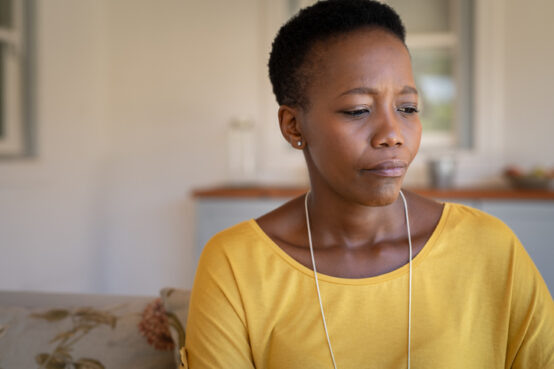
Emotionally, however, I’m a complete mess, especially when I’m not focused on teaching. I can’t stand the uncertainty — the not knowing when this will end. The fear that we’re going to be dealing with waves of this for years to come until there’s a vaccine. The constant fear that everyone I love could die, or that I could die. The concern that life as we know it — a life with hugs and physical touch and travel — is over. I haven’t left the house in weeks. I’m not a hermit; I’m just following the stay-at-home order in my state to the letter. I try to do yoga outside in my backyard to get some sun and relax my mind, but I can’t really pull it off. I’m trying to manage my stress by taking all the precautions. My groceries are delivered straight to my garage. I wipe down the bags and the outside of every food container before putting stuff away in my kitchen. I don’t get any meals delivered. I am doing whatever I can to stay safe, but I’m still preoccupied all day long with the “what ifs.” I think it would help me if my school district just made a decision, but so far it’s just been one extension after the other. How can I do a better job of rolling with the bigger picture scenario and coping with my deep fear of COVID-19?
A: I’m glad you can acknowledge what’s going right for you. You sound like an experienced teacher who is using what you already know about teaching — and about children — to transition smoothly to remote learning. Teaching also is a cognitive distraction that helps you temporarily set aside both your practical and more existential fears. That’s important self-awareness. Use it to identify other cognitive distractions. You might, for example, listen to an audiobook, play Scrabble or Sudoku, or complete a puzzle.
Mindfulness can be grounding, but yoga likely isn’t working for you because it requires you to sit with your thoughts, and your thoughts are making you uncomfortable. You might have better luck if you go outside and spend a few minutes trying to identify all the sounds you hear or counting your footsteps as you walk. Or you could try a more vigorous activity, such as jumping rope or sprinting. Simply spending time outdoors can improve your emotional state, so your instinct to exercise in your backyard is spot-on.
- Related column: Principal wants to know how to encourage staff wellness
- Related column: Teaching remotely is making her lose her mind
Your catastrophizing, however, is getting in your way. It’s hard to pull your thoughts to the middle when they’re not completely irrational. Try to notice, though, when you’re going straight to the worst-case scenario. For example, if you find yourself using words such as “always” or “never,” some reframing may be necessary. When you think, “Everyone I love could die,” try telling yourself, “It’s possible someone I love could get very sick or die, but most people I know are likely to stay healthy.” Similarly, if you find yourself wondering whether you cleaned off every single food package before taking it into your kitchen, you can remind yourself that you’re doing your best to take reasonable precautions — to take charge of the variables in your control — and that’s all you can do.
It’s hard for anyone to manage uncertainty, particularly if it comes with heaping helpings of disruption, stress, and threat, so limit your exposure to the news and other triggering sources of information, including equally stressed-out friends or relatives. This is a time to surround yourself with even-keeled people who make you feel calm. You also can focus on other people’s needs to silence the noise in your own head. For example, you could write birthday cards to foster children, mail personal letters to your hard-to-reach students, or help stock a neighborhood food pantry. You also could keep a gratitude journal, as research shows that gratitude reduces anxiety and improves well-being. You could even ask your students to regularly share three things they’re grateful for, then make your own contributions to the discussion. You’d simultaneously help them and give yourself a mood boost.
These strategies can empower you and reduce your distress, but if your intrusive thoughts start to get in your way — and especially if you find yourself eating or sleeping a lot more or much less than usual, losing interest in activities you once enjoyed, or abusing drugs or alcohol to numb your feelings — then make an appointment with a mental health counselor for teletherapy. There’s no shame in asking for help.
For more Career Confidential: http://bit.ly/2C1WQmw
Have a question that you’d like Career Confidential to answer? Email contactphyllisfagell@gmail.com. All names and schools will remain confidential. No identifying information will be included in the published questions and answers.
ABOUT THE AUTHOR

Phyllis L. Fagell
Phyllis L. Fagell is the school counselor at Landon School in Washington, D.C., a therapist at the Chrysalis Group in Bethesda, Md., and the author of the Career Confidential blog. She is also the author of Middle School Matters and Middle School Superpowers, available at https://amzn.to/3Pw0pcu.