Powerful, important, and compelling work about schools — plus a handful of honorable mentions you may have missed.
By Alexander Russo
Every week, The Grade identifies a handful of reported news stories as “best of the week.” They’re all well-reported, powerfully written pieces on important topics. It’s often hard to get the list down to a manageable size.
Weeks and months later, however, few among them seem truly memorable. They’re lost in the swirl of events, subsequent stories, and similar topics.
But a few education stories stand out as particularly memorable — unique, particularly powerful, deeply important, or all three.
In a highly incomplete and decidedly arbitrary annual exercise going back to 2016, these seven selections include some familiar pieces along with a few controversial picks.
And because no list like this is ever enough, check out the honorable mentions you may have missed.
Enjoy!
‘INFORMAL’ REMOVALS
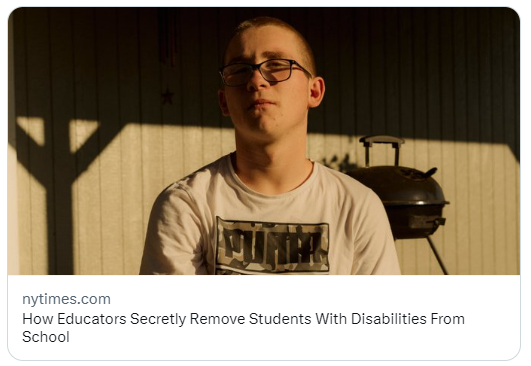
Hard to believe it, but former all-star education reporter Erica Green gave us one last banger of an education story in early 2023 when she was already well on her way out the door: How Educators Secretly Remove Students With Disabilities From School.
Describing so-called “informal removals” — off-book suspensions that allow schools to remove disabled students who are ostensibly protected by federal civil rights protections — Green’s piece centers students’ experiences and advocates’ perspectives while making a good-faith effort to be fair to the educators and school systems struggling to do right by kids. This is how you do it.
 WILLFUL IGNORANCE
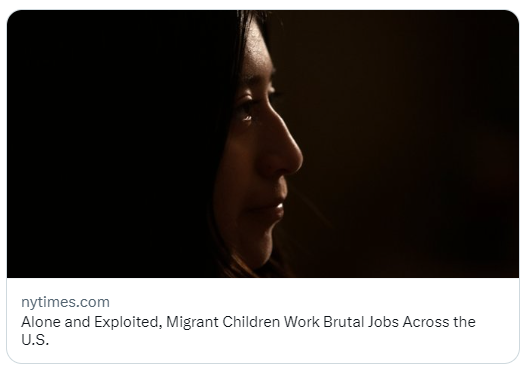
There’s nothing difficult or brave about picking Hannah Dreier’s New York Times Magazine story about migrant students working dangerous jobs: Alone and Exploited, Migrant Children Work Brutal Jobs Across the U.S.
However, Dreier’s story is a powerful and timely reminder of the little-discussed intersection between child labor and schools — part of what Dreier calls a “chain of willful ignorance.” Her story makes us confront difficult questions about what roles educators and schools have to keep kids safe from dangerous jobs that limit lifelong opportunities.
 HIS LITTLE SISTER CALLS HIM ‘PAPA’
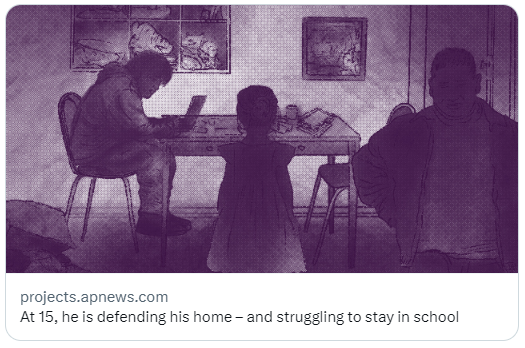
It’s hard to pick just one story by the AP’s Bianca Vázquez Toness, but the piece that’s most memorable to me is At 15, he is defending his home – and struggling to stay in school, an intimate profile of a teenage boy whose family is struggling with uncertain housing — and whose little sister sees him as such an important figure in her life that she’s come to call him “Papá.”
It’s a powerful reminder how easily school becomes a secondary concern in the face of housing and food insecurity — and how tough too many kids’ lives are.
FAIL SAFE
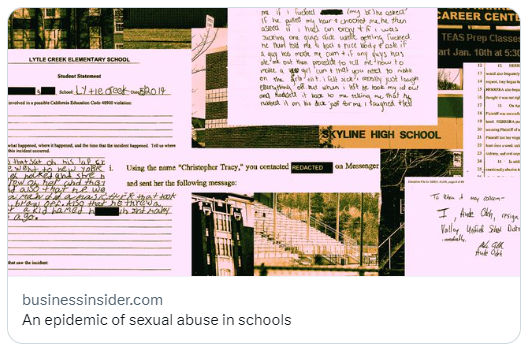
Keeping kids safe is a primary function of schools. So why can’t they keep serial predators away from kids? That’s the central question Business Insider’s Matt Drange tackles in his devastating investigation, An epidemic of sexual abuse in schools.
The answer, Drange finds, is that many states still don’t require schools to disclose relevant employee information or require districts to check.
The indifference to student suffering is unconscionable. I’m hoping that this investigation generates additional coverage and much-needed school system changes.
 THE HOUSING CLIFF
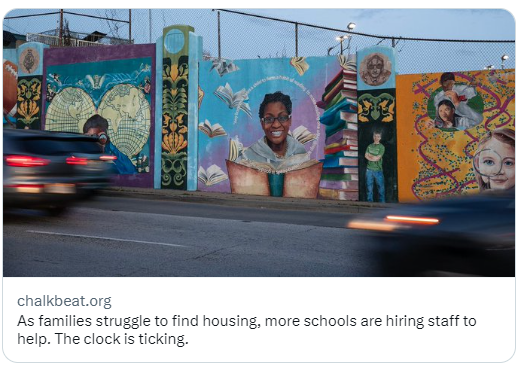
Just when you think you’ve read every possible ESSER funding cliff story under the sun, Chalkbeat’s Kalyn Belsha comes out with a jaw-dropper about schools being allowed to pick up homeless families’ hotel tabs.
An under-appreciated national education journalist, Belsha’s Schools may lose critical strategy to help homeless students tells us something new and important.
It’s a powerful bit of watchdog reporting that includes a strong dose of solutions — a great combination and a good illustration of Belsha’s work.
 A TEMPEST IN A TEAPOT
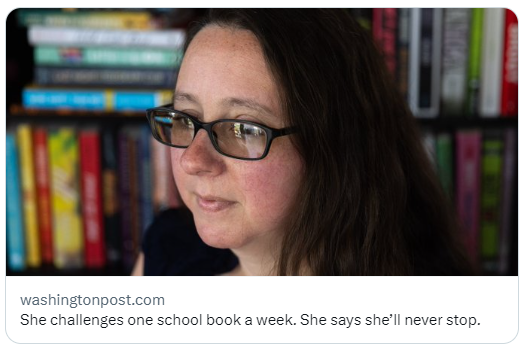
Hannah Natanson’s Washington Post story, She challenges one school book a week. She says she’ll never stop, is one of the best — and most infuriating — pieces of journalism of the year.
In identifying the very small number of people responsible for generating the large majority of book challenges, it represents an impressive feat of journalism.
However, the news that just 11 people generated more than half of the challenges, and the knowledge (only recently reported by the Post) that most challenges are rejected or limited in effect, illustrates just how mis-reported the book ban story has been.
 HOODIES IN THE HEAT
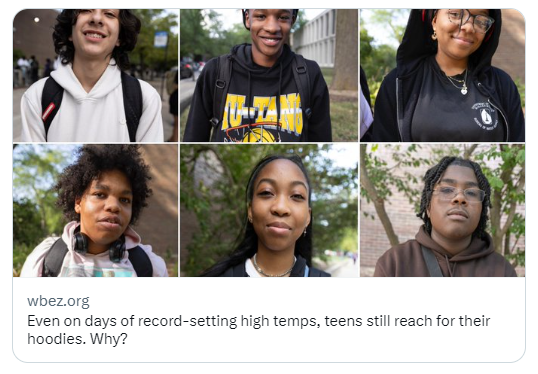
If you want to understand students, one good place to start might be reporting why so many of them wear hoodies year-round, including in the heat of summer.
That’s what former WBEZ Chicago public radio education reporter Nereida Moreno did in her memorable piece Hoodies in the heat, in which students talk about how — among other things — the heavy hooded sweatshirts make them feel hidden and safe.
Now at LAist, Moreno’s education coverage reminds me a bit of former education reporter Linda Lutton, whose most memorable work wove student insights into her schools coverage. With stories like these, readers get a glimpse of what kids are really thinking about as they go about their days.
 HONORABLE MENTIONS
Want more? Here are a few additional memorable education stories from the past 12 months:
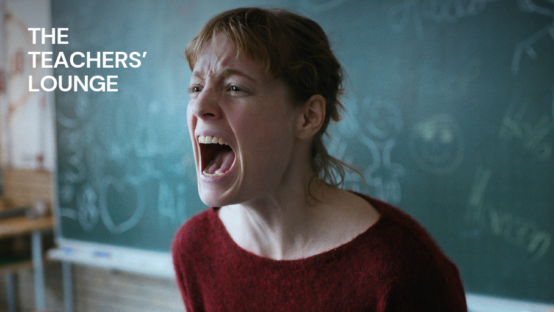
The Rutters of Athens County (New York Magazine), The $1.8-Billion Lawsuit Over a Teacher Test (New Yorker), Grapevine (NBC News), This school tried to keep kids safe. Then graduation ended in gunfire. (Washington Post), How a Texas girl scared of school shootings was punished (Dallas Morning News), Can Community Programs Help Slow the Rise in Violence? (ProPublica), Almost half the students in Fort Worth schools can’t read at grade level (Fort Worth Report), and The Teachers’ Lounge (Sony Pictures).
Previously from The Grade
The 9 most memorable K-12 education stories of 2022 (including Sold a Story)
The 14 most memorable pieces of education journalism of 2020
Previous yearly roundups: 2019, 2018, 2017, 2016
ABOUT THE AUTHOR
Alexander Russo
Alexander Russo is founder and editor of The Grade, an award-winning effort to help improve media coverage of education issues. He’s also a Spencer Education Journalism Fellowship winner and a book author. You can reach him at @alexanderrusso.
Visit their website at: https://the-grade.org/