14 stories that defined K-12 education 2020.
By Alexander Russo
These are the 2020 stories that stand out to me for their reporting, writing, or for identifying a new or crucial narrative. These are the pieces that in the years ahead will come to mind for their excellence or their impact.
Divided into COVID and non-COVID sections, these 14 stories tell the story of K-12 education in 2020. The choices — limited to reported news — are intensely personal, the result of my own preferences and experiences. Your list might be entirely different.
Enjoy!
SHUTDOWN
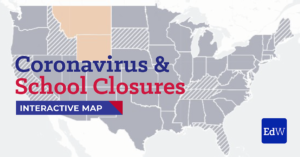
Map: Coronavirus and School Closures in 2019-2020 (Education Week)
Education Week’s school shutdown map was, for many of us, the signature piece of journalism for 2020. Chronicling state and local school shutdown decisions, in as close to real time as possible, the EdWeek map became an essential part of understanding the early stages of the crisis. Everybody used it — educators, journalists, parents.
Bonus: Coronavirus Schools Briefing Newsletter (New York Times).
Inside the day Seattle Public Schools decided to close (Seattle Times)
I’m a sucker for behind-the-scenes reporting, and this Dahlia Bazzaz story was among the most memorable examples of a reporter getting some of the details, decisions, and dynamics that officials were experiencing during an exceedingly difficult time.
Bonus story: New York City Mayor Deliberated for Hours Before Closing Schools (WSJ).
REMOTE
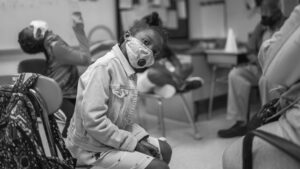
The New York City Schools That Didn’t Close (New Yorker)
In remarkably short order last spring, nearly all the school systems in the nation stopped providing in-person learning. Except, as it turned out, some kids kept going to school — and some educators kept teaching them. Casey Parks’ look at the NYC schools that never closed was deeply human and much needed. The story of these schools, often staffed by hourly staff rather than certified teachers, was woefully undercovered.
Bonus stories: What Parents Can Learn From Child Care Centers That Stayed Open During Lockdowns (NPR); The Silent Suffering of Cafeteria Workers (The Atlantic); For Some Workers, Schools Never Closed (The Nation).
LAUSD coronavirus shutdown worsens student inequities as many students go AWOL (LA Times)
The LA Times’ Howard Blume and Sonali Kohli produced a series of impressive stories like this late March piece that moved the coverage away from the initial depictions of remote learning toward a more careful, skeptical examination of district remote learning efforts. Earlier than most, their reporting revealed problems with participation and engagement that continue to haunt remote learning.
Bonus stories: Online, but off-kilter: A day in the life of a Boston sixth-grader (Boston Globe); How a child learns to read during virtual school (Washington Post).
When it comes to online learning, Mass., Rhode Island take wildly divergent paths (Boston Globe)
Stories that compare similar or adjacent things against each other illustrate the choices that states, districts, and schools make. When the 2020-2021 school year came along, states and districts took a wide variety of paths. The Boston Globe’s Bianca Vázquez Toness and Dan McGowan described the sharp contrasts between two adjacent states with similar infection levels. Other similar pieces compared individual schools and districts.
Bonus stories: Two districts, two very different plans for students (CT Mirror); Remote Learning at 2 Schools, Private and Public (NYT).
DISENGAGED STUDENTS, FEARFUL TEACHERS, POWERFUL UNIONS
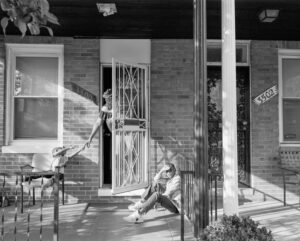
The Students Left Behind by Remote Learning (New Yorker/ProPublica)
Alec MacGillis’ story about millions of disengaged kids like Shemar was for me and many others the best story of the year, not only for its journalism but its impact. It informed many about what was going on behind closed doors. It moved readers. It changed the conversation a bit, highlighting the corrosive effects of the prolonged school shutdown.
Bonus stories: The Children of Quarantine. (New York Magazine); Remote Learning Widens Education Gap. (WSJ).
Online School Demands More of Teachers. Unions Are Pushing Back. (New York Times)
This April piece by Dana Goldstein and Eliza Shapiro focused much-needed attention on the enormous role of teachers unions in shaping how remote learning so often turned out to be inadequate when it came to engaging students and helping them learn new materials and skills.
Bonus stories: A Test Case in Providence: Can Majority-White Teachers Unions Be Anti-Racist? (The 74); Teachers Are Wary of Returning to Class, and Online Instruction Too (NYT).
School districts saw unprecedented drop in enrollment during pandemic (CBS’s “60 Minutes”)
There wasn’t a ton of in-depth news coverage from broadcast outlets during 2020, much less from shows with massive viewership. But this November segment on “60 Minutes” was enormously helpful and eye-opening, as it follows efforts to find and re-engage kids who aren’t logging on or attending school anymore, and the impact on districts that lose kids.
Bonus story: The Case of the Well-Prepared Elementary School (This American Life/Chalkbeat).
REOPENING
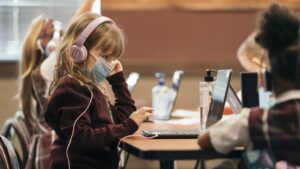
A Texas School Reopens and Everyone Holds Their Breath (WSJ)
Tawnell Hobbs’ early September piece about a College Station (Texas) elementary school was among the first that I saw that took readers inside a reopened school, showing us the challenges and the opportunities of reopening schools.
Bonus stories: A Pennsylvania school district is 10 weeks into in-person classes (Washington Post); Week in the Life of a Baltimore School Getting Back to Class (NYT).
Opening school buildings has not spread the coronavirus, early data shows (Washington Post)
The Post’s Laura Meckler and Valerie Strauss were among the first mainstream national journalists I know of to document the tentative success of reopening schools this fall. In this September story, they unearthed evidence from several different parts of the country that told a very different story than the dominant narrative at the time, which was that reopening was dangerous.
Bonus stories: Florida schools reopened en masse; feared COVID surge hasn’t followed (USA Today); Research Finds Few Links Between Schools And COVID-19 Cases (NPR).
‘Our kids are the sacrifices’: Parents push schools to open (Associated Press)
This early December story from Sara Cline was among the first national pieces to capture the small but vocal parent reopening protests that have been popping up in various parts of the country,
Bonus stories: COVID-19, distance learning and the debate over reopening Oregon’s schools (Oregon Public Radio); ‘State-sanctioned segregation’: California’s school closure debate boils over (Politico CA): For some California teens, school closures led to work in the fields (CALMatters).
SYSTEMIC RACISM & PERVASIVE INEQUALITY
Nice White Parents (New York Times)
This five-part series focused on the powerful but little-understood role that well-meaning white parents play in perpetuating racism and segregation in school systems. It’s been named among the best podcasts of the year by New York and New Yorker and picked up by HBO to turn into a streaming series — which is what happens to super-popular podcasts these days.
Bonus podcast series: Fiasco: The Battle for Boston (Fiasco), The Promise (Nashville Public Radio).
Two Schools in Marin County (WNYC’s United States of Anxiety)
This hour-long podcast episode tells the amazing, awful story of how schools in one of the Bay Area’s most affluent and liberal communities became wildly unequal and segregated.
Bonus episodes: Learning While Black (KALW San Francisco); ‘A Battle for the Souls of Black Girls’ (NYT); In George Floyd’s high school, sports was seen as the ticket out (Washington Post).
The Quiet Rooms (ProPublica IL and the Chicago Tribune)
ProPublica IL’s Jodi Cohen and the Chicago Tribune’s Jennifer Smith Richards began their investigation into the use of seclusion and restraint in 2019, but continued the excellent work this past year. Their relentless coverage of the story has prompted changes in policy and practice.
Bonus story: Two boys with the same disability tried to get help. The rich student got it quickly. The poor student did not (USA Today).
Previously from The Grade:
The 7 most memorable pieces of education journalism for 2019
11 amazing education stories from 2018
Best education journalism of 2017
Best education journalism of 2016
ABOUT THE AUTHOR

Alexander Russo
Alexander Russo is founder and editor of The Grade, an award-winning effort to help improve media coverage of education issues. He’s also a Spencer Education Journalism Fellowship winner and a book author. You can reach him at @alexanderrusso.
Visit their website at: https://the-grade.org/