When employees — no matter their job, position, or role — have the autonomy to make decisions about their daily tasks, they are more likely to be creative, productive, and committed. Employee autonomy is strongly related to job satisfaction and higher retention rates. It encourages and builds creativity, leading employees to solve problems that only they, as the ones closest to their work, can solve.
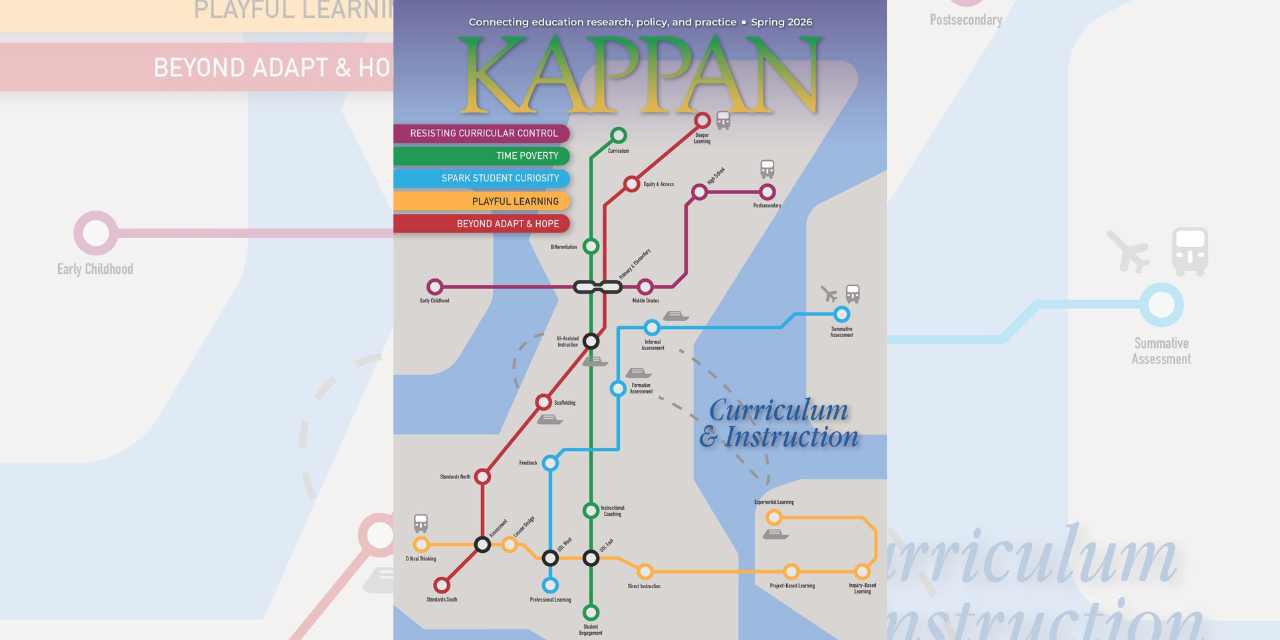
When I started to edit the articles in this issue related to our theme of curriculum and instruction, I wasn’t expecting to think about workplace autonomy. Our lead article, “Educator resistance to curricular control,” by Andrew P. Huddleston, Stephanie Talley, Sara Edgington, and Emily Colwell, changed my mind.
The authors researched instances of teachers quietly or overtly resist prescribed curriculum programs, or what they refer to as principled resistance to curricular control. They note a few instances of outright refusal to teach lessons as required. However, most other examples fall under three categories: strategic compliance, strategic redefinition, and strategic compromise.
Not surprisingly, curriculum that erases teacher autonomy sparks a stronger reaction from teachers. “As the demand for curricular fidelity increases, so do acts of principled resistance,” they write.
Obviously, you can’t talk about curriculum without bringing teachers into the conversation. They are the ones charged with bringing the lessons alive and delivering them to their students – known individuals, not faceless data points.
Curriculum that arises from local conditions, sometimes referred to as place-based learning, requires teacher creativity and the ability to make and show the connections between the local community and the global community.
In “Local stories lead to global understanding,” Sara Pendleton, Lisa Lenarz, and Ariel Beaujot write about a curriculum based on a Wisconsin oral history initiative, Hear, Here.
Hear, Here is a storytelling project in La Crosse. Orange street signs throughout the city display numbers to call to hear two-minute stories about the exact spot in which they stand told by a person who experienced the story.
The project is incorporated into the La Crosse School District curriculum across multiple disciplines. Students can experience how their community fits within a wider historical context and see the diversity of their city in a new way.
The authors write: “The reason Hear, Here has been so successfully integrated into the K-12 curriculum and teaching preservice students is that it is right in our backyards. Place-based learning provides opportunities for learners to build a sense of civic involvement in local histories, stories, culture, and landscapes through engaging in hands-on experiences across curricular subjects.”
Rounding out our curriculum issue, I want to note our special section on the Educators Rising curriculum, part of our career pathway program that introduces high school students to the profession before they enter a teacher preparation program.
Created by educators, it is continually updated with feedback from teachers in the field who are using the curriculum. Its flexibility encourages teacher and student creativity in its implementation.
The recently redesigned Kappan weekly newsletter delivers education insights, thought pieces, and practical applications to your inbox. Participate in our new reader feedback feature that asks you to tell us what you think about current education topics and trends.
Don’t miss out – subscribe at https://pdkiiz.informz.net/PDKIIZ/pages/kappan_subscribe.
This article appears in the Spring 2026 issue of Kappan, Vol. 107, No. 5-6, p 4.

ABOUT THE AUTHOR

Kathleen Vail
Kathleen Vail is editor-in-chief of Kappan magazine.
Visit their website at: https://pdkintl.org/