Adam Harris, a staff writer at the Atlantic, examines the history of discrimination against Black students and the higher education institutions that enroll them in his new book, “The State Must Provide: Why America’s Colleges Have Always Been Unequal – and How to Set Them Right.”
In this interview, The Grade’s Amber C. Walker speaks with Harris about his book, his thoughts on current higher education coverage, and what education journalists can do to improve their coverage of historically black colleges and universities (HBCUs).
This interview has been edited and condensed.
ACW: What inspired you to write this book?
AH: In 2018, I’d written a story for The Chronicle (of Higher Education) that looked at the legacy of underfunding at HBCUs in Mississippi. It was one of the longest-running civil rights cases in American history and sought to figure out what it means to desegregate higher education.
After I finished that piece, there were a couple of things still there. There were still six states that hadn’t proven to the federal government that they desegregated their higher education systems, and some of the states that had, including Mississippi, had very clear issues with equity in their higher ed systems. I started to think about what it would look like at a grander scale to do an interrogation of the state of higher education in America.
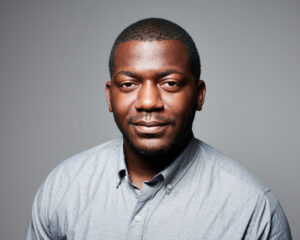
Photo credit: Tim Coburn
ACW: Did your personal experience with HBCUs also inspire you?
AH: I’ve been covering HBCUs for a while and having gone to an HBCU myself I had firsthand experience with some of the inequity. I went to Alabama A&M University and there was a college, literally ten minutes down the road, that had a larger endowment and many fewer black students. The city of Huntsville is about 30 percent black. The other institution, The University of Alabama – Huntsville, was about 10 percent black.
I really wanted to dig in and do some of that interrogation to understand the root and how we got to this point of broad inequity in the higher education system.
ACW: What are some of the challenges higher ed reporters might encounter reporting and writing about HBCUs?
AH: For so long, the only time people went to talk to people from HBCUs, whether that be the president, students, alumni, the board, etcetera was when there were crises and so that inherently made people kind of distrust the media.
One of the things that reporters have to do is rebuild that trust with the institutions and with the sector. Oftentimes, if you’re talking to a student, this is the first time, and maybe the only time, that they’re going to talk to a reporter. So telling them what goes into the process, how the sausage is made, and making that very clear as you’re going into the interview rather than just jumping in. Making the process feel less transactional is of the utmost importance.
Making the process feel less transactional is of the utmost importance.
ACW: Looking back, are there any moments in your own coverage of HBCUs where you wish you’d done something differently or would do differently knowing what you know now?
AH: In some early stories, I think I may have written a bit more about how history influenced financial woes rather than assuming that readers had that base of knowledge. Though you never want to talk down to readers, you also have to understand that your audience may be coming fresh to the subject of historically black colleges. If you’re only writing about the problems they’re facing—or how they’ve overcome those difficulties—without a discussion of how they got to that place to begin with, you’re providing an incomplete story. Space is, understandably, a concern in print, but I believe that history is important enough to carve out room.
History is important enough to carve out room.
ACW: What are some specific reporting strategies you’d suggest to fellow education reporters, most of whom are white children of college-educated parents?
AH: Dig into the archives, make calls, and never assume anything. There’s almost always a historical antecedent for present predicaments. Finding those roots is paramount to getting the story right.
ACW: What are some of the strengths and weaknesses of HBCU coverage that you’ve seen in the media lately and how would you assess the overall coverage of the beat?
AH: Brittany Britto’s series at the Houston Chronicle has been really great, and I really appreciated how Molly Minta dug into the role that politics play in governing boards and how that affects HBCUs.
Danielle Douglas-Gabriel at the Washington Post had a piece that was effectively looking at the current moment of higher education funding from donations to federal money.
I think there has been a shift in understanding that even though some institutions are doing incredibly well, the situation for other institutions is financially precarious. It’s not something that is, of course, only limited to HBCUs. There are other institutions that may well struggle. Typically, institutions with smaller enrollments, those that have endowments of less than $50 million, and institutions that are in rural areas. A lot of HBCUs fall into several of those buckets.
So I think that there has been a shift into “we’re not just going to glamorize the ones that are doing well, but we’re also going to really think about the ways that other institutions are still struggling.” Not solely as a result of their own doing, but also the systemic factors that have played into it.
Though we are in a good moment, we have to continue to do that work of wrapping in the history of why these institutions are in the situation that they are in and putting the context around it. OK, so [a HBCU] got $20 million from Mackenzie Scott. What does that actually mean? Is that going straight to its endowment? Is that going to deferred maintenance? Is that going to eliminating some of the institutional debt that students owe? Since several HBCUs have eliminated institutional debt I think there’s been a mild inflation of what institutional debt and federal loans are. Making those delineations and putting the proper context around things more clearly will give readers a greater understanding of the sector, its promise, and also the places that need help.
ACW: How does the topic of the media and HBCUs come up in the book?
AH: Oftentimes, HBCUs popped up in the news where there’s been bad news — accreditation issues, issues with finances. But recently, that has sort of changed, alongside the national perception of the sector. We are moving beyond the, “Why do we still need HBCUs?” [question]. I think there’s a broad understanding of that, but also kind of an understanding of the legacy and historical underfunding that they have been subject to.
Lately a lot of the coverage has revolved around the large gifts that institutions received in 2020. A lot of institutions received their largest-ever gifts. Whether that was $5 million or $40 million, these were significant, transformational donations to these institutions. But a single injection of funds doesn’t necessarily make up for that legacy of underfunding.
So, one of the things that we are starting to see is a shift in how people are covering this. The idea that yes, while philanthropy is great, it’s not a solution for systemic racism. A one time injection of funds from the federal government is fantastic. The federal government basically tripled the funding that HBCUs receive in a normal year. All of these things are great, but there’s still the question of how to make that sustainable and how to move beyond a onet ime gift to set these institutions up on a path.
You also have to remember one year of philanthropy doesn’t negate years and years and years of unequal philanthropy. So, that context is always necessary when you’re thinking about how the media is covering the sector.
ACW: Can you talk a little bit about the case for covering HBCUs as much as or more than Ivy League schools, community colleges, or other institutions we’ve seen the beat traditionally focus on?
AH: A lot of times people treat HBCUs as sort of a parochial offshoot of higher education rather than an integral part of it. We put so much emphasis on the Ivy League and highly selective institutions, but those are not the institutions that most students attend.
HBCUs are also not the institutions that most students attend. But, if we hope, as members of the media, to give people a greater understanding of colleges and the current situation in higher education, we should be doing more work to cover sectors like HBCUs, other minority-serving institutions, tribal colleges, community colleges, and public regional institutions in rural areas.
The more we work to cover the breadth of higher education, rather than focusing on a single subset of institutions, the better off America will be in terms of understanding the current situation of higher education, and it just allows our coverage to be more robust.
If we hope, as members of the media, to give people a greater understanding of colleges and the current situation in higher education, we should be doing more work to cover sectors like HBCUs, other minority-serving institutions, tribal colleges, community colleges, and public regional institutions in rural areas.
ACW: Nikole Hannah-Jones and Ta-Nehisi Coates are on their way to Howard. How do you think, if at all, these star appointments might be game changers for HBCUs in terms of attracting top student talent or other faculty who might have traditionally gone to predominantly white institutions?
AH: I think that Nikole’s decision to go to Howard and the entire saga with UNC laid bare the current situation in higher education between the power of boards, decision-making on campuses, and the consistent erosion of shared governance in higher ed.
Specifically, [Hannah-Jones] going to Howard shines an additional spotlight on the institutions and what they can do. She is joining one of the preeminent faculties in the country.
One of the things that the HBCU students that I’ve talked to in my reporting all point to is the relationships that they were able to develop with their professors. It’s often not just one professor, but several people on campus who are committed to developing them, not only as a student, but as a person.
When Nikole put out the statement about why she was making that decision, she said she wanted to go somewhere where she was welcome instead of going to an environment where she had to be something other than her full self. It is yet to be seen whether [her decision] has a downstream impact on students or other prominent faculty members going to HBCUs, but what I can say is that it shined a spotlight on the sector and the consistent attention that HBCUs have received over the last several months has really been a boon to the sector.
You can’t start to fix a problem until you understand how deep it runs and the roots of it.
ACW: We have seen all these attacks on critical race theory in both higher ed and K-12 that attempt to erase the historical context of our nation’s history. How do you think our country can begin to fix these inequities when people who are in power are hesitant to even acknowledge that problems exist?
AH: One of the reasons why I wanted to write this book was to lay out the history. Because you can’t start to fix a problem until you understand how deep it runs and the roots of it. With that in mind, at this current moment in history, it’s incredibly important that we do the interrogation of the myth-making of America and really understand the ways that inequality and systemic racism are still with us and the effects that slavery and Jim Crow and segregation have on us today.
I think the most important thing for journalists, for teachers and others in this moment, is to have a commitment to the truth. The important thing is to continue to tell the truth.
Related columns we’ve published about HBCUs:
Reflections on covering a hazing death at a Florida HBCU (by Denise Marie Ordway)
What makes Casey Parks’ New Yorker story so good (about Grambling State)
How student journalists at an HBCU newspaper took on local media — and won
ABOUT THE AUTHOR

Amber C. Walker
In addition to being a consulting editor and columnist for The Grade, Walker is a multimedia journalist and digital content strategist. You can find her @acwalker620 across platforms.