Five myths about the recent surge of school board conflicts — and four ideas for smarter ways of covering them.
By Alexander Russo
Usually sleepy affairs, local school board meetings are getting a lot of media attention lately – including from mainstream outlets like NPR and NBC News as well as from less likely sources like The New Yorker and Saturday Night Live.
But the reasons for the increased attention aren’t hard to grasp. A number of recent school board meetings have included intense conflicts over critical race theory, mask and vaccine mandates, and sexual assault prevention.
Full of yelling, sign-waving, and the occasional arrest, along with scary racial and political undercurrents, school board protests are a no-brainer for editors to assign and easy for reporters to cover: Everyone shows up in one place at the same time, then the yelling begins. The stories write themselves.
However, school board conflicts are extremely hard to cover in a way that’s truly helpful and informative. Too much of the media coverage of the protests that I’ve seen has hyped up the size, importance, and potential danger of the protests – and drowned out too much else that’s going on in schools.
Here are five myths and misperceptions that what I call ‘Squid Game’ school board protest coverage may be creating:
MYTH 1: SCHOOL BOARD CONFLICTS ARE EVERYWHERE
The first and biggest danger is that the enormous amount of coverage creates the impression that school board protests and conflicts are ubiquitous.
In response, I’m told that some districts far away from the protests that have been taking place have already begun “hardening” their board meetings in response to perceived dangers.
But there are roughly 14,000 school boards nationally. And the biggest flareups seem to be taking place at no more than a few dozen locations. Nobody has reliable numbers, but it seems extremely unlikely that these kinds of protests are engulfing the nation.
Many school boards make difficult decisions through compromise. We just rarely hear about them.
MYTH 2: EVERYONE’S PROTESTING THE SAME THINGS
While the temptation may be strong, you shouldn’t lump together all school board protests and controversies.
Sure, there are some common themes and patterns: masks, vaccines, what kids get taught about racism, and LGBTQ issues. But in some places, the protests are focused low literacy levels, lack of quality school options, or sexist dress codes.
“Every parent showing up at a school board meeting in frustration isn’t there to get Ruby Bridges cancelled from the curriculum or to ban books,” tweeted NYC parent advocate Karen Vaites.
MYTH 3: PROTESTERS ARE DERANGED AND DANGEROUS
Perhaps most troubling, much of the media coverage I’ve seen seems to suggest that school board protests are being conducted by deranged and even dangerous individuals, most of whom happen to be conservative.
Some surely may be dangerous. The National School Board Association issued a letter expressing concern about how its members are being treated, and the Department of Justice instructed the FBI to pay closer attention to threats against board members and staff.
But it’s also true that we live in a world in which people seem eager to believe that society – and schools in particular – are dangerous. And media coverage has played an enormous role in creating that perception.
There’s nothing inherently wrong or or dangerous about most school board protests, uncomfortable or upsetting as they may be. Parents should be allowed to demand answers from district officials or express their intense opposition to district policy without having to worry about having the FBI called in.
Just because someone’s angry or expresses views you might not agree with doesn’t make them crazy and dangerous.
It now appears that a the teenage daughter of a parent arrested at the much-covered June school board protest in Loudoun County had recently been sexually assaulted at school.
MYTH 4: WHAT’S BEING PROTESTED IS WHAT’S MOST IMPORTANT
Implicit in media coverage of school board conflicts is that the topic being debated is of central importance to the school district’s ability to execute its core job: to educate children effectively. But that’s not always true.
Mask policies, critical race theory, and gender-neutral bathrooms are obviously very important to some people. But there are other, much more central concerns that better warrant media attention, like persistently poor academic results.
School board protest coverage focused on hot-button political and ideological issues runs the risk of drowning out attention and action on other issues that may be less emotional but more important to students’ educational experiences.
“The debate over whether to teach phonics.. is vastly more consequential than the controversies over history and civics that dominate K-12 discussions,” observes Insider columnist Josh Barro. “But we focus on what fits into the ideological boxes interesting to adults.”
MYTH 5: BOARD PROTESTS ARE UNPRECEDENTED
While the current slew of conflicts is notable, they’re not really unusual or unique.
There’s a long history of school board controversies going back decades. Think sex ed, evolution, racial integration, or Ebonics.
More recently, there have been school board protests over school closures, charter schools, Common Core, and teacher pay.
Just this past year, there were heated protests over whether schools should reopen or stay remote, and whether schools should have armed police officers patrolling the halls.
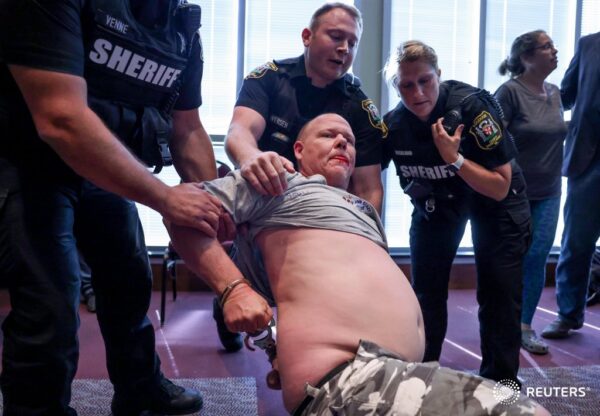
Above: Reuters’ June story, Pandemonium at Virginia school board meeting over Critical Race Theory.
What are some better ways for news outlets to cover school board conflicts? Some ideas from Amanda Ripley, Danielle K. Brown, Jon Stewart, Kathleen McNerney, and others:
PROVIDE HISTORICAL AND NUMERICAL CONTEXT
Rather than stringing together a handful of anecdotes and declaring it a nationwide trend, reporters should give readers much more context about the conflict that’s being described.
What percentage of school boards are experiencing intense conflicts? How does that compare to the recent past? What’s the political or demographic backstory? How have these kinds of conflicts usually resolved?
Adding context will help give readers some much-needed perspective on dramatic events.
GET AT THE UNDERLYING EMOTIONS
The coverage should also make an attempt to get beneath the debate and tell readers what’s going on behind the scenes, emotionally and otherwise.
What are protesters so scared or angry about? What are they hoping to get – or avoid? Author Amanda Ripley calls this the “understory,” and it’s incredibly valuable when media coverage digs down and exposes it for everyone to see. Ditto for reporting that takes readers backstage to reveal political and ideological motivations that lurk behind some school board protests.
“You can’t avoid focusing on actions, but it’s also important to focus on the substance on the protests, the ‘why’ of why people/protesters are there,” said the University of Minnesota’s Danielle K. Brown, who’s researched media coverage of protests. “It’s important to try to find someone who can adequately articulate that ‘why.’”
FOCUS ON EVERYDAY PEOPLE
Equally helpful is coverage that features everyday students, parents, and educators rather than advocates, operatives, and frontline protesters.
Everyday students and teachers may not seek out the microphone or the camera; they probably aren’t even at the board meeting. But their voices and insights will reality-check whatever’s being debated in the board room better than pretty much anything else. Do they think Issue X is important or relevant to them? How will Decision Y affect their experiences?
“Finding the students and families who can’t make it to school board meetings or protests needs to be a top priority for reporters,” notes a recent Nieman essay about education journalism.
At very least, reporters should make sure that protesters are actually parents or members of the community – and find out what their organizational or political affiliations might be.
DE-ESCALATE YOUR LANGUAGE
A strong dose of rhetorical and linguistic calm is also something that school board protest coverage should aspire to.
So much news coverage these days is written to amplify fears and dramatize risks. But amping up readers’ emotions with language isn’t helping, really, in a world in which so many situations are already fraught.
“I think the media does a terrible job at de-escalation,” former Daily Show host Jon Stewart recommended to CNN’s Jake Tapper last weekend, urging media outlets to stop fanning emotional fault lines and start “focusing on things that are more urgent and elemental in people’s lives.”
Your job as a journalist is to inform your readers, not frighten them. Anybody can do that.
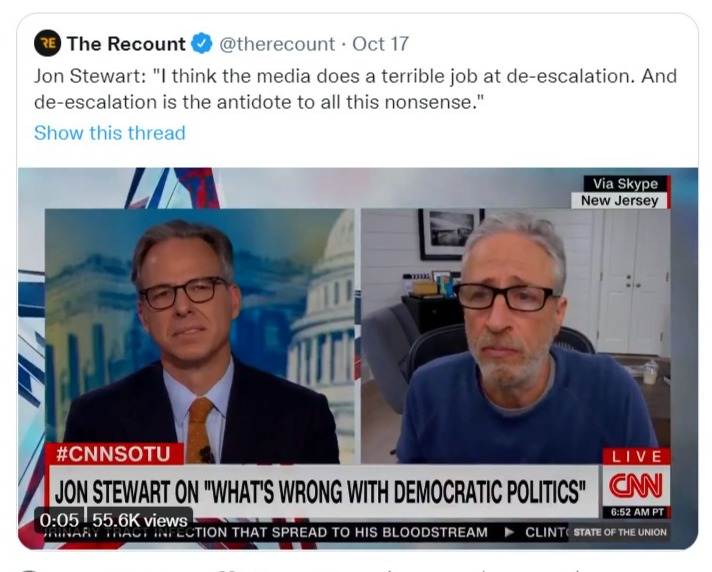
Above: CNN segment featuring Jon Stewart’s comments on media coverage.
There’s a long, long history of school protests and school board showdowns – and an equally long history of misleading and unhelpful media coverage.
The pattern – especially when it comes to intense, racially charged events – is by now familiar: exaggeration, oversimplification, the tendency to frame stories from the perspective of the status quo, and more than occasional carelessness with the facts.
But that’s not what we need. We need calm, skeptical, and context-rich reporting.
Crossed fingers that we get more of it as the school year continues.
Related columns from The Grade
Covering the debate on teaching race in schools
The lamentable rise of ‘conflict’ journalism
Lessons from the media’s coverage of the 1996 Ebonics controversy
New York City 1968 wasn’t a teachers strike; it was a community insurrection.
ABOUT THE AUTHOR

Alexander Russo
Alexander Russo is founder and editor of The Grade, an award-winning effort to help improve media coverage of education issues. He’s also a Spencer Education Journalism Fellowship winner and a book author. You can reach him at @alexanderrusso.
Visit their website at: https://the-grade.org/