Understanding the strengths of Latinx students can improve their educational outcomes.
Latinx students face gross inequities across K-12 and higher education and our larger social system (i.e., health care, housing, political engagement). For example, Latinx students have been underserved due to segregation, poverty, cultural mismatch with teachers, curriculum tracking, and disproportionate disciplinary practices in schools (Oakes, 1995; Orfield et al., 2016; Rios & Galicia, 2013; Trueba, 1999).
These conditions, in part, have contributed to a state of “subtractive schooling” for Latinx students, which has had a detrimental long-term impact on their education and life opportunities (Valenzuela, 1999). Subtractive schooling arises from a long-standing culture in U.S. education that sees and treats Latinx students through a deficit lens (Valencia & Solorzano, 1997). Talking about the chronic underachievement of Latinx students on standardized tests without discussing the lack of equitable opportunities to learn contributes to a deficit narrative. Identifying the struggles of English learners without analyzing the lack of equitable access to highly qualified teachers and suitable curricula creates a deficit narrative. Further, acknowledging families’ challenges to engage with the education system but not addressing the root problem of poverty creates a deficit narrative. These narratives then influence Latinx students’ opportunities to learn in school. They shape the nature of students’ relationships with educators, their exposure to relevant and rigorous curricula, the expectations teachers have of them, and their access to opportunities (Brown & Rodriguez, 2008; Rodriguez, 2012). But there is hope.

The power of asset-based frameworks
Over the decades, many Latinx scholars have countered these deficit narratives by proposing a series of asset-based and pedagogically relevant lenses, frameworks, and concepts to reshape how we perceive and treat Latinx students. For example, recognizing the “funds of knowledge” within Latinx communities allows educators to learn from their Latinx students and families (Moll et al., 1992). The concept of “the third space” recognizes the various literacies that Latinx students bring to the classroom (Gutierrez, 2008). The idea of “pedagogies of the home” validates the various home- and culture-based literacy practices Latinx students bring to school (Delgado-Bernal, 2001). Finally, an understanding of community cultural wealth enables teachers to see the various forms of capital Latinx students bring to school (Yosso, 2005).
I have written about five forms of recognition that are vital to the success of Latinx students in school: relational, curricular, pedagogical, contextual, and transformative recognition (Rodriguez, 2012). I also have written about Latinx excellence from a community-based pedagogical perspective (Rodriguez, 2015) and engaged with colleagues on the role of Latinx students in participatory action research (Ayala et al., 2018). Most recently, I have proposed a framework to recognize the various contributions Latinx people have made in their history, hemisphere, curriculum, communities, and local contexts (Rodriguez & Nevárez, 2021).
Collectively, these efforts attempt to identify, name, validate, promote, and celebrate the strengths, assets, skills, and experiences that Latinx students bring to education. We must center these asset-based frameworks when discussing the hope and promise of education for Latinx students in the U.S.
Dora the Explorer to the rescue
In my academic work, I have used popular culture, especially culturally relevant examples, to bring education concepts to life. As I’ve tried to think of ways to bring together these various frameworks to help educators better capitalize on the assets, skills, and strengths that Latinx students bring to the classroom, Dora the Explorer has come to the rescue. I discovered Dora through my children, who were dedicated fans of the cartoon show. As I watched the episodes alongside my children, I appreciated the access they had to an entertaining and culturally relevant cartoon and character.
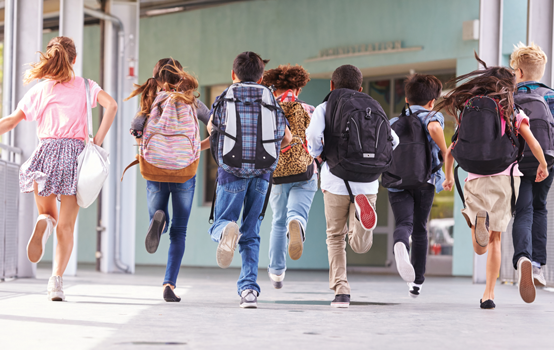
As I was preparing for a presentation to Latinx students about the promise of education in their lives, I came across a silhouette of a student with a backpack and began incorporating the image in my presentations. I would point to the backpack as I shared my story about my family; the schools and universities I have attended; the support of my mentors; and other key moments, setbacks, and opportunities that shaped my educational journey (Rodriguez, 2018). I explained that my backpack was filled with a collection of assets, tools, experiences, and strengths that supported me. Students could relate to this image because many of them filled their backpack each fall with new school supplies to get them through their education journey.
Over the decades, many Latinx scholars have countered these deficit narratives by proposing a series of asset-based and pedagogically relevant lenses, frameworks, and concepts to reshape how we perceive and treat Latinx students.
Similarly, Dora the Explorer has a backpack full of tools. She frequently saves the day by pulling out a ladder, rope, life jacket, pair of scissors, book, or umbrella from her mochila (the Spanish word for backpack). For Latinx students, the mochila is an apt metaphor for all the strengths and gifts they bring to the classroom. This metaphor can transform how Latinx students see themselves, and it can inform how educators can better respond to and serve them in the classroom.
Unpacking students’ mochilas of excellence
It is vital that we recognize all that Latinx students bring in their mochilas beyond school supplies. They bring their history, family, community, culture, and language. They bring their ancestors. They bring the lessons learned from the educación they have acquired at home. They bring their parents’ sacrifice, hard work, and ganas (tenacity). They bring their resilience. They bring knowledge and experiences acquired from observing, doing, and learning from their parents, family members, and cultural practices (Moll et al., 1992). They bring the ability to share and create literacies in the third space that is our classroom (Gutierrez, 2008). They bring their cultural dichos (sayings), consejos (advice), and cuentos (stories) that make up their pedagogies of the home (Delgado Bernal, 2001). In their mochilas, Latinx students carry their various forms of community cultural wealth, like their language (Yosso, 2005) and their familial, community, and hemispheric legacy of excellence (Rodriguez & Nevárez, 2021).
In my presentations for Latinx students of all ages, grades, and institution levels, I not only expose them to asset-based frameworks, but I also encourage them to use their mochilas of excellence in their everyday schooling experiences. When they are sitting in class, their abuelos (grandparents) are sitting with them. When they are studying for an exam, their neighbors and friends who may not have had the opportunity are studying with them. When they are juggling multiple responsibilities by working, caring for family, and studying, they are extending the legacy of their parents’ hard work and sacrifice to the next generation of Latinx students.
It is also vital to recognize the pedagogical implications of mochilas of excellence for the classroom. A lingering approach to teaching and learning suggests that students should leave their historical, cultural, home, and community identities at the classroom door. Once the student enters the classroom, some believe that their personal, economic, or historical realities become irrelevant, especially in such topics as math or science. However, I believe that the aspects of the students’ identities that they carry in their mochilas must be welcomed into the classroom. When students are recognized, affirmed, and validated in this way, the learning space, and the people within it, have opportunities to be transformed.
To recognize Latinx students’ mochilas of excellence, educators must be aware of the history of Latinx education in the U.S. They must understand the deficit mindsets that have dominated education theory, policy, practice, and pedagogy for decades. They must also know about the asset-based frameworks that can help transform how educators see and treat Latinx students. Educators, leaders, policy makers, and teacher development professionals must also embrace the power of story as a tool to identify and affirm the assets students bring to the classroom in their mochilas of excellence.
If we are bold enough to recognize and validate the many gifts students carry in their mochilas, we can realize the promise of our education systems, especially as we continue to recover from the global pandemic. We can appreciate that students’ mochilas are filled with knowledge, tools, and experiences that can enable them to not only persist and thrive in education, but also to help solve the problems of the world, just like Dora does.
References
Ayala, J., Cammarota, J., Berta-Avila, M., Rivera, M., Rodriguez, L.F., Torre, M. (2018). PAR entremundos: A pedagogy of the Americas. Peter Lang Publishing.
Brown, T.M. & Rodríguez, L.F. (2008). School and the co-construction of dropout. International Journal for Qualitative Studies in Education, 22 (2), 221-242.
Delgado Bernal, D. (2001) Learning and living pedagogies of the home: The mestiza consciousness of Chicana students. International Journal of Qualitative Studies in Education, 14 (5), 623-639.
Gutierrez, K.D. (2008). Developing a sociocritical literacy in the third space. Reading Research Quarterly, 43 (2), 148-164.
Moll, L.C., Amanti, C., Neff, D., & Gonzalez, N. (1992). Funds of knowledge for teaching: Using a qualitative approach to connect homes and classrooms. Theory Into Practice, 31 (2), 132-141.
Oakes, J. (1995). Two cities’ tracking and within-school segregation. Teachers College Record, 96 (4), 681-690.
Orfield, G., Ee, J., Frankenberg, E., & Siegel-Hawley, G. (2016). Brown at 62: School segregation by race, poverty, and state. Civil Rights Project/Proyetco Derechos Civiles, University of California, Los Angeles.
Rios, V.M. & Galicia, M. (2013). Smoking guns or smoke and mirrors? Schools and the policing of Latino boys. The Association of Mexican American Educators Journal, 7 (3), 54-66.
Rodriguez, G.M. (2013). Power and agency in education: Exploring the pedagogical dimensions of funds of knowledge. Review of Research in Education, 37 (1), 87-120.
Rodriguez, L.F. (2012). “Everybody grieves, but still nobody sees”: Toward a praxis of recognition for Latina/o students in U.S. schools. Teachers College Record, 114 (1), 1-31.
Rodriguez, L.F. (2015). Intentional excellence: The pedagogy, power, and politics of excellence in Latina/o schools and communities. Peter Lang Publishing.
Rodriguez, L.F. (2018). The educational journeys of students of color across the educational pipeline: A pedagogy of storytelling or a struggle for freedom? Diaspora, Indigenous, and Minority Education, 12 (4), 214-229.
Rodriguez, L.F. & Nevárez, A. (2021). Reclaiming our excellence. In J. Cammarota (Ed.), Liberatory practices for learning (pp. 111-138). Springer.
Trueba, E.T. (1999). Latinos unidos: From cultural diversity to the politics of solidarity. Rowman & Littlefield.
Valencia, R.R. & Solórzano, D.G. (1997). Contemporary deficit thinking. In R.R. Valencia (Ed.), The evolution of deficit thinking: Educational thought and practice (pp. 160-210). RoutledgeFalmer.
Yosso, T.J. (2005). Whose culture has capital? A critical race theory discussion of community cultural wealth. Race Ethnicity and Education, 8 (1), 69-91.
This article appears in the March 2023 issue of Kappan, Vol. 104, No. 6, pp. 50-53.

ABOUT THE AUTHOR

Louie F. Rodriguez
Louie F. Rodriguez is a professor and Bank of America Endowed Chair in Education Leadership, Policy, and Practice in the School of Education at the University of California, Riverside.