Reflections from a former Wall Street Journal education reporter on integration, diversity, school discipline, and trans-racial journalism.
By Alexander Russo
Lee Hawkins may or may not be a familiar name to you, but he should be.
A longtime journalist, he covered business for many years, then switched to New York City schools for his last two years at the Wall Street Journal.
Curious about his experience switching to education and what would happen next, I was glad when he resurfaced recently with “What Happened in Alabama?,” a new 10-part podcast in partnership with APM Studios about his family and the long legacy of racism in America.
A Black student who attended predominantly white schools in the Midwest, Hawkins is particularly interested in the issues of corporal punishment — which remains legal in many states — and disproportionate discipline against Black and brown students.
Despite the recent surge in attention, he calls for more coverage of inequalities in schools, which so often result in students of color being disciplined, suspended, or beaten.
“Some media organizations simply don’t care because their readers can’t relate to the experience,” says Hawkins. But it’s not just editors, he says. “Some of these realities touch people in so tender a place that they almost don’t want to report on it.”
Some of these realities touch people in so tender a place that they almost don’t want to report on it.
Conducted by phone and email, this interview has been edited and condensed.
What led you to make the switch from business coverage to schools and equity?
Lee Hawkins: In 2018, I had the honor of winning USC Annenberg Center for Health Journalism’s National Fellowship from the center’s Fund for Reporting on Child Well-being. I met some of the nation’s leading experts on the long-term effects of Adverse Childhood Experiences and its impact on shortened life expectancy. I had just gotten the book deal for “I Am Nobody’s Slave” for HarperCollins, and I began to recognize that the health of my father and so many family members who lived through Jim Crow had been impacted by racism-related childhood trauma. Switching beats enabled me to build expertise for what I’m doing now and pay some rent on the planet.
What was your experience like covering schools after having covered other beats for so long?
LH: The greater New York and education teams were filled with wildly talented journalists. The biggest challenge was that the pandemic broke out right when I switched beats. I was able to write about the intersectional issues that affected so many students — especially those of color. And then the George Floyd tragedy positioned me to do work on everyone from the Little Rock Nine to the mothers of Eric Garner and Amadou Diallo. I was also on the WSJ team that did the series on the Tulsa Massacre of 1921, which was a Pulitzer finalist. And my piece about how the Jesuits used slavery-based revenue to found Georgetown and dozens of other colleges, universities, and K-12 schools was a finalist for the NABJ “Salute to Excellence” Award. I was grateful to be nominated for these by WSJ, even after I left.
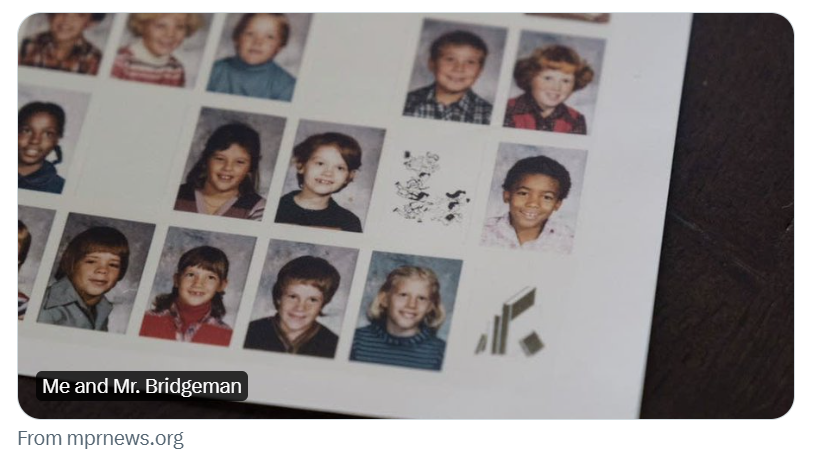
Above: Hawkins’ story about his first and only Black teacher growing up, Mr. Bridgeman.
Where do schools and education come up in your new podcast, “What Happened in Alabama?” Is education a big part, a little part or, or a mixed part of the story you’re telling?
LH: I think it’s a big part. Though it’s not an education podcast, it does get into the autobiographical experience of me for me growing up as a Black kid in Minnesota, where I attended a predominantly white school, K-12. My family did also spend a great deal of time in Minnesota’s Black community, but at school I never had a Black teacher except for one substitute teacher that I had for one day. His name was Mr. Bridgeman and I recently reached out to him and did a package on him for Minnesota Public Radio.
But “What Happened in Alabama?” is a podcast about my 400 years of family history, tracing the intergenerational effects of enslavement and Jim Crow apartheid on one Black American family. And what I was trying to do was to understand some of the things that my father was very skittish talking about related to his experience growing up in Jim Crow Alabama. When I was a kid, sometimes he used to have nightmares. And my dad was my idol. He was a tall, strong man. He was athletic. He was full of life. But that was a very scary experience for me because I didn’t think my dad was afraid of anything. So I figured as a kid, if he was that afraid of Alabama, then it must have been a harrowing experience.
One of the questions that I always had in my life was why, when I’m disciplined, is the belt used? The belt was used a lot in my childhood as a Black kid, and not just mine, a lot of my friends. Pretty much every kid around me who was willing to talk about it was telling me that they got the belt at home. And when I saw the movie “Roots,” I saw that very intense whipping scene. I’ll never forget that scene. Because at that moment, I made the connection, I said, “This belt thing has something to do with slavery.”
I didn’t dare ask about it at the time. But when I started talking to my dad, what I found was that he was not disciplined with a belt anywhere near as much as he disciplined me with a belt. But he got a lot of experience with it in school.
He got a lot of experience with [the belt] in school.
Can you tell us more about the connection between how Black kids are disciplined at schools and at home?
LH: Corporal punishment in schools was big in the Jim Crow era. And what I found in my research is that it continues to be legal in 17 states, and Black kids are hit at disproportionately higher rate.
I was just at an event a few weeks ago, talking to a high school principal, a white woman who I think was a very well-meaning educator and a very well-trained educator. She was talking about Black American students who were experiencing behavioral trouble and she was talking about how concerned and stressed the children will become when educators would say, “We’re going to call your parents.” Because it was fundamentally clear in those moments that those children were going to be hit.
You still see Black children beaten at disproportionately higher levels in schools in the former slavery states. It’s baked into the American culture. Researcher Geoff Ward has found that the amount of paddling happening in these former slavery states is highest in the counties where lynching was the most prevalent.
So the economic, social, political injustice over generations have led many Black parents to feel that they need to use corporal punishment and allow schools to use corporal punishment against their children to keep them out of trouble and safe. And in our podcast, you’ll learn about the origins of those beliefs and how I was able to uncover exactly where the whip and the belt came from in my family’s own American experience. And the revelation is devastating.
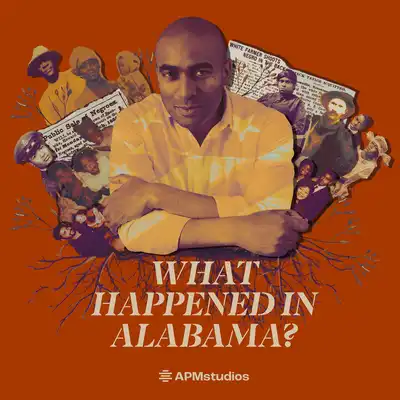
Above: Hawkins’ new podcast, “What Happened in Alabama?“
Does corporal punishment in schools get the media attention that it deserves?
LH: I think that one of the things about corporal punishment in schools is that it’s done in a very sly way. It’s hard to get the data, and it’s hard to get the administrators to speak on the record about this. Every so often, you’ll see a video of a parent coming to school to beat a child in the classroom or in the cafeteria and sometimes you wonder, “Well, how did the parent get in to be allowed to do this?” But this is all kept under wraps. It’s one of the biggest stories in education that’s not being reported — possibly because it mainly impacts Black kids.
Researching your book, did you find lots of education journalism that you admired or did you find the opposite?
LH: The research for my book was mostly related to enslavement, Jim Crow, and integration, so I would say there are some extremely amazing writers and academics producing work around those subjects.
But I didn’t find as much as I’d hoped in the education arena. There hasn’t been a lot of reporting that really looks at the truth and extent of racial inequality and bias in schools. And what I mean by that is not just the disproportionately higher severe punishment that that students of color receive, but also the disparities in, you know, the historical underpinnings that have fueled the opportunity gap, and the amount of harassment and hate speech students of color are targeted with in majority white schools, with few policies in place to protect them.
How often do students of color end up being disciplined or suspended in the process of physically defending themselves against this kind of hate speech and harassment? Very often.
I feel like the best attribute of any education reporter needs to be empathy — that ability to step outside your own experience into a completely new world. When I was covering NYC public schools, there were students who lived in homeless shelters — a lot of them. They did not have a wireless connection in the shelters. Some of them were top students, and they were suffering anxiety because they wanted to keep their grades up, but they had to try and do so while on a waiting list for a free iPad, wondering all along if the signal would be good enough on a night they’re needing to prepare for an exam.
Some of these realities touch people in so tender a place that they almost don’t want to report on it. Some media organizations simply don’t care because their readers can’t relate to the experience and, therefore, it often isn’t a priority of their editors or their newsroom.
I feel like the best attribute of any education reporter needs to be empathy.
What about your own personal history? Where does it come into your work?
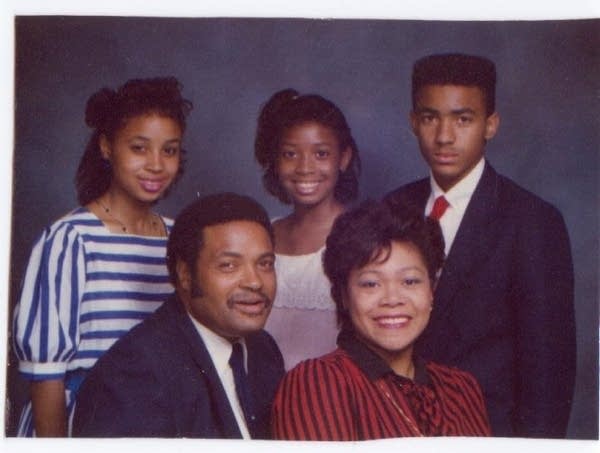
LH: I call myself part of the integration generation, a term I coined because we were the first students to integrate schools and neighborhoods after the Civil Rights Act was passed. We’ve always had to be able to move across society and into different places, spaces, where we might be the only person of color.
But when you put a white kid in a position where they haven’t had that experience, it’s literally cruel. Because giving white students the opportunity to understand other cultures is going to help them when they walk into that college classroom and they have a professor from Nigeria or, you know, a professor or classmate to come from the Bronx or come from different parts of the country.
When you learn about my experience and my sister’s experience, and we go back and we interview kids with whom we grew up in Maplewood, Minnesota — Black kids who are now adults — you’ll start to get inside the complexities and the nuances of the personal experiences that people are having, particularly people of color.
Given that 80% of education reporters are white (and few seem to have grown up in poverty), do you think we need to have more racial and economic diversity on the beat?
LH: You know what, someone asked me this question a few weeks ago, they said, “Do you think the answer is that we have to have more diversity in newsrooms because the journalists of color are the only ones who really understand these kinds of complexities and nuances around race?” And I said, “No, not at all.”
Of course, I value diversity in newsrooms, but I don’t think it’s prudent to expect journalists of color to be the only people who are qualified to do stories that involve people of color. It should be a fundamental responsibility of every reporter to be able to cover a wide range of communities in the same way that reporters of color are expected to.
I never had the luxury to go in and say, “Well, I can’t cover the General Motors shareholders meeting or the strike down at the rural union hall because everybody there was white.” I wouldn’t have been allowed to do that. And so the same thing applies. That’s part of our responsibility as journalists, and I think it’s racist to imply that journalists of color are the only people who should cover and know about diverse communities. Yes, we are uniquely qualified, but considering the swift demographic change that’s happening across America, can you really be an education reporter if you’re not comfortable moving across the margins of society with ease?
I’m not saying you’re racist for asking that question — it’s an important one — but people can’t just throw their hands up and say, “I’m white. I’m not even going to try to write or edit stories that deal with people who don’t look like me.”
When I look at some of the really great work that’s been done on slavery and Jim Crow, for example, some of the most powerful books were not always written by Black people. I think we have to be encouraged by that fact. It’s not as much about color as we emphasize. It’s about respect, empathy, and wanting to cover America consistent with her true demographic makeup.
It should be a fundamental responsibility of every reporter to be able to cover a wide range of communities in the same way that reporters of color are expected to.
If you had a takeaway message from your experience and your new podcast, what’s the main thing that education editors and reporters need to understand and maybe change about the way they approach their work?
LH: I think the most important reality for us all to understand is that equality is a new concept in America. For all but 60 years of her existence, white supremacy has been the law of the land. That’s not a political statement; that’s just a fact. Jim Crow apartheid ended only 60 years ago. And that’s why we’re seeing books about history feared and banned, why we’re seeing Black and Latino students being beaten at disproportionately higher rates, despite no difference in behavior, and all kinds of other severe school punishments, such as excessive suspension, adultification of children and teenagers, and other kinds of racial bias in the classroom.
America made it illegal to discriminate against people of color only a moment ago. So this new concept of racial equality has been very hard for nearly every sector of American institutions — banks, schools, hospitals, insurance companies, churches, and so much more — to even accept. And when leaders are not comfortable with equality, that’s when they make policies that forbid educators from teaching about slavery and Jim Crow, for example, on the basis that it will make white students “feel guilty.”
When you think about it, it’s almost comical — I mean in the thin line between comedy and tragedy sense — that some state governments have basically forbidden lessons about the history of white supremacy in order to coddle white students. I can’t think of anything that would be more white supremacist. I mean, that’s real power. We don’t like the lesson, so we’re going to shut it down.
But when a country only evolved out of apartheid and a caste system 60 years ago, this is going to happen. And I think it’s important for every education reporter to be cognizant of how deeply ingrained racial inequality has been, so that every article they write is rooted in an understanding and an acknowledgement of that undeniable history.
Previously from The Grade
Why’s there so little coverage of everyday teacher racism?
Fear, complicity, and guilt get in the way of covering school segregation
White media barely noticed when 100,000 Black educators were displaced
What it’s like being a rookie education reporter
Boosting the impact of New York City schools coverage