
Q: “My preservice teacher program didn’t adequately prepare me for the classroom. How can we improve teacher pathways to ensure students are ready for teaching?”
A: There was nothing that could have adequately prepared me for the classroom. I thought my time as a student would give me a clear sense of what to expect, or that attending a well-respected local education program would. I was mistaken. I came into the program wide-eyed and optimistic, only to be confronted with the reality of how insufficient my preparation was. I felt so out of place at the time, I questioned my decision to become a teacher. Fortunately, my desire to be great and my commitment to connect with my students made me determined not to give up — even when I was certain that it would be a viable path.
Preservice programs carry an impossible burden in the public imagination. We believe a few semesters of coursework, a short practicum, and a student teaching stint fully prepares a novice to lead a classroom. When that doesn’t happen (and it often doesn’t), the consequences show up immediately — for new teachers who feel blindsided, for mentor teachers who scramble to support them, and for students who deserve skilled, steady instruction from day one.
If you’re an institution asking, “How do we improve teacher pathways so candidates are truly ready to teach?” there is no one solution. It’s a pathway redesign problem—one that requires earlier recruitment, stronger clinical preparation, tighter alignment with districts, and better on-ramps for career-changers. Here are concrete moves institutions can make now.
Redefine “Classroom-Ready” as a Competency Set (Not a Credit Count)
Many programs still define readiness through seat time: courses completed, hours logged, boxes checked. But readiness is performance. Institutions should articulate a clear set of competencies that candidates must demonstrate, then design the pathway backward from those outcomes, just as we are expected to do for the students we teach.
Competencies should include high-leverage instructional practices (e.g., modeling, checking for understanding, feedback), classroom culture (routines, relationships, restorative practices), planning (standards or competency alignment, task design), assessment literacy (formative assessment, grading practices), and inclusive instruction (UDL, special education collaboration, multilingual learner scaffolds). Build this into a progression with “look-fors” at each stage and require candidates to demonstrate growth over time — ideally through artifacts, video, and coached reflection rather than a single high-stakes observation. We must do better than just ask preservice teachers to read about these things. They must practice them and receive regular feedback to develop these practices across a variety of environments.
Start Earlier: Build CTE Teacher Pathways with Educators Rising
One of the most powerful solutions is also the most overlooked: start developing teachers before they become college students. High school-based teacher preparation is not a novelty—it’s a strategic pipeline solution. As a Career and Technical Education (CTE) pathway, Educators Rising offers a structured, evidence-informed approach to helping students explore careers in education, practice foundational skills, and build professional identity early. The students I work with in Massachusetts are already proving to be amazing educators and leaders, and they haven’t even graduated from high school yet. Through classroom or chapter participation, they explore topics and skills that provide the experience needed to make informed decisions about a career in education while building a network of support. It has truly been an honor working with the teachers and students in Massachusetts.
When the pathway begins as early as middle school — supported by CTE funding structures — “readiness” becomes a long-term development plan rather than a last-minute scramble.
Make Clinical Practice the Spine, Not the Side Quest
During my preparation classes, the coursework did not align with what was happening in my classroom. Often, the theory I was taught felt superfluous, and although some of it was necessary, I would have appreciated practical experience, especially since I took an alternative route to get my license. Institutions can address this by making clinical practice the core of preparation, with coursework integrated around what candidates do with real students each week. That requires:
- Longer, earlier, and more coherent placements (not a new site every semester with unrelated expectations).
- Carefully selected mentor teachers trained in coaching (not just “experienced” teachers). This is critical because the wrong mentor can completely sour the experience.
- Structured cycles: plan → teach → collect evidence → reflect → reteach.
One practical improvement is a “teaching lab” approach: Candidates practice a high-leverage move (such as facilitating discussion or giving feedback), video-record it, analyze student responses, and try again the following week. Repetition with feedback is how skills develop — and too few programs build enough repetition into their design. In the years since I started my career, I have worked with and participated in many changing programs. Having the opportunity to speak with preservice teachers and offer them real-world advice that they could only hear from a person in the field. Additionally, many programs are doing a much better job of getting students into classrooms in their first year, so that if they decide the profession isn’t for them, they aren’t wasting precious time.
Align Coursework to the First-Year Reality (Especially Classroom Management and Assessment)
New teachers rarely say, “I wish I had more theory.” They say, “I didn’t know how to run a classroom,” or “I didn’t understand grading, and I’m drowning.” And boy, is it frustrating when you haven’t built your toolkit yet.
Institutions can address this without lowering rigor:
- Teach classroom management as culture-building: routines, relationship practices, de-escalation, and predictable structures — not just rules and consequences.
- Teach assessment as decision-making: how to use formative checks, how to provide actionable feedback efficiently, and how grading policies affect motivation and equity.
- Include common first-year constraints: pacing guides, mandated curricula, IEP meetings, family communication, and workload management.
- Get guest speakers from the field: Folks who can speak to the challenges and rewards of being in the classroom, where frank questions can be asked and answered through an outside lens from the coursework.
Then require candidates to demonstrate these skills in supervised practice—not just discuss them.
Use Digital Portfolios to Evaluate Readiness Over Time
If the goal is “classroom-ready,” you need a better assessment system than transcripts. Require candidates to maintain a digital portfolio demonstrating growth across program competencies, including lesson artifacts, student work analysis, short video clips, and reflective commentary tied to evidence.
This does two things: it creates a more accurate picture of readiness, and it models the kind of reflective practice you want candidates to continue as educators. It also supports more equitable evaluation—reducing reliance on a single evaluator, a single lesson, or a single moment. It models how these new teachers can use a portfolio as an authentic assessment modality with their own students.
Design Alternative Route Pathways That Are Rigorous, Supported, and Humane
Career-changers bring valuable expertise — workplace experience, maturity, content knowledge — but they often need intensive support to translate that experience into effective instruction. Too many alternative routes either overload candidates with full teaching assignments too soon or water down preparation to “survive the year.”
Institutions can lead to better models by:
- Offering a structured preservice “on-ramp” (summer institute + coached practicum) before candidates become teachers of record.
- Pairing candidates with trained mentors and providing scheduled coaching cycles (not “call me if you need me”). I work as a mentor in my local school district, and I make it a point to get into classrooms, offer feedback on materials, and, having built a relationship with my mentees, I’m a safe place for them to discuss their challenges. This also allows me to advocate for them with the folks who run the program.
- Creating residency-style models where career-changers co-teach or teach a reduced load while completing coursework.
- Building explicit preparation for special education collaboration, multilingual learner supports, and culturally responsive practice — areas that career-changers may not have encountered.
The aim is not to make alternative route teachers identical to traditional candidates. The aim is to make them professionally ready, with the support structures that prevent burnout and protect student learning. Make sure to check in with your state, specifically, as there may be a local program that can help.
If preservice programs didn’t adequately prepare many graduates, the solution is not simply “add another course.” It’s redesigning the pathway, so candidates develop competencies through coherent practice over time, starting earlier, and ensuring both traditional and alternative routes are rigorous, supportive, and aligned to classroom realities.
Institutions have enormous leverage here. When you build pathways that are developmental, evidence-based, and partnership-driven, you don’t just prepare teachers — you protect students’ learning by ensuring that every new educator enters the classroom with the skills, support, and a realistic chance to thrive.
If you have an issue that you would like me to address, please email me at ssackstein@educatorsrising.org or complete this form. You will be kept anonymous.
ABOUT THE AUTHOR
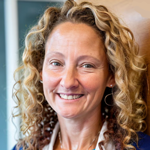
Starr Sackstein
Starr Sackstein is the Massachusetts state coordinator for PDK’s Educators Rising program, COO of Mastery Portfolio, an education consultant, instructional coach, and author. She was a high school English and journalism teacher and school district curriculum leader. She is the author of more than 15 educational books, including Hacking Assessment (Times 10, 2015), Making an Impact Outside of the Classroom (Routledge, 2024), and Actionable Assessment (Routledge, 2026).
Visit their website at: https://www.mssackstein.com/