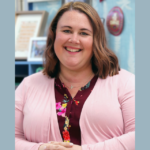
Misplaced concerns about English learners and the science of reading are slowing progress, says former Stanford professor Claude Goldenberg. Vigilant journalism is the key to addressing the confusion.
By Alexander Russo
While it might seem like the literacy reform movement has become something of a juggernaut, that’s not entirely the case.
Several states — California and Massachusetts among them — have not yet revamped their literacy programs. Several districts — New York City among them — have struggled to implement reforms.
One emerging factor in California and elsewhere has been concern about the usefulness of the science of reading (SoR) approach for EL kids. Concerns about EL kids were cited as one of the reasons for the failure to pass a recent bill.
However, these concerns and the qualifications of those who raise them warrant serious examination by journalists, according to at least one expert, Stanford University professor emeritus Claude Goldenberg.
Goldenberg recently aired some of his concerns in an EdSource op-ed, To improve how California students read, we must get past confusion and misinformation, citing the spread of “mischaracterizations and outright fictions” by unqualified critics.
Not one to let either side off the hook, Goldenberg also pointed out “unwarranted” claims and “unhelpful” definitions by SoR advocates.
With more than a million newly arrived immigrant kids in American schools over the past three years, educators and policymakers desperately need high-quality coverage.
And yet somehow, according to Goldenberg, many EL advocates have become convinced that literacy reform based on the best research we have will hurt rather than help — and media coverage has been complicit.
Many EL advocates have become convinced that literacy reform based on the best research we have will hurt rather than help — and media coverage has been complicit.
The latest in our long-running series on media coverage of English learners and immigrant kids, this interview was conducted via phone and email and has been edited.
What’s your overall take on media coverage of literacy issues?
CG: I would say that overall the media try to do a reasonably decent job covering literacy issues, superficial as the coverage often might seem.
Of course, reporters have their biases and assumptions, as they — and we all — do in any controversial domain… climate, politics, homelessness, etc. And academics, of course, complain that the coverage is superficial — or worse.
For example, the worn-out dichotomy between “phonics” vs. “whole language” — more recently “balanced literacy” — has way outlived its usefulness, but it remains the template for much of the reporting.
There’s widespread agreement that lots of things are necessary in literacy instruction; it’s not an either/or proposition.
The tough questions are about how much of what (foundational skills, knowledge, vocabulary, comprehension, etc.) and when and how to incorporate them into a comprehensive literacy program.
Are there issues or aspects that news outlets consistently miss or get wrong when it comes to coverage of English learners and literacy?
CG: There are two areas where I find clear fault in the coverage.
One is there is very little digging into what the qualifications are of people engaged in these discussions that influence people who don’t have the ability to cut through the noise. Individuals who have literally done and published ZERO research and seem not even to have read all the relevant research are ascribed as much credibility as individuals who have track records of research promoting increased understanding of how to promote literacy development in any language.
This is particularly true in California, where politically powerful groups, who have little to no research credibility, have recently killed a piece of reading legislation. It was flawed, to be sure, but at least a decent start. See here, for example, and here (see “Debunking Science of Reading Neuroscience Claims with Dr. Steven Strauss, MD & PhD”), for a webinar sponsored by one of these groups (the California Association of Bilingual Education), featuring someone who literally has no credibility, in spite of his MD in neurology and PhD in Linguistics. I have urged journalists at publications where I have written or been quoted to look into this scandalous situation, but so far, no uptake.
The other area where I find fault is in covering EL issues. There is virtually none in the mainstream press, except perhaps as a throwaway reference.
It’s at least somewhat better in the education press, for example Education Week and EdSource in California, where, as you know, this is a very big issue.
There is very little digging into what the qualifications are of people engaged in these discussions.
What do advocates for ELs who are critics of the science of reading have to say — and what’s wrong with their assertions?
CG: There’s a lot, but the most insidious and damaging is that the “science of reading” not only doesn’t apply to ELs, but that it’s damaging to ELs.
What’s wrong is that they have a tendentiously narrow view of what we know from reading research (a term I much prefer to “science of reading” since “science of reading” has become a lightning rod that stops thinking dead, and people just line up on whatever side they belong to or identify with).
These EL advocates/SoR critics fail to understand the voluminous research we have. I wonder if they’ve even read, much less fully comprehended, it. This knowledge base applies to languages worldwide, whether they are first languages or additional ones. Skeptics confound the knowledge with its misinterpretation and misapplication.
These unfounded claims are cluttering this space for more useful discussions of policy, practice, curriculum, and implementation.
Are journalists platforming these experts and arguments without sufficient skepticism?
CG: So far, at least, journalists aren’t doing anything. Journalists will quote people who have been associated with EL education for a while, although in my opinion they have varying degrees of expertise. I’ve not seen anyone quoted who clearly is not appropriate at all, and I’d like to keep it that way. But ELs and the science of reading is a very niche field, and people still get influenced by things that kind of fly under the radar from a journalistic standpoint. I appreciate the challenge that presents to journalists.
So this nonsense doesn’t get propagated by journalists necessarily but there’s influence going on that doesn’t get picked up at all yet can have a very serious effect on the conversations going on. These conversations or presentations on social media or at conferences are influential, and they typically harden mindsets rather than open minds.
Who should be examining the credentials and assertions of people who criticize the science of reading when it comes to English learners?
CG: Anyone who covers reading research, policy, and practices. I’d love it if the issue were taken up by any reporter who covers education in general, but perhaps that’s too much to ask. Besides, other areas of education have their own challenges with misinformation and outright falsehoods. We’re not much different from climate change, immunology, and electoral politics. We’re in a very truth-challenged time.
I have urged journalists to look into this scandalous situation, but so far, no uptake.
Has misinformation about ELs and the SoR had any real-world impact?
CG: I believe so. The most immediate and clear impact was the recent resounding failure of Assembly Bill 2222 in California. It was killed by very the implacable opposition of two prominent EL advocacy groups, CABE and a somewhat more moderate group called Californians Together (CalTog). They came out unalterably opposed to it, and then when the California Teachers Association came out, also unalterably opposed to it, it just died.
Besides that, but impossible to gauge precisely, there are all the students — whether ELs or not — who are not getting the sort of instruction they should get in part because groups like CalTog, CABE, and the CTA are adamantly opposed to anything that smacks of “science of reading” (again… I wish we could lose that term!). There’s good, valid knowledge from which all students would benefit if teachers knew and used it. Would all of our reading problems and social and educational inequities dissolve simply by implementing “science of reading” legislation? Of course not, for gosh sake. But we could be doing much better than we currently are. And our kids could be reading, writing, and participating in the knowledge economy, as Kareem Weaver keeps saying, much better than they currently are. So that’s a real-world impact.
Has this misinformation hindered newcomer literacy reform in other places?
CG: There was a similar dynamic in Illinois two years ago. As in California, a well-intentioned but flawed bill drew opposition from EL advocates based on all sorts of things, some of which were hard to figure out. The bill didn’t even come to a vote. But then — and here’s where the story diverges from California’s and maybe foretells a possible future for us — there were frequent and regular meetings with various stakeholders, including of course the EL advocates. Problematic items were removed, and EL issues, such as content area tests for teachers that covered bilingualism, biliteracy, and oral language development, were added. I’m hopeful it will be a decent start and that maybe this time next year California will be in at least a similar position.
Previously from The Grade
Literacy
What’s next for literacy coverage in 2024?
After ‘Sold a Story,’ what comes next?
How I missed the phonics story
Beyond ‘Sold a Story’
English learners
Reporters share tips on covering immigrant education 2024
Keeping the spotlight on English learners 2022
How to write smarter stories about English language learners 2020