Why have so many K-12 educators been so resistant to the idea that students should understand multiple perspectives on history and current events?
For its 2016 word of the year, the Oxford English Dictionary (OED) chose “post-truth,” which it defined as “relating to or denoting circumstances in which objective facts are less influential in shaping public opinion than appeals to emotion and personal belief” (2016). The term had been in use for a decade already, noted the OED, but it saw a “spike in frequency” in 2016, especially in reference to the U.S. presidential election and the Brexit referendum in the U.K.
The post-truth nature of contemporary politics really hit home for me in September 2020, when President Donald Trump sent out a memo calling on federal agencies to cease funding any staff training activities that focused on white privilege and critical race theory or that suggested the United States or any individual race or ethnicity is “inherently racist or evil.” Such training sessions, according to the memo, amount to “un-American propaganda” (Schwartz, 2020).
To many of us who still live in a fact-based reality, it seems absurd to describe critical race theory (CRT) as some sort of anti-American propaganda. In truth, CRT is a scholarly movement, popular among many researchers and activists in legal studies, education, and other fields. Broadly speaking, it’s an effort to study the history of racism in the United States, including the ways in which that history continues to influence our courts, schools, and other institutions. Far from seeking to label any racial or ethnic group as evil, CRT seeks to help people learn about and validate the experiences of those who’ve been marginalized and whose perspectives have often been ignored by policy makers, judges, educators, and others who hold positions of power in our society.
CRT: Objections and benefits
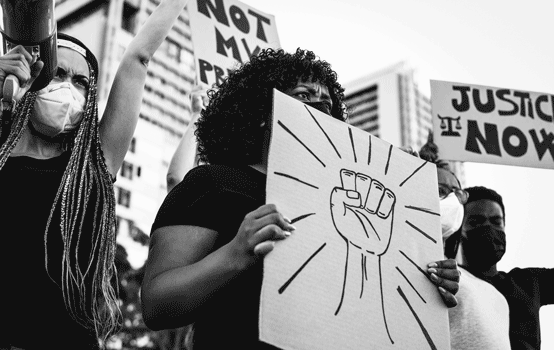
After the killing of George Floyd, a Black man, by a white Minneapolis police officer in May 2020, many Americans were moved to speak out about the ways in which violence against Black people has been minimized and misrepresented in public discourse. And it’s no surprise that some of them relied on ideas from critical race theory, which provides language and concepts with which to analyze and discuss precisely this kind of issue. Nor is it a surprise that when a lot of people began to mention CRT, bringing it to national attention, other people — including the president — reacted by demonizing it, characterizing it as a hateful ideology that deserves to be banned.
One of the most important roles we have as educators, particularly social studies educators, is to help students sift through competing perspectives and develop well-rounded political views and identities.
Some critics have argued that CRT’s efforts to highlight and analyze the role of white supremacy in U.S. history, politics, and culture only serves to heighten racial divisions. However, a thoughtful use of CRT can, in fact, be a unifying force, providing opportunities for students of every race and ethnicity across the United States to wrestle with the ways in which racial oppression has held all of us back (Rose, 1996) and to understand that racism will only continue to hamper our collective progress as the world becomes more globalized and connected. Ultimately, the point of CRT isn’t to assign blame to one group of students but to enable students of all races and ethnicities to have informed, productive conversations about the forces that have shaped, and continue to shape, the society in which they live.
Another common attack on CRT is that is grounded in a “Marxist” view of the world. But the two movements focus on completely different aspects of society: CRT seeks to deconstruct white supremacy, and Marxism seeks to deconstruct capitalism. In fact, some avowed Marxists, such as the renowned scholar Mike Cole (2009), have concluded that “CRT and Marxism are basically incompatible” (p. 119). No doubt, it’s possible to find some people who support CRT while also holding Marxist economic views, but that’s hardly the norm. More typically, advocates look to critical race theory to make the case that people of every race and ethnicity should have equal opportunities to compete in the economy, whatever kind of economy — capitalist or otherwise — it happens to be.
In my own work as a social studies teacher in a predominantly white high school in Westfield, New Jersey (and as the only person of color in my department), I have found CRT to be a useful framework. Not only has it helped me better understand my own history, but it has informed my teaching practice and, I think, made a valuable addition to the curriculum in my local schools. The year before George Floyd was killed, I was involved in designing a new social studies course that drew on concepts from CRT. As I describe in this article, the course was hotly debated by our school board and members of the community, but it was eventually passed and implemented (Chiarello, 2019).
At the same time, I was completing my doctoral dissertation, which focused on the practices of social studies educators in predominately white districts across New Jersey, and which included an analysis of survey data about their knowledge and use of critical race theory (Farag, 2020). Both of these experiences — seeking approval to teach a course that relies on CRT and examining other teachers’ knowledge of CRT — revealed just how reluctant many school districts and educators are to teach the histories of marginalized peoples in rich and nuanced ways.
I would argue that one of the most important roles we have as educators, particularly social studies educators, is to help students sift through competing perspectives and develop well-rounded political views and identities. But if teachers are to play this role effectively, they will need conceptual frameworks, such as CRT, to help them lead productive discussions about this country’s history of racial discrimination, in which students come to understand that we all stand to benefit from learning about each other’s racial and ethnic identities. Choosing whose truth to teach is not a zero-sum game, and none of us should be shut out of the K-12 curriculum.
A controversial course
There has been ample research into the importance of including the diverse histories of marginalized peoples in the social studies curriculum (e.g., Ladson-Billings, 1998). Students should be exposed to many ways of thinking about the American experience, rather than being taught only one version of the nation’s story. However, to the extent that teachers do turn their attention to the histories of marginalized peoples, they often push that material to the fringes of the curriculum (for example, teaching about a handful of Black historical figures during Black history month; King & Brown, 2014), rather than weaving the experiences of diverse peoples throughout the regular curriculum.
In an increasingly multiracial and globalized society, social studies teachers of white students do those students a disservice by not helping them explore the perspectives of people of different races.
Bringing multiple historical perspectives of U.S. history into the curriculum creates important opportunities for high-level thinking and analysis. It requires students to consider differing narratives, wrestle over competing views, and come to their own conclusions about the past and its influence on the present. Ideally, the classroom offers a safe place for such public debate, one where young people can learn to make and defend arguments and, in the process, develop a healthy ”respect for the equal standing of all citizens and common recognition that reasonable people can disagree” (Justice & Macleod, 2016, p. 5).
In recent decades, much progress has been made in diversifying the K-12 curriculum and providing more opportunities for multicultural education (e.g., Sleeter & Grant, 2007; Sleeter & McLaren, 1995). However, as Christine Sleeter (2001) observes, the “overwhelming presence of whiteness” remains a persistent problem in education. And when educators attempt to make the curriculum more multicultural, they tend to do so by adding more and more separate content on top of the existing curriculum, rather than rethinking the curriculum as a whole. By contrast, CRT, which calls attention to how white supremacy has shaped so much of the history, gives teachers a framework to deconstruct the historical narrative as currently taught and a system for deciding what needs to be included and what does not.
My colleagues at Westfield High School and I hoped to put these ideas into practice when, in 2018, we developed an elective course for 11th- and 12th-grade students to complement New Jersey’s required high school social studies curriculum. Westfield High is the only high school in a district that serves a predominately affluent, suburban town, in north-central New Jersey. It is a high-performing district school with a 97.4% graduation rate and 84.3% of graduates go on to attend four-year post-secondary institutions. The student body is predominately white (83.1%), with smaller populations of Asian (7.7%), Latinx (6.1%), Black (2.4%), Native Hawaiian or Pacific Islander (.1%), and multiracial (0.6%) students (New Jersey Department of Education, 2019).
For decades, Westfield High had offered an elective course titled African American History, taught expertly by the only other person of color in my otherwise all-white social studies department. When that educator retired in 2016, though, enrollment in the class plummeted. Eventually, the class was canceled, which meant that most of our students had no opportunity to explore historical narratives that focus directly on people with racial and ethnic identities different from their own. Although other classes included the voices and stories of marginalized peoples, these curricula did not use theoretical frameworks that both included marginalized peoples and systematically criticized the narratives that marginalized them in the first place. We knew that fundamentally revamping every course to adopt such a critical lens, especially in required courses, would be likely to meet resistance from many different stakeholders, so we sought instead to develop an elective course — which we called Power, Privilege, and Imbalance in American Society — as an important first step in a process that could eventually lead to further inclusion of critical perspectives into the broader curriculum.
After more than a half-century of persistent racially based inequities and inequalities in U.S. society, educational institutions play an important role in either reproducing these inequalities or resisting them.
We structured the course to discuss how power can create privileges and imbalances within important institutions, how different systems of power (e.g., race, gender, social class) intersect, and how contexts shape power dynamics. One underlying theme is the idea that everyone in a society suffers when systems of oppression create imbalances. This course focuses specifically on the role race plays in creating power dynamics through the construction of race as an identity, the development of white supremacy, and the impact of white supremacy on the government, economy, and society. The course expands the discussion across multiple races and ethnicities and ultimately frames race as a social construct that can be deconstructed and analyzed logically with the goal of making society function more equitably for the benefit of all, including white students.
Adhering to the district’s usual procedure, we introduced our new course to a Board of Education committee in the spring of 2018. Generally, the committee is quick to approve new courses, but in this case it decided to table the discussion and have us make a presentation to the rest of the board. Over the subsequent few months, administrators and board members discussed the course at length.
Critics said that the course amounted to divisive liberal indoctrination, and even that it was anti-Semitic (Chiarello, 2019), while proponents argued that it was a necessary addition to the school’s many electives. During the initial meeting in November 2019, one board member, after reading reviews of the course’s source material (rather than the material itself) said she found “reviews indicating the reading materials offer a biased perspective” (Glackin, 2019). In response, other residents argued, “history is always told from someone’s perspective and the purpose of this course is to bring previously marginalized voices to the conversation” (Glackin, 2019). In my view, opponents of the course took source material out of context and argued against that material rather than against the course itself or the theory shaping the course. Meanwhile, the Westfield Martin Luther King Association enthusiastically endorsed the course, stating that “examining historical and contemporary issues pertaining to racial and ethnic minorities through the perspective or viewpoint of those minorities is an excellent step towards the scholarly approach that will be expected of our students in their college history classes” (Wolf, 2019).
Ultimately, the course was approved in a contentious 6-3 vote at the publicly held board meeting in December 2019. During this meeting, one board member raised the criticism that CRT had been accused of being anti-Semitic and anti-Asian. Her argument comes from a long-standing critique of CRT’s deconstruction of the belief that the United States is a meritocracy (Gillborn, 2015). Many of CRT’s detractors point to the economic success of certain racial and ethnic groups in the United States as evidence that people from marginalized groups can succeed. However, weaponizing the experiences of some groups to invalidate the experiences of others tends to play into the “model minority” stereotype that dehumanizes all groups involved (Chow, 2017). In addition, CRT examines institutions rather than individual people. A critical race theorist would argue that members of more successful groups succeeded despite racist structures holding them back, and a course built on CRT could explore the historical contexts that shape the experiences of many different marginalized groups in American society.
Even after the course was approved, the controversy didn’t end. Over the subsequent weeks, the course gained national attention in both the news and social media. Ironically, while the course was designed to stem the polarized nature of discussions surrounding race in the U.S., it attracted intensely polarized responses. The Wall Street Journal published an opinion piece by civil rights activist Robert Woodson (2020), who took issue with the course for promulgating a “lethal message of despair and distortion of history.” While Woodson’s contributions to the civil rights movement cannot be overstated, it’s important to recognize that CRT is not focused on individuals and their successes but on institutions. Although individuals from marginalized groups can avoid despair and express their agency within an oppressive system, they may be less able to freely and equally do so than others. Accomplishments such as falling poverty rates among Black Americans, which Woodson cites in his article, should absolutely be celebrated, but we should also ask how the poverty rates differ between Black and white Americans and what institutional factors make it more difficult for Black Americans to accumulate wealth. It is through examining institutional policies and their effects, which CRT encourages, that productive conversations about race can occur.
Other criticisms were less substantive and more unfair than Woodson’s. On Facebook, for example, in a post about the course, most comments either misunderstood the point of the course or assumed one elective course would define the entire education of all the high school’s students.
In March 2020, due to COVID-19, Westfield High shifted to remote learning, and the debate around the course subsided. However, in May 2020, millions of people across the country watched the video of George Floyd losing his life while being pinned to the ground by a police officer, and the subsequent protests put CRT back on the national stage. In Westfield, local protests included direct critiques of the school system, with the organizer of one local event bluntly stating, “the Westfield School district has failed me over and over again, for over a decade . . . I’m not going into that school senior year fearing for my safety . . . I’m not going to walk into that school fearing I’m going to get bullied again” (Chiarello, 2020). At the following week’s board meeting, one board member, when speaking about efforts to fight hate in schools, emphasized “we have to continue to learn . . . we can’t just assume that because it worked before, it’s still working now.” In turn, that prompted the superintendent to hail the new course as evidence of the district’s commitment to responding proactively to racial discrimination (Chiarello, 2020).
On September 9, 2020, just a few days after Trump issued his memo railing against critical race theory, I taught the very first class of Power, Privilege, and Imbalance in American Society to a predominately white group of students at Westfield High. Due to a massive schedule overhaul to cope with COVID-19, only 14 students were registered for the course, although more wanted to take it. At the time of this writing, there have been no discussions with parents or community members regarding the nature or content of the course.
The whiteness of history instruction
The conflict surrounding the Power, Privilege, and Imbalance course was to be expected. Such tensions often arise when people critique long-standing historical narratives, incorporate the histories of marginalized people in the curriculum, and raise questions about why they were marginalized in the first place.
Scholarship inspired by CRT tends to highlight the roles that federal, state, and local governments have played in establishing and enforcing, for example, discriminatory housing policies that led to the racial and ethnic segregation that continues to exist across the country. Likewise, our course included material meant to draw students’ attention to policies such as redlining and practices such as white flight and blockbusting. Such past policies and practices also shaped the present demographics of school districts like mine and influenced what local residents, including teachers, know about their own history, as I learned from my dissertation research (Farag, 2020).
For my study, I surveyed 104 social studies teachers in predominantly white public high schools across New Jersey. I asked demographic questions, used scales measuring teacher critical competencies and critical consciousness, and included a questionnaire about CRT. The data showed that most of the teachers of white students are white themselves (94.2%), grew up in predominantly white towns (87.6%), and never had a social studies teacher of color (82.7%). These teachers are the products of largely white environments, so they may have had limited exposure to people who do not look and think like them, and it’s no surprise they would need support in bringing other perspectives into the curriculum. Indeed, my research also showed that the majority (62.5%) of the teachers of white students have never even heard of CRT, and even more (64.4%) report that they do not know enough to implement it into their pedagogy (Farag, 2020).
In an increasingly multiracial and globalized society, social studies teachers of white students do those students a disservice by not helping them explore the perspectives of people of different races. Much of the previous education research about the use of CRT examines ways in which white teachers can better educate their students of color, not how they can better educate their white students (Sleeter, 2017). But exposing white students to this material has value in that it teaches these students to question predominately white historical narratives while also helping break down barriers between groups. Presenting students of color and white students with different (and sometimes contradictory) approaches to history threatens to further polarize society and serves to undermine the authority of educators as students grow up and realize the story they’ve been told about history was incomplete or different from what others learned.
While critics complain that CRT imposes guilt on white students and reduces their self-esteem, CRT addresses systems and structures, not individual people’s guilt. Students sitting inside classrooms today were not alive when the major institutions that shape their lives were created, and no student who identifies as white should feel guilty that those institutions exist; however, they should be empowered to understand how and why ethnic Europeans combined together to be identified as a single “race.” Rather than reducing self-esteem, I would argue that such an understanding helps students build their identity.
The teachers I surveyed also held some beliefs that run counter to critical race theory, with the majority (67%) expressing the view that racism and racial discrimination could be solved incrementally over time (Farag, 2020). In contrast, the fundamental impetus for the development of CRT came from frustrations about the slow pace of civil rights reform (Ladson-Billings & Tate, 1995). After more than a half-century of persistent racially based inequities and inequalities in U.S. society, educational institutions play an important role in either reproducing these inequalities or resisting them. Teachers could greatly benefit from an approach like CRT to help them play their part in accelerating the reform necessary for a more equitable society.
Truths for all students
Educational institutions must use effective theoretical frameworks to ensure the histories of marginalized people are present in curricula for students from all backgrounds. If students across the country learn different versions of history, it will become increasingly difficult for members of society to agree on truths and employ public reason. And if students of different racial identities receive significantly different lessons in schools, our educational institutions risk becoming complicit in further dividing the country along racial lines.
Critical race theory provides an effective framework, backed by decades of research, to unpack and rethink the social construct of race that divides so much of U.S. society. Students exposed to CRT can critically examine the institutions that shape their lives, develop their own identities, and find ways to release society from racial labels and discrimination. CRT allows white students to critically examine how they’ve come to be labeled as white and further develop their identities as European ethnics. CRT allows students of color to examine their own racial and ethnic identities and understand the historical circumstances that shape their lives and create the inequities that so many suffer from. This is possible when teachers and students are aware of a framework in which productive discussions about these issues can exist. That is, critical race theory can help make educational institutions a unifying and constructive force that fosters productive citizenship in an increasingly complex and stratified world.
References
Chiarello, R. (2019, December 4). Westfield school board splits in approval of course on race, power imbalance. Tap into Westfield.
Chiarello, R. (2020, June 14). Promises from Westfield Schools after students’ George Floyd protest draws thousands. Tap into Westfield.
Chow, K. (2017, April 19). ‘Model minority’ myth again used as a racial wedge between Asians And Blacks. NPR.
Cole, M. (2009). The color-line and the class struggle: A Marxist response to critical race theory in education as it arrives in the United Kingdom. Power and Education, 1 (1), 111-124.
Farag, A. (2020). Structured whiteness: A study of social studies teachers who teach in predominately-white public school districts [Doctoral dissertation, Rutgers Graduate School of Education]. ProQuest Dissertations Publishing.
Gillborn, D. (2015). Intersectionality, critical race theory, and the primacy of racism: Race, class, gender, and disability in education. Qualitative Inquiry, 21 (3), 277-287.
Glackin, J. (2019, November, 14). Proposed WHS class causes debate at BOE meeting. Westfield Leader, 46-2019.
Justice, B. & Macleod, C. (2016). Have a little faith: Religion, democracy, and the American public school. Chicago, IL: University of Chicago Press.
King, L.J. & Brown, K. (2014). Once a year to be Black: Fighting against typical Black History Month pedagogies. Negro Educational Review, 65.
Ladson-Billings, G. (1998). Just what is critical race theory and what’s it doing in a nice field like education? International Journal of Qualitative Studies in Education, 11 (1), 7-24.
Ladson-Billings, G. & Tate, W. (1995) Toward a critical race theory of education. Teachers College Record, 97, 47-68.
New Jersey Department of Education. (2019). New Jersey school performance reports. Trenton, NJ: Author.
Oxford Dictionaries. (2016). Word of the year 2016. https://languages.oup.com/word-of-the-year/2016/
Rose, L.R. (1996). White identity and counseling White allies about racism. Impacts of Racism on White Americans, 2, 24-47.
Schwartz, M. (2020, September 5). Trump tells agencies to end trainings on ‘white privilege’ and ‘critical race theory.’ NPR.
Sleeter, C.E. (2001). Preparing teachers for culturally diverse schools: Research and the overwhelming presence of whiteness. Journal of Teacher Education, 52 (2), 94-106.
Sleeter, C.E. (2017). Critical race theory and the whiteness of teacher education. Urban Education, 52 (2), 155-169.
Sleeter, C.E. & Grant, C.A. (2007). Making choices for multicultural education: Five approaches to race, class and gender. Hoboken, NJ: Wiley.
Sleeter, C.E. & McLaren, P. (Eds.). (1995). Multicultural education, critical pedagogy, and the politics of difference. Albany, NY: SUNY Press.
Wolf, E. (2019, November 27). Letter: Westfield MLK Association endorses new course at high school. Tap into Westfield.
Woodson, R.L. (2020, January 17). The left forgets what Martin Luther King stood for. Wall Street Journal.
ABOUT THE AUTHOR

Antony Farag
Antony Farag is a social studies and humanities teacher at Westfield High School, Westfield, NJ, a cofounder of Global Consciousness Consulting, and a lecturer at the Rutgers Graduate School of Education.