I will be the first to admit that I have, at times, been resistant to change. It’s unsettling and sometimes scary, even when it’s absolutely necessary. Many people who, like me, resist change are not opposed to change itself but are frustrated by years of efforts that don’t work. Changes that are purposeless — “change for change’s sake” — just pile on more work without considering what those implementing the change actually need. In many cases, that’s what change-averse folks like me are afraid of when a new initiative is being touted. The problem isn’t change. The problem is pointless change.
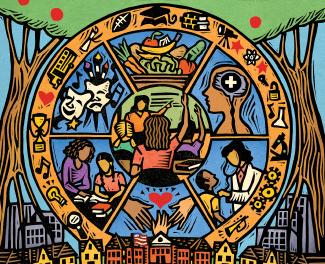
Those who work in education recognize that some things do indeed need to change. In this issue, Linda Nathan, Lydia Cochrane, and Ayesha Hoda paint a poignant picture of how schools as structured today simply don’t work for some students. They note that, as students’ needs increase, teachers are taking on more and more responsibilities that distract them from academic learning. They envision an entirely different kind of school that draws on expertise from the community so teachers can focus on instruction.
It’s one thing to know that change is necessary and to have a bold vision of what could be. It’s another thing to know how to make that change happen. This issue looks closely at the how.
Lisa Kingsley and Jennifer Perry Cheatham, for example, encourage leaders to look at the design of schools to see how current approaches to scheduling and class assignments for students and teachers may be keeping schools from reaching their goals. They recommend a “Do Now, Build Toward” approach, in which schools take small steps now to address immediate needs while working toward a more ambitious goal.
As urgent as the problems are, not every change can be made immediately. Chicago Public Schools is an example of how gradual change over time can lead to dramatic improvement. Sharon Greenberg and Anthony S. Bryk have studied school change in Chicago extensively, and they share how the city took a systemwide approach and built the capacity of educators over time. Once considered “the worst in the nation,” the district became one of the nation’s most improved after more than 30 years of effort.
Arielle Lentz and her co-authors looked at how school change worked in more than 170 districts in five states, and they too found that change takes time. Those seeking to make change need to understand the whole system as it is now, communicate their vision clearly, and give the teachers who will implement the change authority to be part of the process. Teachers, after all, are the ones who set the tone for students every day, as David Stroupe, Lindsay Berk, and Anna Kramer explain in their discussion of classroom cultures. Teachers who are empowered as sources of knowledge about what should happen in schools can, in turn, empower students as sources of knowledge about what should happen in the classroom, the school, and the world.
Too many of us have seen well-meaning leaders put in place changes that don’t really make a difference. Rick Ginsberg and Yong Zhao compare these changes to the duck-and-cover drills of the 1960s. Teachers and students alike recognized that hiding under a desk wouldn’t do anything to protect them from nuclear attack, but the drills fed leaders’ desire to do something. That desire is understandable. But if we’re going to do something to address the problems in our schools — and we should — we need to make sure that the something we do will actually matter. Even those who are suspicious of change will get on board with that.
This article appears in the March 2024 issue of Kappan, Vol. 105, No. 6, p. 4.

ABOUT THE AUTHOR

Teresa Preston
Teresa Preston is an editorial consultant and the former editor-in-chief of Phi Delta Kappan and director of publications for PDK International, Arlington, VA.
Visit their website at: https://prestoneditorial.com/