In this week’s newsletter:
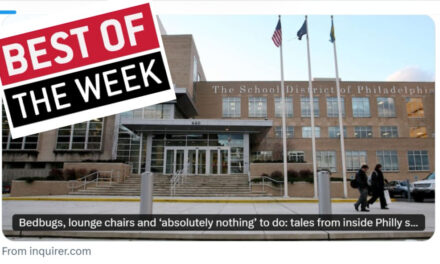
📌 Enrollment declines force districts to close schools.
📌 Why kids don’t read novels — even in English class.
📌 The reporter who started her own microschool
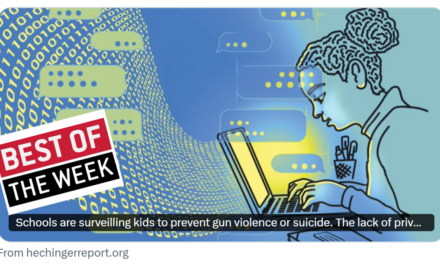
📌 “A tiny percentage of U.S. gun homicide deaths”
ENROLLMENT DECLINES ➔ SCHOOL CLOSURES
The big education story of the week:
The big education story of the week — and in some ways of the entire year — is declining student enrollment leading to difficult school closing calls.
In just the past week or so, we’ve seen stories from various parts of the country (Salt Lake Tribune, Baltimore Banner, New York Post, Orlando Sentinel, San Antonio Express-News, nola.com).
The contributing factors often include increased immigration enforcement, falling birthrates, and the rise of alternatives to traditional schools like homeschooling, microschools, charter schools, and private school choice. In some major cities the high cost of living is driving out families. In others, school buildings might need too much work to justify keeping it open. Often the community reaction is harsh, but sometimes — as in Vallejo, CA — residents realize it’s time to let the schools go (San Francisco Chronicle).
None of these factors are likely to change in 2026. For better or worse, we’re expecting many more stories about shuttered schools in the new year.
Other big education stories of the week include the death of the Brown University shooting suspect (AP, Chronicle of Higher Education) and renewed debate over the impact of diversity efforts on young white men in fields like journalism and academia (Compact, We Have Never Been Woke).
‘INVISIBLE’ LUNCHROOM WORKERS, WHOLE BOOKS, & PHONE BANS
The best education journalism of the week:
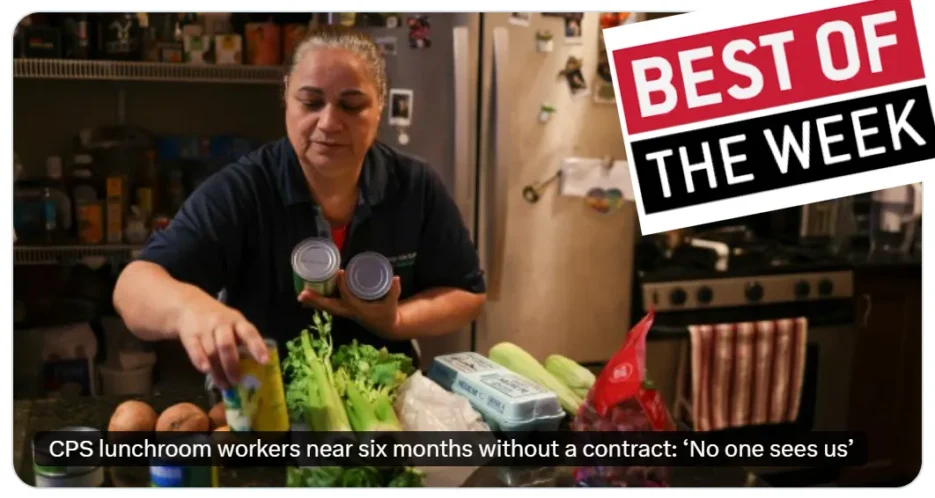
🏆 CPS lunchroom workers near six months without a contract: ‘No one sees us’ (Chicago Tribune)
This story could have been a quick hit on extended union negotiations for lunchroom workers. Instead, Kate Armanini follows one woman from her shift at the school kitchen to the food pantry where she volunteers — and picks up food for her own family. The story provides an intimate look at how workers are struggling on salaries that average less than $30,000 in a district where a regular teacher averages about $100,000.
🏆 Kids Rarely Read Whole Books Anymore. Even in English Class. (NYT)
This stellar piece by Dana Goldstein starts with the results of a 2,000-person survey on what teens are reading and gets better from there. Goldstein points to practical considerations in the trend away from novels to collections of excerpts — including the use of curated computer programs— and provides nuanced perspectives on all sides. Best of all, the piece avoids unnecessary hand-wringing.
🏆 How the Phone Ban Saved High School (New York Magazine)
Get past the headline and you’ll find a charming series of vignettes from freelance reporter (and former NPR education correspondent) Anya Kamenetz showing how high school students are spending their downtime in the wake of New York’s new bell-to-bell cellphone ban. The newly popular old-school activities — which seem to vary school to school — include listening to CD’s, trash-talking games of dominoes and betting hair ties on hands of poker.
Other stories we liked this week include The Complicated Legacy Rod Paige Leaves Behind (Word in Black), ‘A parallel system’: Miami-Dade school district to be cut out of decisions about charter schools (Miami Herald) and The “White Tiger” Case: How an Online Search for Friends Ended in Coerced Suicide (Der Spiegel).
Thanks for reading Alexander Russo’s The Grade, where we take a closer look at education news. Subscribe for free to receive new posts and support my work!
10 BEST EDUCATION STORIES OF 2025
Latest from The Grade:
Did you know that The Grade has published a list of the year’s best education journalism each year since 2016?
The top 10 education stories of 2025 features journalism from the Washington Post, APM Reports, Voice of San Diego, The Argument, and many others, covering hot topics including private school choice, chronic absenteeism, literacy reform, equity-based efforts, and school sexual misconduct.
Other year-end roundups you might be interested in seeing — Longreads, The 74, etc. — are listed at the bottom of the piece. But ours is the best.
PEOPLE, EVENTS, & MORE
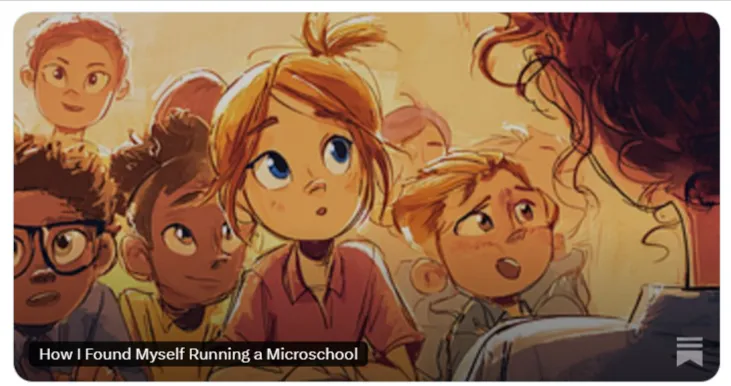
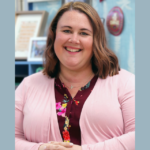
Above: Bay Area journalist Kelsey Piper wrote about something I’ve never actually seen a reporter write about before: starting their own microschool.
📰 People: The LA Times’ Matt Hamilton has a pair of stories about school districts using nondisclosure agreements (with help from Harriet Ryan) and massive sexual assault payoffs you should definitely check out. The Sunday Long Read’s year-end review celebrates the highly talented Hannah Dreier, who’s appeared in this newsletter many times in the past: “Time and again, she’s delivered stories of people that also capture larger crises.” The Center on Education Progress writes that The Grade fave Kelsey Piper has quickly become one of their favorite education writers for “the rigor, conviction, and clarity of her reporting.” Agreed.
Who’s education’s top Resistance Lib (a la Heather Cox Richardson)? Reformer – turned-traditionalist Diane Ravitch is not the only choice.
📰 Comings & goings: After a decade in journalism including more than four years at the Alabama Education Lab, Rebecca Griesbach has now started a new job and related career at Tulane’s Cowen Institute.
📰 Numbers: Republicans now hold a slight advantage on education, according to the latest poll from The Argument — and a 39-29 advantage among people who currently have kids under 18. One third of 8th grade girls spend 7+ hours per day on social media, according to a Monitoring The Future report written up by Jean Twenge. The Education Law Center latest report ranks North Carolina 50 out of 51 in school funding level — and 50 out of 50 in school funding effort. Toledo Schools added 1,000 new employees as enrollment dropped by 1,800, according to the Edunomics Lab’s Marguerite Roza. K-12 Dive named Oregon’s Beaverton School District as the number-one district in the nation. Over 2,100 schools operate four-day weeks, according to the Economist — out of ~135,000.
📰 Events: Check out this recent webinar on teaching High Achieving Low Income (HALO) students. It’s not up yet, but Hechinger’s Jill Barshay and the NYT’s Sarah Mervosh were scheduled to be guests on AEI’s year-end podcast. EWA’s seminar on covering English Learners featured EdWeek’s Ileana Najarro, reporter and Spencer Fellow Tara García Mathewson. The deadline for the Urban Journalism Workshop has been extended to Jan. 12th and is now open to first-year college students.
📰 Segments: Lee Gaines was on NPR’s All Things Considered with a six-minute story about teachers using AI detection software. On Weekend Edition, Sequoia Carrillo explored the emerging research on school cellphone bans. Chalkbeat’s Jason Gonzales was on WBUR’s Here & Now to talk about this year’s FAFSA.
📰 Collaborations: Teacher’s College has the Hechinger Report, and — as of September — the Columbia Journalism School has College Watch, headed by profs Michael Shapiro and Nushin Rashidian. Meredith Kolodner’s Hechinger Report story on school racism probes falling off under Trump was also published in the Washington Post.
📰 Quotes:
“This is the year journalists will stop being surprised & offended by the negative feelings people have about our work.”
“School shootings in the US are horrible, all the more for being mediagenic. They are also a tiny percentage of U.S. gun homicide deaths.”
“Nothing was gained for the genuinely vulnerable and marginalized in society. There was just a shuffling of positions among elites.”
“To line up such a simple series of dominoes to topple oversimplifies a complex challenge and places undue blame on the shoulders of discerning young readers and the public school teachers who work tirelessly to support them.”
“Haven’t we rehashed 2024 enough?”
KICKER
Always save the best for last.

Why Middle School Sucks by Alvin Chang
That’s all, folks. Thanks for reading!
With research and writing from Abraham Kenmore.