In this week’s newsletter: It’s the fifth anniversary of the nationwide COVID school shutdown. How high tech student safety efforts can expose students’ personal lives. Reporters share lessons from covering COVID. A surge of education reporters on TV and radio. And: Old-school transparencies still work in 2025. Who knew?
COVID SHUTDOWN ANNIVERSARY
The big education story of the week
The big education story of the week is the 5th anniversary of the 2020 nationwide school shutdown, which began as a two-week experiment but dragged out in many places for 18 months.
Five years later, absenteeism remains a problem in many places (Beacon Journal). Educationally, students have recovered in only a few parts of the country (New York Times, WNYC, Washington Post, NPR, WBUR, Voice of San Diego, Free Press, Florida Today).
The decision to close schools is still hotly debated (New York Times, WNYC). A new book excoriates many of those decisions — in particular the decision to close schools so quickly and for so long (Princeton University Press).
Other big education stories of the week include USDE layoffs and budget cuts. Follow @thegrade_ for daily education news, Monday-Friday.
WHEN SAFETY TECH BACKFIRES
The best education journalism of the week
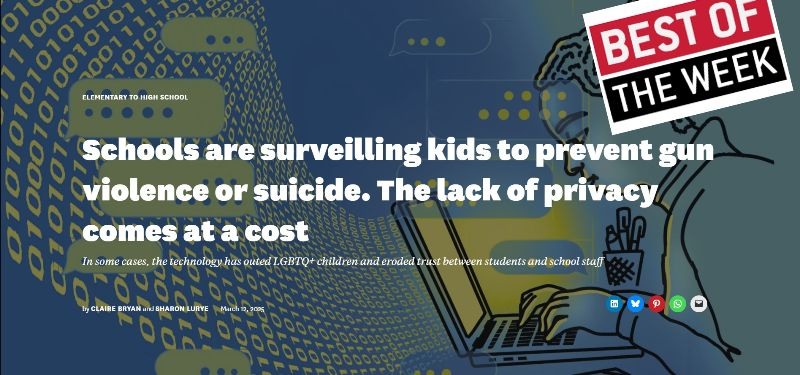
The best education journalism of the week is Schools are surveilling kids to prevent gun violence or suicide. The lack of privacy comes at a cost by Claire Bryan of The Seattle Times and Sharon Lurye of the Associated Press, published as part of an AP collaborative among eight news organizations.
It tells the story of AI-powered surveillance software that in thousands of cases alerted Vancouver, Wash., Public Schools staff to signs of self-harm and possible school attacks. But it also inadvertently opened up students to deeply personal exposure when the reporters made a simple records request and got nearly 3,500 sensitive student documents — all of them unredacted.
It’s a daring, timely story of technology’s unintended consequences, as students use the same school-issued laptops for both schoolwork and to cope with “angst in their personal lives.” At one school, one in four students’ writings set off alarm bells.
At its best, the piece provides what may be the most vivid example to date of how districts’ efforts to protect students can open them up to outside scrutiny. Bryan and Lurye uncover poems, college essays and excerpts from role-play sessions with AI chatbots in which students open up about depression, heartbreak, suicide, addiction, bullying and eating disorders. All of the writings are accessible to anyone with links to the files, unprotected by passwords or firewalls.
Other education stories we liked include California’s Black student crisis (Word In Black), a Texas superintendent who earns up to $870,000 overseeing 1,000 students (The Texas Tribune), and why Oklahoma is pushing for all-day cell phone restrictions (PBS).

LEARNING FROM COVID
Our latest columns and commentary
This week’s new piece from us is a collection of COVID coverage lessons from (clockwise, starting top left) K-12 Dive’s Kara Arundel, The 74’s Jo Napolitano, former NPR correspondent Anya Kamenetz, The 74’s Greg Toppo, ProPublica’s Alec MacGillis, former WSJ reporter Ben Chapman, and the News Observer’s Keung Hui.
In Learning from COVID, current and former education journalists share hard-won lessons from covering the pandemic. Among their recommendations:
“Too many education journalists defaulted to the teacher or administrator perspective,” observes former NPR reporter Anya Kamenetz, “rather than the true stakeholders — the students, parents, and society at large.”
“There should have been more coverage of the schools that were managing to stay mostly open for in-person instruction starting in the fall of 2020,” writes ProPublica’s Alec MacGillis.
This is part of a month-long series on COVID coverage lessons. Last week’s initial installment was How the pandemic response destroyed the learning culture in one Baltimore high school. Upcoming pieces include interviews and insights from book authors, parents, and educators.
PEOPLE, JOBS, & EVENTS
Who’s going where and what’s happening
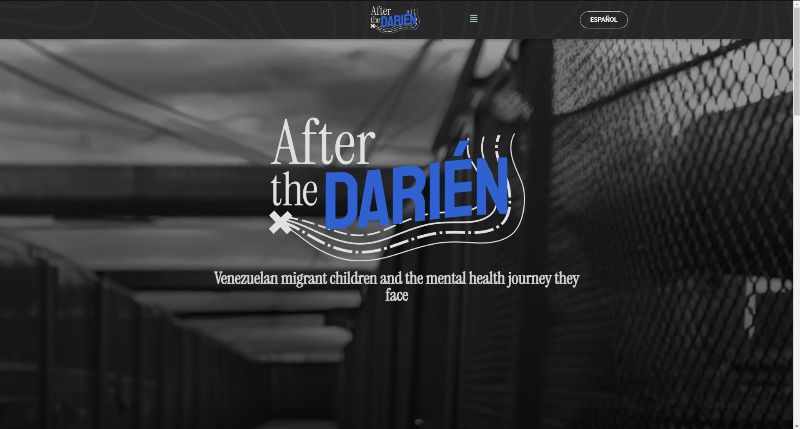
Above: Produced by reporters from El Tiempo Latino and Chicago Health Magazine, After the Darién tells the story of Venezuelan families struggling to build new lives and opportunities in Chicago and New York City.
📰 US Department of Education: Washington Post writer Laura Meckler appeared on NPR’s Fresh Air to talk about Trump budget cuts. On The Daily, the New York Times’ Dana Goldstein explained how Trump is balancing his desires both to dismantle and to weaponize the Education Department. USA Today’s Zach Schermele was on Fox to chat about the Education Department. Inside Higher Ed’s Liam Knox appeared on CBS News to talk about Education Department cuts. CNN aired a fiery 9-minute debate over why US education is failing that sadly did not include any education journalists. EWA scheduled a journalists-only webinar about how the Education Department’s unprecedented policy changes affect K-12 and higher education. I wasn’t able to get it to work, but I’m hoping the replay will be available soon.
📰 Education segments: WBUR featured a lengthy segment asking the question, Is education technology actually helping students learn?. WNYC featured a fifth grader talking about how to support people with stutters. The Houston Chronicle’s Elizabeth Sander was on Texas Standard, talking about the stark increase in juvenile detentions for school threats this fall. WUNC public radio featured a segment on public schools’ big enrollment problem with WUNC education reporter Liz Schlemmer and ProPublica’s Alec MacGillis. 📰 Upcoming: This year’s Headline Club FOIAFest includes a 03/22 panel on FOIA in education coverage featuring Chalkbeat’s Reema Amin, ProPublica’s Jennifer Smith Richards, and the Chicago Tribune’s Gregory Pratt, moderated by Chalkbeat’s Mila Koumpilova. The following week’s events include ResearchEDU in NYC at Grace Church School. And former Seattle Times education writer Claudia Rowe’s new book about the foster care system, WARDS OF THE STATE, has apparently received a great review.
📰 RIP, FiveThirtyEight, whose most memorable media reporting and commentary included The Media Really Has Neglected Puerto Rico, What The Trump Era Taught Me About Covering Politics, and the unforgettable Shut Up About Harvard.
THE KICKER
We saved the best for last.
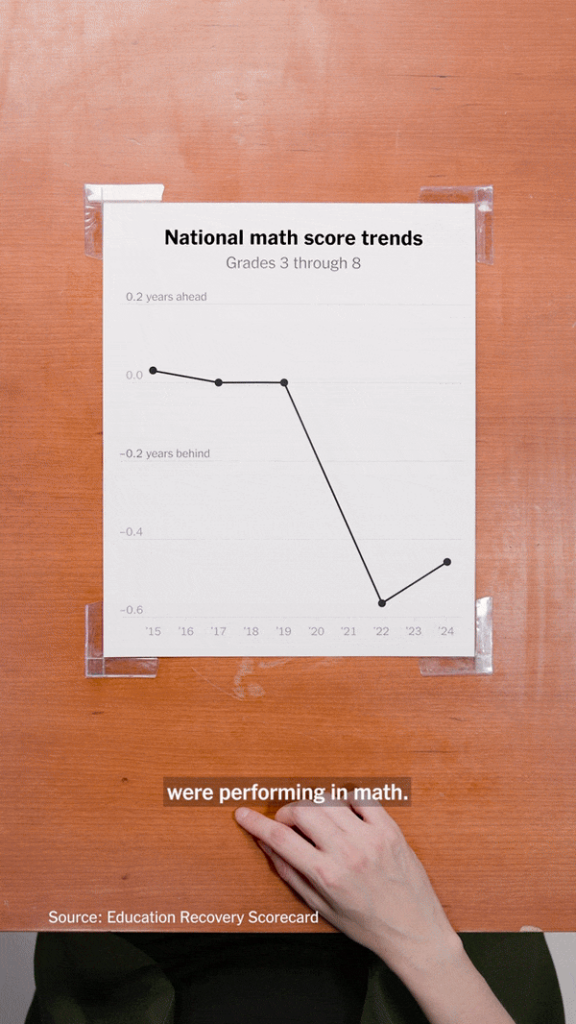
Hail the power of overhead transparencies, a long-ago tool of classroom teachers everywhere. (h/t New York Times)
That’s all, folks. Thanks for reading!
Reply to this email to send us questions, comments or tips. Know someone else who should be reading Best of the Week? Send them this link to sign up.
Using Feedly or FlipBoard or any other kind of news reader? You can subscribe to The Grade’s “feed” by plugging in this web address: http://www.kappanonline.org/category/the-grade/feed/.
Read more about The Grade here. You can read all the back issues of The Grade’s newsletter, Best of the Week, here.
By Alexander Russo