Thanks to climate change, just about every beat is becoming a climate beat. As the Los Angeles wildfires remind us, education is no different.
By Caroline Preston
“Education is the climate solution.”
That was the message of Shiva Rajbhandari, a then-19-year-old school board member from Boise, Idaho, at a climate conference I attended last year.
By giving students the skills and knowledge to fight climate change, and by harnessing schools to reduce their carbon footprint, education systems can play a critical role in alleviating the climate crisis.
While education typically hasn’t received top billing at climate conferences, that is changing.
I believe climate is also an urgent story for education journalists.
That’s why I wanted to share some background on how I find stories at the intersection of climate and education issues, plus major storylines to consider, resources to explore, and a sampling of journalists who are also reporting on these topics.
Climate is an urgent story for education journalists.
My interest in covering climate change began before I was hired by The Hechinger Report seven years ago.
As an editor at Al Jazeera America and as a freelancer, I’d worked on stories about climate change — and the more I learned, the more urgent I believed the issue to be.
So not long after joining Hechinger, I started seeking out opportunities to write about climate on the education beat.
Hechinger sometimes asks its members to vote on a story to fund with their dollars, and I pitched one on climate change education.
Our members chose the idea, allowing me to travel in 2019 to Oklahoma to report on how a teacher in a deep-red district was finding ways to educate her middle schoolers about climate change.
Since then, I’ve tried to report on the many different ways climate change is reshaping schools, students’ lives, and learning.
I teamed up with Rebecca Klein, formerly of HuffPost, for a nine-part series in 2020 that investigated how textbooks fall short in covering climate change; how climate change threatens student mental health and school facilities; how it’s reshaping medical training; and how students are trying to save their districts from climate disaster. Our project also looked at families migrating from climate-vulnerable districts, reshaping enrollment patterns and school financing. And we looked at how Covid-related school closures might sadly be a practice run for the disruptions we face from climate disasters.
As I’ve continued to cover stories on how climate change is disrupting learning and how schools can help students prepare, I’ve been struck by how many more people and groups have begun to work at the intersection of these issues.
So in September, I started a climate and education newsletter that spans early learning, K-12, and higher education.
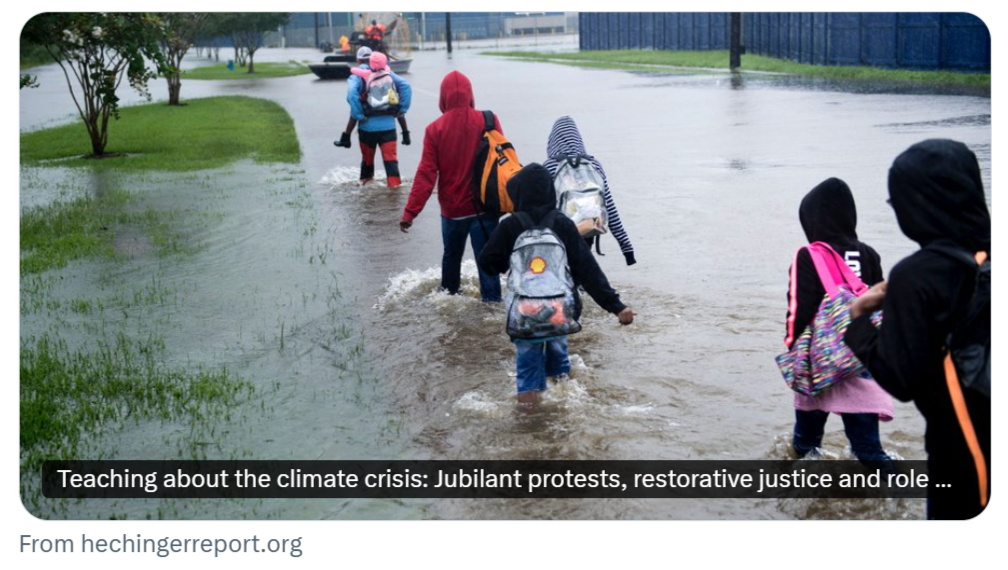
Above: A recent climate/schools story from the author.
As climate change alters our planet and how we live on it, just about every beat is becoming a climate beat. Education is no different.
Here are some angles I’d encourage education reporters to explore this school year and beyond:
1. Green jobs
With the Bipartisan Infrastructure Law, the Inflation Reduction Act, the CHIPS Act, and more, there’s significant funding and policy action for a greener workforce. Republican control of the White House and Congress could make some of those investments vulnerable, but even so, companies are moving toward greener approaches because of market demand. Reporters should examine what these jobs really are — and how schools are preparing students to succeed in them.
How can people get them? Are they actually good jobs? What renewable energy jobs are popping up in your communities?
We’re still early in this shift, and there’s a need for education reporters to scrutinize the changes and investments that are being made. How and whether people get the necessary preparation and training for the jobs that are emerging, and whether schools and universities are able to step up to provide it, is a big education story.
2. Finding solutions
Early on, I was very focused on the damage that climate change was wreaking on students and schools. Too few people, frankly, seemed aware of those dangers. As schools reopened in fall 2021, I published a story with a pretty bleak headline: “Climate change is sabotaging education for America’s children, and it’s only going to get worse.”
While I think it’s been important to have stories and headlines like that one, I put more effort now into finding stories that reflect progress and reasons for hope. That’s for two reasons: More readers today are aware of climate change’s harms than they were even just a few years ago. And there’s a growing body of research showing that negativity alone can contribute to climate doomerism, a sense that nothing can be done. But that’s not true.
There is a lot to be done to reduce (or offset) the worst harms of climate change. And educators and students are often the ones developing and putting into action the strategies for alleviating the climate crisis. Education reporters should dig into these conversations and solutions and report on good news, too.
3. Disaster recovery
This past fall, we had at least two major storms hit the southeastern United States. In just the first two weeks of the new year, we’ve had devastating fires in Los Angeles.
For school districts, the costs of disasters like these come in lives, money, learning, and mental and physical health. Also, schools are often the centers of communities and are increasingly seen as hubs and places of resilience after disasters.
Education reporters can tell the stories of families, educators, and school districts recovering in the wake of climate-fueled disasters. One example is Hechinger contributor Kavitha Cardoza’s story from Puerto Rico in 2023, which examined how natural disasters made worse by climate change had contributed to a migration of teachers and students, school financing challenges, and trauma.
As education journalists pursue these stories, I’d encourage them to become acquainted with attribution science, which helps assess climate change’s influence on a particular weather event. Covering Climate Now offers some resources to help.
4. Accountability stories
Schools and colleges have a big carbon footprint — transportation to and from campuses, the energy needed to power their buildings, the food students consume and often waste, and more. Education journalists should hold institutions in their communities accountable for the decisions they make to reduce that footprint.
I recently wrote about some college campuses combining instruction with efforts to decarbonize, what’s known as the living lab model. In higher ed, AASHE and Second Nature help track colleges’ commitment to decarbonization and sustainability. The group Undaunted K12 is tracking how K-12 systems are using tax incentives from the Inflation Reduction Act.
There’s also research on higher ed’s links to oil and gas.
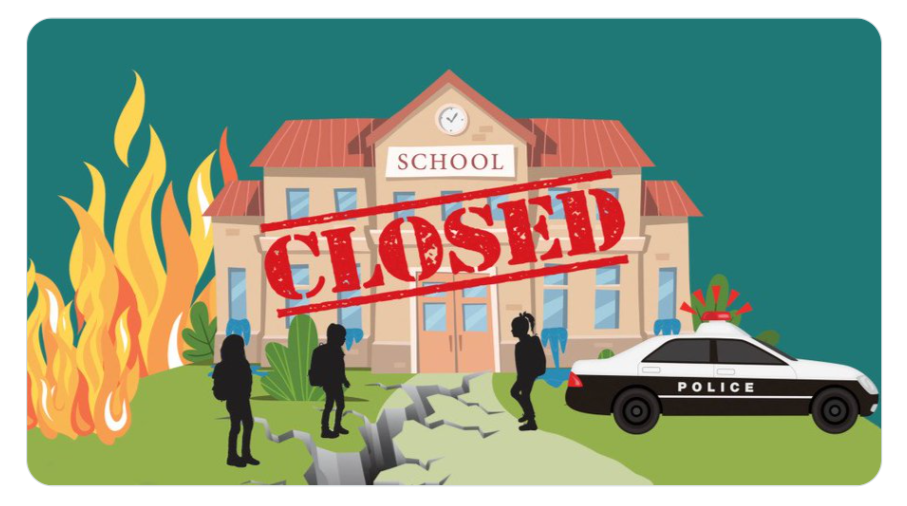
Above: Disaster Days (CalMatters)
Where to find resources
Today, there are many organizations and people working at all levels of education to help students and schools adapt to climate change. This is Planet Ed, the National Center for Science Education, Second Nature, Undaunted K12, Ten Strands, and SubjecttoClimate are just a few in that fast-growing universe of organizations.
Other journalists are covering these topics, too. Anya Kamenetz, formerly of NPR, writes a column for Hechinger on climate change and education. At EdWeek, Madeline Will, Arianna Prothero, and others have reported on climate instruction, climate’s effects on student mental health, and other issues. Back in 2021, Alvin Chang, then with The Guardian, produced one of the first in-depth projects on how heat affects student learning. For CalMatters, Ricardo Cano took an early look at school closures due to wildfires. Journalist Katie Worth published a book about misinformation in climate education.
Young people — not just activists, but regular students, even those in elementary school — also have thoughts and insights on climate change and how it may be affecting their lives, career hopes, and futures.
At that same climate conference where I heard from Rajbhandari, another speaker noted that while she was upset by an early bloom of flowers because of what it meant about the world’s warming, the toddler with her was delighted.
This is the world kids are growing up in, the only one they’ve known, and hearing their impressions and perspectives is, to me, always the best part of being an education reporter.
Caroline Preston is managing editor of The Hechinger Report. Follow her on Bluesky and LinkedIn and sign up for her climate and education newsletter.
Previously from The Grade
How climate disrupts education
Climate and schools: The biggest education story you’re probably not covering