Inattention to key topics, a seeming lack of urgency, and little collaboration are holding regional coverage back.
By Colleen Connolly
Back in 2021, former Boston Globe education reporter Jenna Russell reflected on a story she co-wrote with Bianca Vázquez Toness about immigrant English language learners falling behind in the pandemic.
Asked how a story like this could have been missed for so long by so many, Russell gave a telling answer:
“I think in all things, not just education, Massachusetts often tends to have a kind of superiority complex where the assumption is that we’re doing it better than everybody else.”
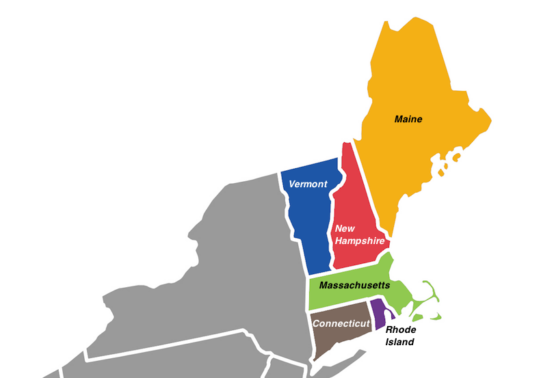
From what I have seen tracking New England coverage since June 2020, Russell’s astute observation is relevant for both the region and also for the education coverage that’s being produced.
There are a lot of talented education journalists in New England, and there have been a lot of standout pieces, including many stories by Russell and Vázquez Toness.
But the immediacy and accountability coverage of education one can see in other parts of the country — like Texas, Virginia, and Florida, to name a few — is too often missing.
A lack of direction and urgency seem to pervade regional education coverage, along with a failure to collaborate among outlets.
With some reflection and willingness to change, however, education coverage in New England could be among the best in the country.
There are a lot of talented education journalists in New England. But the immediacy and accountability coverage of education one can see in other parts of the country is too often missing.
Bright spots
Let’s start with the good news.
For a fairly small (but dense) region, New England has a relatively large group of dedicated of education reporters and full-time section editors, particularly in Boston. The Globe currently has five reporters and an editor for their Great Divide team. WBUR Boston has two reporters and an editor. And GBH has a new education editor and is hiring a reporter. There are also education reporters at the CT Mirror, CT Post, and New Haven Independent.
Most regions of similar size are less robust in terms of manpower these days. Take San Francisco, for example, which is a bit larger than Boston. There isn’t a single education team left standing in the Bay Area.
The region has lost some experience and talent, but many remain. And Russell’s reporting provides excellent examples of high-quality education coverage. Russell and Naomi Martin’s 2022 story Families in Alabama have free, full-day prekindergarten while many Mass. families can only dream of it is a good place to start if reporters want to learn how to help break down that superiority complex Russell spoke about.
Some other standout stories that come to mind include WBUR’s extensive series last summer on the cost of child care, GBH’s Meg Woolhouse’s detailed story on the uneven teaching of climate change in the state, and the New Haven Independent’s story about the arrest of a teacher over an altercation with a student — featuring the teacher’s perspective.
Another area where New England shines is coverage of housing and education together. Jacqueline Rabe Thomas, now at Hearst CT, owned coverage of both beats during her time at the CT Mirror, which just hired a new education reporter. More recently, the Mirror’s Ginny Monk did the same, with an excellent and deeply reported series on how evictions impact children.
The Grade is supported by a number of foundations including the Barr Foundation, which has also helped fund the Boston Globe’s education team. For more about The Grade’s funders and its editorial independence, go here.
Black holes
After many months of reporting on school closures and masks, New England education reporting didn’t seem to emerge with a sharp new focus in 2022, like other regions. It tended to cover renewed mask debates, lowered test scores, and any whiff of COVID surges in schools. For too long last year, New England education reporters wrote what was essentially the same story about the pandemic aftermath without bringing it forward.
Partly as a result, some big stories fell through the cracks last year, in particular the literacy story that was 2022’s big new topic.
APM Reports’ Emily Hanford started a reporting trend with her outstanding “Sold a Story” podcast and many reporters who hadn’t previously been reporting on literacy in their districts started doing so. The Oregonian began to investigate their state’s lack of action in switching to science-based reading curriculum. WBEZ Chicago went into classrooms to scrutinize what reading lessons teachers in Illinois are using. And CalMatters reported literacy progress in a shift to phonics in California.
Where were the big series and features on literacy in New England? Sarah Carr’s excellent December story about literacy in Boston ran the Hechinger Report and the Washington Post. Why not the Globe?
The good news is that the Globe’s new hire, Mandy McLaren, is the reporter behind a much talked-about series on literacy for the Courier-Journal. Let’s hope she brings the same dogged reporting to New England.
There were few in-depth stories that took the topic of learning loss to a new level, while outlets in other regions were surging ahead. The LA Times recently took a deep dive into the mismatch between students’ high grades and low test scores. Vázquez Toness’ AP story covered two Virginia cities’ contrasting efforts to adopt year-round schooling to combat pandemic learning loss.
With some reflection and willingness to change, education coverage in New England could be among the best in the country.
Where to go from here
Many regions tend to cover certain topics in education particularly well. Last year in Texas, it was book bans. In Florida, politics. In Los Angeles, learning loss. In Chicago, absenteeism.
In Boston or the rest of New England, what’s the north star that education journalists are following? So far in the post-pandemic era, it seems unclear and education coverage a little directionless. But I urge reporters to find out what that story (or stories) is.
Collaboration is another strategy that the Globe and other local teams might well expand on. While the Globe has a large enough team to support collaboration among its own reporters, I’d also love to see more collaboration across outlets.
Compared with other education teams, like the Dallas Morning News and Seattle Times ed labs, there is little cross-publishing in New England. I think the perspective of an outsider and the extra resources could take education reporting to the next level – as well as to bring more attention to what’s going on in New England.
The Globe today has done a great job covering Boston Public Schools’ inner workings (thanks largely to James Vaznis), but that kind of narrow reporting leaves out the opportunity for larger stories that show wider trends.
It doesn’t have to remain this way. With teams being remade — and even newish editors at the Globe and WBUR who bring perspectives from covering education in other parts of the country — education coverage in New England can find its footing and a new direction in 2023.
Colleen Connolly is a freelance journalist whose work has appeared in the Columbia Journalism Review, The Guardian, The New Republic, Smithsonian magazine, and the Chicago Tribune. Her most recent piece for The Grade was What education reporters should know about covering students in foster care. See more of her work here. You can follow her on Twitter: @colleenmconn.
Previously from The Grade
How to report from inside a school — even when they won’t give you access
Globe reporters describe how they covered immigrant English learners
30 stories in 7 days: a close look at Boston-area education coverage
Assessing the surge in Boston-area education coverage
In Connecticut, fewer reporters, more missed stories
Profiling valedictorians to highlight school inequality
Praise & criticism for coverage of MA’s $41M charter school ballot debate
ABOUT THE AUTHOR

The Grade
Launched in 2015, The Grade is a journalist-run effort to encourage high-quality coverage of K-12 education issues.