Reflections from the mom who helped uncover the full extent of the scandal surrounding former Des Moines superintendent Ian Roberts. The latest in our series on non-traditional education news.
By Laura Powell
Most of us who end up doing what I do probably don’t set out to become citizen journalists.
We’re just curious people who care about what’s true, and, when we stumble upon information that has been overlooked, we feel compelled to get the word out.
At least that’s how I ended up spending two weeks covering the story of Ian Roberts, the disgraced former Des Moines superintendent who turned out to have lied about pretty much everything.
When headlines first appeared about a school district superintendent being arrested as an illegal alien, the universal reaction was disbelief. Sensational headlines often mislead, but this time the stories offered no hint of a reasonable explanation.
The mystery of how Roberts rose so high intrigued me. I’m allergic to dishonesty, so once I realized I had a liar in my sights, I kept digging.
Though I’m a lawyer by training, many of my skills translate to investigative work —especially scanning large volumes of documents for key details.
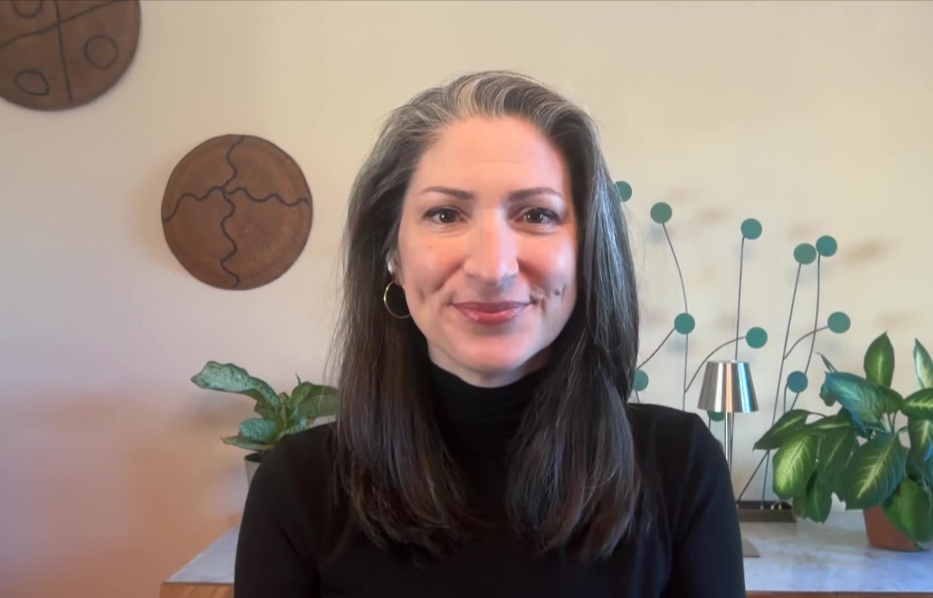
I’m a mom, a civil liberties attorney, a former leftist — and now a citizen journalist.
Note: Read on for the rest of Powell’s essay about her experience, then watch the above interview for her additional thoughts.

Above: The New York Times, Washington Post, Wall Street Journal, Associated Press, and many other mainstream national news outlets would eventually cover the story.
The initial story broke on a Friday, while I was starting a weekend of shuttling kids to appointments and soccer games.
My first research was done on my phone between errands. I started with public sources, such as social media posts, court records, and school board documents. It was all there, available to anyone who looked with a critical eye. Yet no one had. Not school officials. Not state agencies. Not newspaper reporters.
No one had questioned the implausible parts of Roberts’ resume or his ever-shifting backstory. The fact that I found so many red flags so quickly says as much about the school districts that hired him as it does about Roberts himself.
It was all there, available to anyone who looked with a critical eye. Yet no one had. Not school officials. Not state agencies. Not newspaper reporters.
One of the first things that jumped out at me was that there were inconsistencies in year of birth. Someone — who appears to be Roberts himself — created a Wikipedia page for him on his birthday in 2014, entering his year of birth as 1978. Many other sources say 1973. But numerous legal documents I located consistently list his year of birth as 1970.
Then there are the extraordinary claims about degrees he earned. Roberts claimed to have earned a doctorate in education from Morgan State in 2007, and started styling himself as “Dr.” shortly thereafter. But his doctoral dissertation was from an online university from 2021. He has claimed a variety of degrees from prestigious universities, but upon closer examination, these turned out to be less intensive programs.
Ironically, the most colorful elements of his tale appear to be true. He did graduate from military officer school in Guyana and then went on to join the police force. Stunningly, in a self-published book, Roberts noted that his police unit was referred to as a “Death Squad.” He also was a standout runner in college in the United States and represented Guyana in the 2000 Sydney Olympics.

Above: The author first posted about Roberts on September 27th. You can read her posts about Roberts in chronological order.
This wasn’t my first viral story on X (Twitter). For example, earlier this year, I revealed that a Los Angeles immigrant-rights group involved in anti-ICE riots was receiving large amounts of state funding.
That story mostly circulated in conservative circles because legacy outlets had no appetite for criticizing a left-wing organization.
But losing a superintendent was too big for the Des Moines media to ignore.
At first, reactions split along partisan lines, with many on the left defending Roberts. As the facts emerged, that support faded, and the press began covering him more critically.
While chasing primary sources, I had little time to read the professional coverage. When I did, traditional news reports that I read were typically confirming things I’d posted days earlier, usually without crediting me.
Early on, The Des Moines Register mentioned me but didn’t bother to reach out or to independently verify my claims.
“Many have recirculated comments and observations by Laura Powell,” wrote the Register’s Lee Rood, who quoted a tweet from me about the abundance of inconsistencies in Roberts’ bio. “Powell poured over Roberts’ book, Wikipedia page, news articles, self-published book, LinkedIn page, military service, looking for errors and inconsistencies.”
But being credited was more the exception than the rule.

Above: At least one Des Moines Register article credited the author.
Later, thanks to a tip in my X inbox, I broke an exclusive story that Roberts had been served with a protective order in 2023, following an incident involving Roberts and his employer at a consulting firm. I’m certain it was a scoop because the sheriff’s office was surprised to discover it when I contacted them.
But when The Des Moines Register published their version, they presented it as if it were their own discovery, and ABC News later erroneously credited The Register for being the first to report the story.
Because I am not employed by a legacy outlet, my work received no acknowledgment.
I earn very little from my writing, but recognition matters because it helps me sustain this work. Treating my scoops as public property and ignoring the role of my reporting is indefensible.
Traditional journalists have access I don’t — they can get public officials to respond, and their records requests get priority while mine languish in the queue.
It’s worth asking whether it’s legal or fair for government agencies to favor credentialed reporters over citizens. The First Amendment protects freedom of the press; it doesn’t grant special privileges to an exclusive class.
One advantage I do have is community goodwill. Once my reporting took off, I was flooded with messages from Iowans thanking me for doing what their local media hadn’t. I also received tips from people who don’t trust the professional press. Some confirmed what I’d already found, while others were genuine scoops.
Once my reporting took off, I was flooded with messages from Iowans thanking me for doing what their local media hadn’t.
My work evolved from online searches to the old-fashioned, time-consuming task of building relationships with sources.
I also have to work harder to prove credibility. I post “receipts” — screenshots, clips, and documents — to back up everything I share. It slows me down and gives other reporters a roadmap to my sources.
And unlike them, I don’t cite anonymous sources in order to protect my credibility, so some parts of the story go underappreciated simply because I can’t attach a name.
Doing this work alone has its pitfalls. I have to move fast or risk being scooped, which increases the chance of mistakes.
Once, a law enforcement officer called angrily about my wording in a post. He was expecting newsroom precision from someone dictating tweets at red lights!
I have no editor, no legal team, no one to help me make judgment calls. I ended up deleting the post about the protective order after a party named in the public records asked me to, out of privacy concerns. It wasn’t an easy call, but I explained to my readers what I’d done, and it was the right decision.

Above: The author explains deleting a previous posting.
Roberts’ story fascinates because of his flamboyance — his social media depicts a carefully curated personal image — and because it’s rare for someone who has risen to such a high position in the education system to be exposed with falsified credentials.
But the real story isn’t about one man or one school district — it’s about the system that enabled him.
From public discussions, the indications were that the board wanted a Black superintendent, seemingly believing that appointing one would somehow solve the district’s racial disparities. So when a candidate appeared who checked every box, it seems they didn’t ask too many questions.
The consultants who helped the Des Moines school board hire Roberts work nationwide. The same flawed practices that failed in Iowa could fail anywhere.
The real story isn’t about one man or one school district — it’s about the system that enabled him.
In the end, the story got the national attention it deserved, thanks in part to my reporting. I achieved what I set out to do — expose the broken hiring process that let an unqualified candidate slip through.
But the saga also revealed the failures of the professional media. This story sat under the noses of local journalists, who parroted Roberts’ statements about his life as facts, without verifying or even questioning the glaring inconsistencies.
It’s an indictment not just of a school board, but also of a press corps that has forgotten how to be skeptical and is too lazy or cautious to dig unless someone hands them a map marking where the truth is buried.
Laura Powell is a California-based mother, lawyer, and a citizen journalist.
Previously from The Grade
How I unintentionally became an education reporter
Make room for non-traditional education journalism!?
Thankful for education journalism — traditional and otherwise