In this week’s newsletter:
📌 Some states and districts are fighting back — and even taking the lead.
📌 New research confirms cellphone bans work, but there’s a price.
📌 Citizen journalists are eating your lunch — again.
📌 Just how stuck are lawmakers over the shutdown?
K12 FIGHTS BACK, TOO
The big education story of the week:
The big education story of the week is the small but growing resistance that appears to be emerging against the Trump administration’s effort to exert its influence among both universities and K12 school systems. However, the coverage of K-12 resistance has been much more muted so far.
At the higher education level, we know that seven of the nine universities the Trump administration approached have publicly rejected the deal — joined by one university that was not even initially asked to sign (The Hill, Chronicle of Higher Education, Washington Post, New York Times, Politico, AP).
However, states including Virginia, New York City, Colorado and several school districts have also pushed back against the Trump administration’s edicts and investigations — often over trans student policies (Politico Chalkbeat, CBS News). Large multi-state coalitions have formed to push back against new policies and to promote academic acceleration (New York Times, The 74, Harvard Gazette).
Here at The Grade, we’re rooting for more coverage of these equally important K-12 stories. One good place to get a handle on the big picture might be Brookings’ K-12 education litigation tracker. Another might be Lawfare, a non-profit outlet that tracks all the lawsuits against the administration.
Other big education stories this week include a new study showing cellphone bans are working (Good Morning America, Chalkbeat, Hechinger Report), a record number of homeless students in New York City (New York Times, The City, ABC7), and the impact of the Amazon Web Services outage on K12 schools (EducationWeek, Wired).
E-SPORT FOR ATTENDANCE, SCHOOLS & SHELTERS, & PLAYING IN THE MUD
The best education journalism of the week:
🏆 Public schools have an absenteeism problem. E-sports and architecture are helping. With an ongoing attendance crisis, it’s always good to see solutions coverage of innovative ways to get kids back to school. This piece asks students and experts alike how a Nintendo Switch or learning CAD can get students in the door for everything else. (Jackie Valley / Christian Science Monitor)
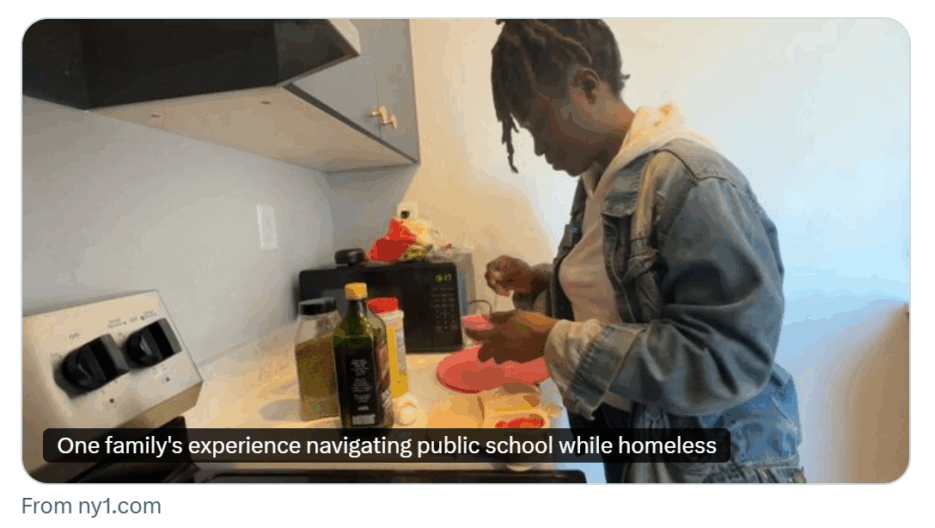
🏆 One family’s experience navigating public school while homeless puts a human face on the estimated 150,000 New York City students who were homeless at some point last year. In just a few minutes this video shows how one mother dealt with challenges ranging from broken public transportation to constantly changing districts as she moved between shelters. The accompanying written story provides valuable context for her experience. (Jillian Jorgensen / NY1)
🏆 Preschool without a building could be in Maryland’s future follows a gaggle of toddlers through the mud while explaining the potential benefits and barriers to outdoor early childhood education. It’s an entertaining read and a clear guide to the state’s new pilot program. (Maya Lora / Baltimore Banner)
Other stories we liked include How Uncertified Teachers Went From a Stopgap to an Escalating Crisis (EducationWeek), Nory Doesn’t Go to School Here Anymore (New York Times), What does it take to root out fraud in Maryland’s biggest school districts? (Baltimore Banner), & Philadelphia’s youngest learners aren’t getting support services they’re legally entitled to (Chalkbeat).
Thanks for reading Alexander Russo’s The Grade, where we take a closer look at education news. Subscribe for free to receive new posts and support my work!
CITIZEN JOURNALISTS ARE EATING YOUR LUNCH (AGAIN)

This week’s new offerings from The Grade include an essay and interview with Laura Powell (above), the lawyer mom who appeared to be out-reporting local and national outlets working on last month’s Ian Roberts / Des Moines public schools scandal.
Over and over again, Powell seemed to beat traditional news outlets at finding important news tidbits. Over and over, she says, her efforts were not given the credit they deserved.
“It was all there, available to anyone who looked with a critical eye,” she writes. “Yet no one had. Not school officials. Not state agencies. Not newspaper reporters.”
Fueled by mistrust of traditional news coverage and their own impatient curiosity, citizen journalists like Powell are finding and consolidating school-related news that readers want — faster and in most cases just as accurately as traditional news outlets. Like the scruffy bloggers of the early 2000s — or the misfits solving cases in ‘Only Murders In The Building’ — these citizen journalists are eating everyone else’s lunch.
Thanks for reading Alexander Russo’s The Grade! This post is public so feel free to share it.
PEOPLE, EVENTS, & MORE

📰 Quotes
“Instead of always making cuts sound dire, articles like this need to also note big problems with fed ed ‘help.’
“It’s great that D Wes Moore in Maryland is raising standards, but if it’s an R in Virginia, it’s a plot to undermine schools.”
“This is basically another example of how to take statistical noise and use it to support preexisting moral crusades.”
“We just didn’t bring a big enough mallet.”
“Always, always disaggregate your data.”
📰 People/jobs/moves: After a few years away doing policy and research work, Emily Donaldson is back on the beat, editing what’s soon to be a team of three education reporters at the Express News and two more at the Statesman. “We largely know what good education policy looks like, but decision makers don’t always enact it,” writes Donaldson in a DM. “It’s our job as journalists to connect those dots for readers.” In case you missed it like I did: Erin Gretzinger is the Madison, Wisconsin Cap Times’ K-12 reporter. Ashley Mowreader is leaving Insider Higher Ed to go to grad school but they’re looking for someone to take her job focused on student success. An outlet called Just The News is looking for an education / parental rights reporter. Yes, seriously.
📰 Events: Last weekend’s Moms for Liberty conference was written up in Hechinger by Laura Pappano, but that’s all the coverage I saw. Starting today, you can watch LEFT BEHIND, a new documentary about a NYC school specializing in dyslexia online. Over in the UK, they’ve been having a national inquiry into the government’s response to COVID. Check out these pictures from a 2015 EWA event in Chicago and see if you can recognize anyone?
📰 Segments: At a recent debate, NJ political candidate Mikie Sherrill derided Southern states’ education accomplishments. In a video podcast at The Argument, Jerusalem Demsas and The Atlantic’s Roge Karma push back on the belief that most COVID restrictions wouldn’t work — and that government officials knew or should have known that. Princeton professors Francis Lee and Stephen Macedo offer a rebuttal.
Meanwhile, PBS is showing ‘Truth Under Fire,’ an hour-long roundtable debate in which journalists and others respond to a hypothetical instance of disinformation about a controversial school board decision being spread rapidly on social media. The documentary shows teachers and journalists that “they cannot compromise their integrity and principles in order to compete with the frenzy of social media,” writes host and UC Davis professor Aaron Tang. “Our democratic system cannot function without independent journalists asking hard questions in order to ensure that the truth is surfaced.”
📰 Reports: Parental tech use has been likened to secondhand smoke in that it might endanger children’s health and development “in ways we don’t even fully understand yet.” The early results on Ohio’s effort to switch reading instruction have been disappointing so far. School cellphone bans are perhaps a rare case in public policy where the “data back up the hunches,” notes Hechinger’s Jill Barshay. “But the academic benefits are rather small and they come with a cost.”
📰 Research: “My concern about how the media covers vouchers is tied to how journalists are trained, to seek balance and presenting both sides, prioritizing conflict, and relying on official sources,” writes David DeMathews, one of the co-authors of a recent Brookings study on the history of vouchers. “From my perspective, the result of this training is that coverage tends to flatten complex issues into political horse races.”
📰 Books: “How does a community lose contact with its faith in schools? And what happens when it does?” writes Beth Macy in an excerpt from her new book, Paper Girl. Erica Green’s long-anticipated book about the Landry school scandal is out in January.
KICKER
Always save the best for last.

“This pump is very dug in, much like the rest of the building.” — USA Today Congressional correspondent Zach Schermele on the government shutdown.