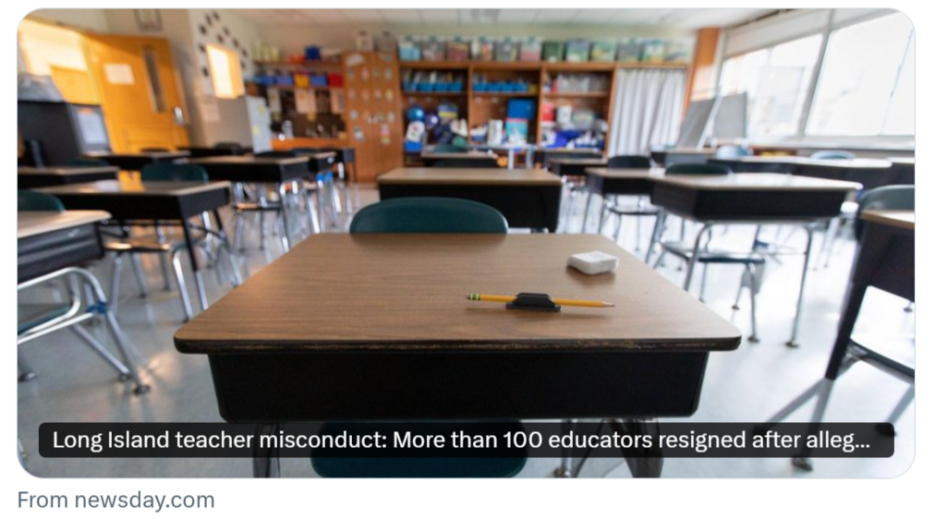
The under-used strategy to unlock school secrets, according to one investigative reporter. Part Three of The Grade’s new series.
By Alexander Russo
If you haven’t heard of Newsday’s investigation into school confidentiality agreements, you really should check it out. A number of experts and journalists I have talked to about covering school secrecy mentioned the investigative series, written by Jim Baumbach and Joie Tyrrell.
Speaking with Baumbach, I learned about the secrecy-laced process Long Island (and presumably other) school districts use to get problem teachers out of their classrooms without informing the public or even necessarily preventing the teacher from getting another job in another district.
It’s a setup that works for the schools, the teachers, and the state – but not for parents and kids and the public.
While investigating these stories is tough work, Baumbach says that school public records are an under-appreciated way to get inside what’s happening even if nobody wants to talk.
“I think school districts are, in some ways, the soft spot in public records,” he says, echoing what others like the Courier Journal’s Stephanie Kuzydym have told me. “We can get so much more records from both schools and districts than we have yet to appreciate.”
“We can get so much more records from both schools and districts than we have yet to appreciate.”
This interview — part of The Grade’s 2025 series on school secrecy — has been edited and condensed.
For those of us who haven’t read it, what did you and your reporting partner Joie Tyrrell find in your big 2023 investigation?
The basic question we sought to answer was, how do school districts, public school districts, handle issues when an educator has done something so abhorrent that they want to get rid of them? How does a district extract itself when a teacher is found to have done wrongdoing?
And what we uncovered was a process laced in secrecy: effectively, districts wanted to get rid of these teachers, but the state process to do is so long, pricey, onerous and uncertain that districts are incentivized to negotiate a deal in which the teacher agrees to walk away. But in order to do that, they need to make it attractive to the teacher to give up their rights. So they give them a payout — often months, but we found some cases in which the teacher received payouts covering years — and they lay out the terms in what they call “confidential settlement agreements,” where the reason for the teacher’s sudden departure is not explained.
This protects their reputation and future job prospects, which advocates say comes at the expense of the community’s greater good. The state education department effectively said this process is okay because they have a separate process in which school leaders are required to report teachers suspected of wrongdoing – acts of questionable moral character, in their wording – and then if the state confirms the acts, they go after the teacher’s license, which would keep them from working elsewhere.
However, we found this process takes much longer, many, many years. We captured all of that into our teacher misconduct overview.
How did you come upon the story in the first place?
There was a teacher who was arrested for accused of stealing from his fellow teachers. He was a football coach stealing money from the district, basically. The arrest occurs, and then we both had the question, what’s going to happen to this guy? I mean, you know, he’s accused criminally of stealing from the district, so we followed the case along. And finally, he’s convicted criminally, and yet they could not fire him. Instead, they reached a settlement agreement.
It was just an eye-opening thing for us. What is a settlement agreement? We submitted a public records request, and basically it was just that he was resigning from his tenure deal. And so, so it just opened up this whole world: How often does this occur, and for what reasons does this occur — and how much can we find out about it? So that really was the impetus for this.
But then the pandemic arrived, which put our efforts to report a story about the practice on hold. Then in November of 2021, one of our 124 school districts had a kind of Me Too moment. One teacher was accused basically of being a sexual predator. It leads to this board meeting that went all night where these people were saying this has been going on in this district for years. They said generations of us have been affected by male teachers being allowed to act inappropriately with female students, and the school district essentially looked the other way. When I saw this meeting, I immediately thought, ‘Well, here’s our opening to do this story again.’
“How often does this occur, and for what reasons does this occur — and how much can we find out about it?”
Where does your April 2023 story fit among all the other investigative work that you’ve done in your career?
It’s definitely among the top. I mean, for several reasons, probably number one is just the amount of time and work that went into it.That story was five years in the making, with lots of stops and starts, all out of our control.
There are so many obstacles to doing a project such as – educating yourself on the state’s discipline process, determining what records you can get, scouring board minutes for references to those records, submitting those record requests and keeping it all organized, which in the end proved to be critical to put everything into context.
Also finding a real person who can serve as the on-the-record voice of someone negatively impacted by this process — that was perhaps the biggest challenge of all, as it is in any big project dealing with sensitive issues of a sexual nature.
Plus, seeing how many stories that project has spurred also shows me, the reporter, the impact has had on our work. That’s why I put it at the top.
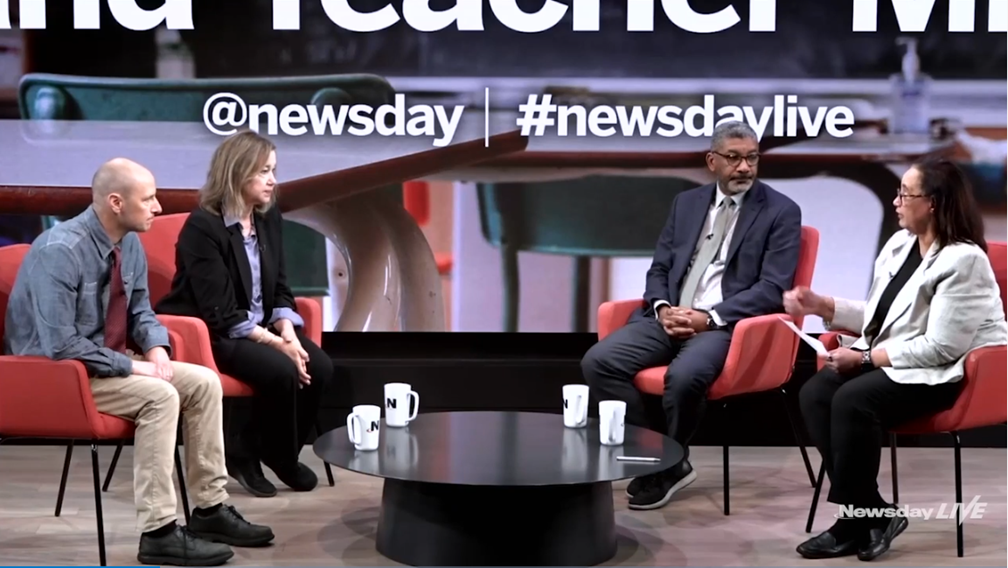
Above: Inside our investigative series on teacher misconduct
What’s different about reporting on schools and school systems from all the other investigative work you’ve done?
Kids are involved. You go into a story without any presupposed notions, except for the fact that you know no children should be harmed in any setting. We are talking about children. And from a reporter standpoint, there are lots of public records. You can get public records from school districts.
My belief is that public records in school districts are not fully appreciated by reporters. But to me, I think school districts are, in some ways, the soft spot in public records that we can get so much more records from both schools and districts than we have yet to appreciate.
That’s really what led to this series. Everything we got led to us seeking more information, and each time, each time we got the information we had more questions. We did have to jump through hoops and figure out ways to get the next step. Nothing was fed to us. Nothing was given to us by sources. It was all through pure documents obtained from these very school districts and from the New York State Education Department.
“School districts are the soft spot in public records.”
How does investigating school systems compare to other government entities or to non-government entities?
School districts are a whole different animal. So while I lamented that the story did not run in 2020 when we had the first draft done, the final version was 10 times better because we were so much better versed in what documents existed and how to get those documents.
I’m talking about arbitration hearings or hearing officer hearings and transcripts of the hearings of these teachers. The two different sets of discipline procedures (district and licensing).
There was an understanding that we can get those documents. Most of these people didn’t speak to us, but they spoke to us through the records. So really it was just understanding the language of what records we can get,
How secretive and obscure is the process that you uncovered?
Very much so — disturbingly so. I mean, basically the state education people and the various school district people are saying ’You have to trust us that we share this information among districts. It also goes into databases shared among states.’ But that’s not transparent from the public perspective at all. And getting it wrong once is one time too many.
We found one scenario where a teacher had a settlement agreement very early in his tenure process, which described that female students complained that he was making them feel uncomfortable. Eventually, he leaves his tenure job but then he still goes and gets another job at another district.
What have your school-related investigations found since 2023?
After the 2023 story into the teacher disciplinary process, I had a random reader reach out to me and said, ‘You need to look at the Child Victims Act that opened up this window for anyone who was a childhood victim of sexual abuse to sue.’ So basically they told me you should look at lawsuits against school districts. So I did.
I found more than 200 lawsuits filed against Long Island School districts, and I’ve been following them through the court system. One case settled for $14 million. One district had 45 lawsuits, all accusing the same teacher who was there from 1970 to 2000. That school district went to trial in one of the cases and lost the trial for $25 million. They’re appealing it right now.
That spurred another investigation into the school district facing the 45 lawsuits. You appreciate the impact of reporting when each story leads to another, and another.
Did anything change locally or statewide in response to the investigation?
Nothing has changed in terms of laws or transparency or anything like that. I think the biggest thing that I hang my hat on with this report is just the awareness. I do have school officials telling me to keep doing this work. I think there’s a greater awareness now that it’s not going to be automatically secret.
Is anyone defending the current system?
That was a challenge. The teachers union in New York is very powerful in state political circles—that is certainly not in dispute. And while they undoubtedly want a safe environment for children, they also have to fight for due process for their members, and there is an inherent tension there. I get that.
But getting them to defend the process that has them in the understandably unenviable position of protecting the worst of the worst is a tough hill to climb from a reporter’s standpoint. They gave us statements doing so. And because this process is laid out in state law, the people who have the power to change it are the legislators, and politicians as we know like to call out problems moreso than defend current processes, especially when we’re looking at it through this lens. And then there’s the state education department, which basically says these are the rules we have to play by through the law.
But I should add, just this week the state Board of Regents – which oversees the state Ed department – proposed a change that calls for teachers accused of sexually abusing children can have their licenses temporarily suspended immediately. An advocate of victims credited our reporting for showing limitations in the current process.
Previously from The Grade
How I penetrated a wall of silence to document sexual abuse of Massachusetts students (Boston Globe)
School secrets and sexual assault (Courier Journal)
Your high school journalism teacher was a serial sexual predator
Is K-12’s #MeToo moment finally here — & will journalism help play a role?
Secret agreements in special education
How to investigate sexual abuse at Native American boarding schools.