An investigative reporter shares how she discovered the many ways schools protect coaches accused of abusing students.
By Alexander Russo
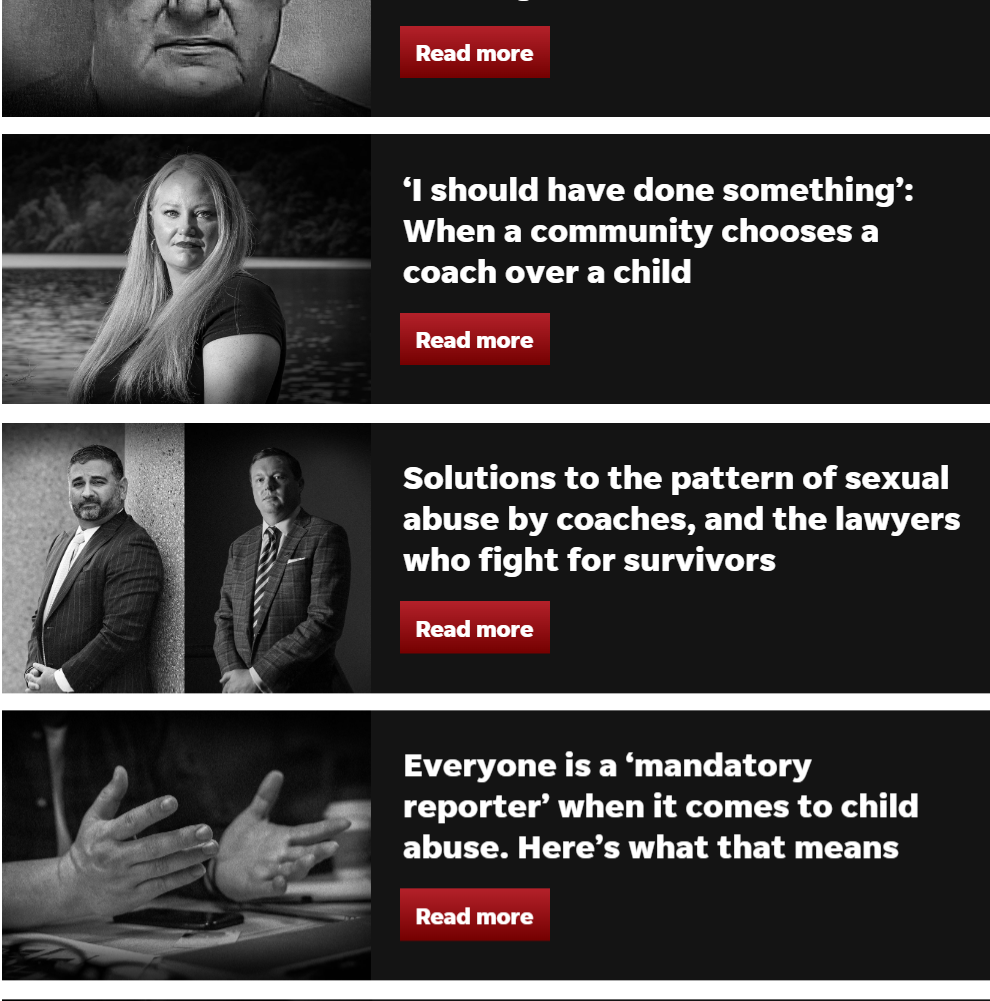
Late last year, the Courier Journal’s Stephanie Kuzydym published a powerful series on school coaches who’d been accused of sexual misconduct — often with little public acknowledgement.
In all, she and her colleagues found 80 cases of alleged misconduct over the past 15 years, hidden by various kinds of nondisclosure agreements (NDA’s) that are still allowed in the state but have been banned in others.
Along the way, she learned a lot about how to find hidden NDA’s, school insurance policies that cover sexual misconduct — and reluctance among adults to confront rumors and open secrets.
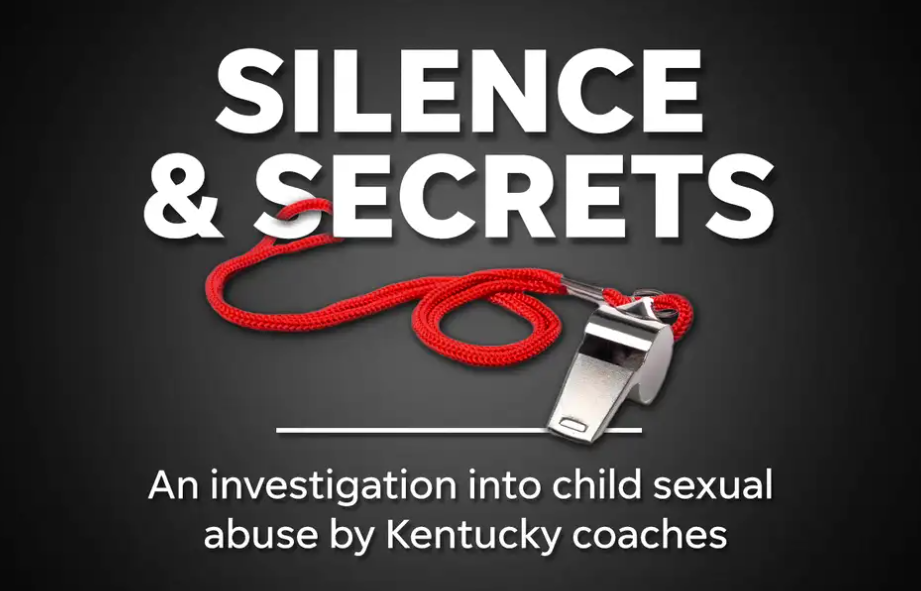
In the following interview, Kuzydym shares how she came to produce this series, called Silence and Secrets, and how her background as a sports reporter helps her work.
“I can’t tell you how many times I walked in my editor’s office and said the word ‘Disgusting,” she told me. “This is disgusting.”
“This is disgusting.”
Conducted by video, this interview has been edited and condensed. It’s the latest in our series on covering school-based sexual assault.
For people who haven’t read the series yet, can you give us the gist of what you found?
Steph: It started with two local coaches who were charged with charges related to child sex abuse, and we dug through newspaper reports and court records and old radio and TV reports and did all sorts of Google searches and archive searches to find that at least 80 cases of alleged sexual misconduct by Kentucky middle and high school coaches had happened during the past 15 years. We found that the Kentucky legislature hadn’t passed laws that have been on the books in every state that touched Kentucky since 2018.
You also learned a lot about nondisclosure agreements, right?
Steph: Last session, the legislature proposed a bill that would prohibit non-disclosure agreements related to child sex abuse in schools. I kept asking legislators and sources what school district do you know that has had an NDA for this, and I kept getting the response, ‘Well, I don’t know. It’s whispers. We’re hearing rumblings about it.’ But no one could point to a specific school district.
And when I went and asked for NDAs from every Kentucky public school district. I got almost no records back, and I couldn’t figure out why. Why would you put in the state law you can’t have an NDA if there are no NDAs, right? Well, it turned out that school district attorneys refer to them as ‘confidentiality agreements’ and they’re often embedded within settlement agreements.
So then I requested those and started looking through the settlement documents to look for a confidentiality clause. What started as two coaches turned into a whole lot more. You don’t know what you don’t know — even if it’s staring you right in the face.
“You don’t know what you don’t know — even if it’s staring you right in the face.”
What else did you not know that you didn’t know?
Steph: So many things. I didn’t know that there were insurance policies that school districts have for sexual misconduct and abuse coverage. And if that school districts carry this insurance, it tells you that it can happen. Meantime, all I’m being told is ‘this doesn’t happen.’
What else didn’t I know? I mean, all of it.
I had one source who was willing to talk to me about child sex abuse at the hands of coaches. One. I have a lot of sources, but all the rest of them just completely went silent. They wanted nothing to do with the topic. They were like, ‘Well, that doesn’t happen in our district.’
But then USA Today reporter Steve Berkowitz was the one who was like, ‘Do you understand all the nuances of the Title IX law?’ And I was like, ‘No.’ And he’s like, ‘You should just go look at, you know, if there’s any OCR [Office of Civil Rights] complaints against any of them, and then from there, see who their Title IX district coordinator is.’ And if they don’t know who their Title IX coordinator is, you have a problem. There’s nobody there to go to. You have no idea who to (report) to.
“I have a lot of sources, but [most] wanted nothing to do with the topic.”
See below for previous articles from The Grade about covering sexual predators (and other school secrets).
Have you covered this topic before?
Steph: No, I knew very little about child sex abuse before this project started. It’s weird, because the previous project I did had roots back in my hometown, and this one does too. There was a child sex abuse case by the assistant volleyball coach right after I had graduated high school, and that coach ended up going away to jail for, I think, 20 some years. … So I understood how — ‘everybody knew and nobody was saying anything — and then when it kind of leaks out, there’s rumblings.’
I think school-based sexual abuse is an under covered story, and I keep wondering when this will become impossible to avoid. But you’re primarily sports investigative reporter, right?
Steph: I look at a lot of my stuff through the lens of sports. But most sports reporters cover a beat, and I don’t do that anymore. In fact, if you asked everybody here in the newsroom what I cover, what my beat is, they would probably say the ‘death and trauma’ beat. I like to say that I cover the intersection of kids and health and safety. A lot of my stuff focuses through the lens of sports.
Why look at child sex abuse (or any other topic) through the lens of sports?
Steph: When you go to a restaurant tonight, what’s going to be on the TV? It’s not going to be the local school board meeting. But if you can bring people into the story through sports, it’s such a powerful (connector). It brings so many people together from so many aspects of life. People have been trying to tell the story of teachers who are abusing kids, but there’s a nuance to it being a coach. It just adds a whole other layer.
How do you learn to report around sources who are shut down?
Steph: I had a really great mentor, a former sports editor of the Cleveland Plain Dealer, and I used to go to him and complain about non-answers I was getting from coaches. And Roy, my mentor, would say, ‘Well, you know, there’s a whole other world out there that involves documents.’ And so, I think I just started realizing that if the coach is going to shut down and not talk to me, that’s fine. That’s his choice. But if there are other things that say otherwise, then let’s go look at them.
Did working on this series make you think about your own school experience?
Steph: Oh, constantly. I think back all the time. I mean, I was an athlete myself. Recently, in therapy I’ve been wondering now, like that coach, ‘Was that grooming? Like this moment right here?’ So, it’s made me analyze my past a lot.
Insider’s Matt Drange started out at his high school, grappling with his own having turned a blind eye. Something was definitely going on in my high school, that’s for sure.
Steph: It was never something that came up during my high school years. I was in college when the one that was exposed was exposed. It’s more been like asking the questions and still receiving no answers and but reviewing the settlements … sometimes, I guess I just wonder, ‘What will it take? What does it take?’
People talk a lot about Jerry Sandusky and Larry Nassar as if they’re isolated cases. But when I started talking to more people and talking to survivors, that was like the biggest thing for them: it’s not just a one-off thing.
Is there anything different, different about doing an investigation on child sexual abuse in schools or athletic departments?
Steph: Yeah, everything was different. This was nothing like anything I’ve ever reported before. It’s not a topic people want to talk about, regardless of even if you’re in a newsroom or at a coffee shop. I have a very limited amount of people who are willing to open up and talk about it, especially on the record.
And what about in the newsroom?
Steph: My editors have been incredible. They extended my deadline to give me more time. They saw what was happening and that we were coming across more and more incidents. They saw that the longer I spent on it, the more people were willing to open up and talk about it, and that it’s important to them. But it’s not something like we’re going to chat about over the water cooler, right? I just don’t bring it up. It’s such a heavy, disgusting topic. I can’t tell you how many times I walked in my editor’s office and said the word ‘Disgusting. This is disgusting.”
“I can’t tell you how many times I walked in my editor’s office and said the word ‘Disgusting.'”
Do you think this story is going to get picked up or replicated in other places?
Steph: I mean, could it be? It could be. Absolutely, yeah. Kentucky is a microcosm of what’s happening in the nation. I mean, Billie-Jo Grant has a database of all of these headlines that have happened, and what it took was just running those people’s names through enough searches and databases with sports terms to end up finding out if they were a coach.
For some reason, the headlines were always, always ‘This teacher.’ This teacher was arrested. This teacher was arrested, and the word coach almost never appeared.
Why do you think that the perpetrator is always identified as a teacher rather than as a teacher and coach?
Steph: I think reporters too often don’t always think through the sports lens of an educator.
In fact, there’s one coach in the project that was never named as a coach, anywhere. I saw a photo of him. I said, ‘That photo right there, that’s a photo of a coach….’ He absolutely was a coach, and nobody had called him a coach anywhere, in any previous reporting.
I think I spent so much time on sidelines that there’s a certain … apparel – It was a type of polo shirt that he was wearing, and you could tell that his arms seem to be, like, behind his back, because you know how, like, in a sports photo, you put your arms behind your back. When you’re the coach, you kind of puff up your chest. …. I’ve seen that stance before. Then we requested documents from the school district that confirmed he was a coach.
Reading these stories, I thought about my favorite coach in middle school. I was the captain of the soccer team. And before practice, he would talk to me in the coaches locker room while he changed from his suit into his sweats. He would get fully naked, which looking back seems wildly inappropriate. What do you recall, if you feel comfortable saying?
Steph: I played tennis. Every Sunday after church, I would have tennis lessons. And every Sunday while I had my tennis lessons, my dad would sit there and watch the tennis lessons. I found it frustrating on the days I’d be playing bad, and would ask him, ‘Why do you have to sit there and watch me the whole lesson?’ And my dad used to say, ‘As long as I’m paying $60 for the lesson, I’ll watch as much of it as I want.’ But it wasn’t just that. It was that I was a young girl, and I always had male tennis coaches. My main tennis coach was phenomenal. He never laid a hand on me, never groomed me. But every lesson I ever took, I would look up and my mom or dad would be there, never saying anything, but watching.
Thank you so much for creating this amazing story and talking to me about it. It’s a tough topic, but an important one.
Steph: I think the thing I always come back to is this day where I sat in a former high school athletic association commissioner’s office and he was wearing a pin that said, ‘Kids First.’ And you know, you talk to administrators doing these interviews …They say, ‘The safety of our students is the number one thing.’ But does safety end at tornado drills and bomb threat drills? This is not a new problem. Where does that idea of safety turn into silence and secrets?
Previously from The Grade:
Your high school journalism teacher was a serial sexual predator
Is K-12’s #MeToo moment finally here — & will journalism help play a role?
Secret agreements in special education
How Bethany Barnes became a star education reporter
How to investigate sexual abuse at Native American boarding schools.