While EWA’s new report reveals a lot about who’s covering education news and how journalists perceive themselves, it downplays deeper questions about coverage quality.
By Alexander Russo
A new poll from the Education Writers Association (EWA) isn’t remarkable for what’s changed since 2016, when it first released a similar report on the state of the education beat. It’s more noticeable for what hasn’t changed – and for the important questions it leaves out that could provoke reflection and improvement in the field.
Five years ago, EWA published a report on the state of the education beat, finding that the average education reporter was white, female, surprisingly (to me) optimistic about the beat, and a frequent user of press releases and other forms of PR.
At that time, I wrote about the many challenges that I thought the report revealed, as well as the surprisingly upbeat findings that it contained: Education journalism survey reveals diversity and independence challenges.
Now, EWA has published an update, showing some new information about a lack of resources and the harassment of journalists.
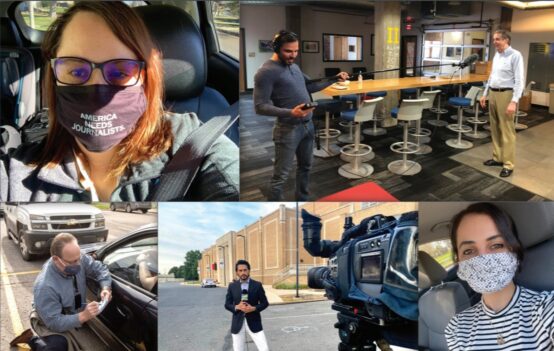
There’s lots of interesting information and analysis in the report, along with some anonymous insights and fun images of education journalists at work.
However, there are relatively few findings in the report that tell us anything we couldn’t have guessed. And the report recommendations, while worthy, tend to focus on issues like hiring, access, and funding rather than the kinds of things that most beat reporters and section editors can influence.
The report recommendations, while worthy, tend to focus on issues like hiring, access, and funding rather than the kinds of things that most beat reporters and section editors can influence.
Funded by Carnegie Corporation of New York with the help of the Wallace Foundation, State of the Education Beat 2021: A Critical Profession in a Time of Crisis is in many ways a repeat of the rah-rah 2016 report.
Based in large part on the responses of 419 EWA members and other education journalists to a 38-question survey, the 2021 report emphasizes the importance and value of the work education journalists do.
Education is “at the center of the news,” says EWA head Caroline Hendrie in the introduction to the report, based on survey results from the EdWeek Research Center. “The American public depends on education journalists to provide need-to-know information, answer critical questions, and hold public officials accountable during a fast-moving and multifaceted crisis.”
Education journalists are depicted as the hard-working, essential members of the journalism profession that they are.
Education journalists are depicted as the hard-working, essential members of the journalism profession that they are.
According to the new report, education reporters are still typically white, female, and surprisingly optimistic about the education beat. They are even more convinced that their work has impact than they were five years ago, perhaps a function of the current crisis. The only major difference is that education journalists now express a much stronger awareness of equity challenges kids face in schools and stronger concerns about lack of diversity in the journalism field.
Here are some of the most interesting and important findings, along with some thoughts:
WIDESPREAD HARASSMENT AND ABUSE
Sixty-one percent of those who responded say that they have been verbally or physically threatened or harassed by their audiences and/or sources. More than 1 in 3 have had problems with hostile or uncooperative education leaders. Roughly 1 in 3 women and people of color reported facing gender or racial discrimination by audiences or sources of their education journalism. It’s a sobering reminder of what reporters have to deal with. Given what I see on Twitter, I’m surprised these numbers aren’t higher.
STAFFING & MEMBERSHIP HOLDING STEADY
Speaking of surprises, financial difficulties and resource limitations were the top challenge journalists reported facing but just over a quarter of survey respondents said the size of their education news staff has decreased in the past two years – and just under a quarter said it has grown. Meanwhile, the number of EWA journalist members has grown to roughly 1,500, up from just over 1,400 five years ago. Clearly, education journalism hasn’t experienced the steep drop-off we’ve read so much about in the industry overall, at least not yet. Or perhaps survey responses don’t capture the full extent of layoffs.
UPBEAT VIEWS OF THE K-12 SYSTEM
Education journalists say they believe that their work is making a positive impact and that K-12 school systems are, too. Roughly half of those surveyed see K-12 education as “going in the right direction.” This view is even more positive among reporters who cover the K-12 system. That seems strange to me. For decades, schools have produced wildly inequitable results for kids and perpetuated systemic racism and segregation. Schools haven’t seemed to shine during the pandemic, during which inequalities have largely worsened. Maybe only optimists participated in the survey. Or maybe I am too much of a critic of school systems, like Bekah McNeel wanting education writers to write angry.
MASSIVE CLASS AND RACIAL GAPS
Four out of five respondents identify as white, roughly the same percentage as five years ago. That’s more than unfortunate, given the longstanding lip service to newsroom diversity. We need more education reporters who are first-generation or whose families experienced poverty when they were growing up. And we need many more nonwhite journalists than are currently covering the beat, as revealed in this report and in The Grade’s annual snapshot of major newsrooms and education outlets. The only silver lining is that EWA and education journalists who responded to the survey seem much more aware of the problem than in the past.
EXTERNAL RECOMMENDATIONS
This year’s report also includes several recommendations: give education journalism the resources it deserves, recruit and retain more nonwhite journalists, focus on equity, remove barriers to access to schools, and continue to support beat coverage.
However, most education journalists aren’t in a position to take action on hiring or budget allocations. So, what’s a beat reporter or section editor supposed to do? Asked this question, EWA responded that “leadership can come from many sources in the newsroom” and urged journalists to “heed our recommendations to the extent that it’s appropriate for their roles.”
That’s too bad. This poll could have been used as an opportunity to delve more deeply, asking journalists questions about their own newsroom experiences and challenging them to reflect. How do they hope to improve the quality of their work? What, if any, experiences with harassment or discrimination have they had in their own newsrooms?
The journalism profession is going through a fundamental reconsideration of its most basic ideas (like objectivity). And, as we’ve seen over the past year or two, the education beat has no shortage of challenges to address, beyond the issue of newsroom diversity.
Some of the most obvious challenges that education journalists face include how to depict fear-filled debates, ways to increase source diversity, covering communities that are not your own, skills and awareness when working in a more diverse newsroom, and how to put kids and parents at the center of the coverage.
Asking journalists for their thoughts on these deeper issues could have provided rich material for future discussion and improvement.
The journalism profession is going through a fundamental reconsideration of its most basic ideas (like objectivity). And, as we’ve seen over the past year or two, the education beat has no shortage of challenges to address, beyond the issue of newsroom diversity.
Taken literally, these findings represent a disturbingly glowing self-assessment, largely disconnected from questions that have roiled the rest of the journalism industry and concerns that have become increasingly common about journalism, including education coverage.
But it’s hard to tell whether the results represent journalists putting on a brave face or whether they really feel that upbeat. And of course, EWA is going to present the findings in the most sympathetic, positive light possible.
From where I sit, the current state of the education beat is mixed. Education reporters and editors include some of the smartest, most talented, and hardest-working people I know. Under difficult circumstances even before the pandemic, they are regularly producing impressive work.
However, this past year of pandemic coverage has made it abundantly clear that the the beat faces serious challenges regarding the quality of the journalism it produces. I wish that this report gave more time and space to confronting more of them.
Related stories from The Grade:
Smart ways to cover the wrenching debate over reopening schools
How to avoid writing needlessly alarmist school reopening stories
Reopening coverage should focus on students’ needs
ABOUT THE AUTHOR

Alexander Russo
Alexander Russo is founder and editor of The Grade, an award-winning effort to help improve media coverage of education issues. He’s also a Spencer Education Journalism Fellowship winner and a book author. You can reach him at @alexanderrusso.
Visit their website at: https://the-grade.org/