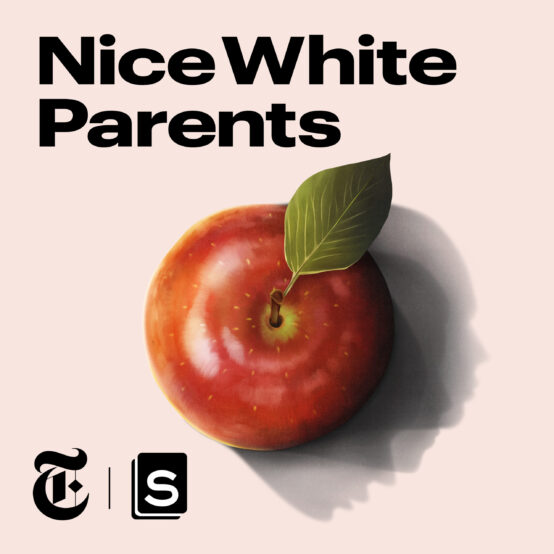
An interview with Chana Joffe-Walt, the journalist behind this year’s biggest education podcast, “Nice White Parents.”
By Alexander Russo and Tracy Tullis
Back in 2015, Chana Joffe-Walt helped make two of the most memorable education podcast segments of the decade, This American Life’s “The Problem We All Live With” Parts I and II, which focused on school segregation and inequality in Ferguson, Missouri, and Hartford, Connecticut.
Five years later, Joffe-Walt is responsible for this year’s big back-to-school podcast, “Nice White Parents,” a five-episode series that tells the deeply frustrating history of a Brooklyn middle school where white parents have stymied efforts at true racial and academic integration for the past 50 years.
In our interview, Joffe-Walt describes some of the thinking that went into the series, how it was reported and produced, and the rationale for putting white parents at the center of a story about the longstanding inadequacies of the education provided to Black and Latino communities.
“I was aware that focusing on the pathologies of white parents risked centering white parents,” Joffe-Walt told us. “I tried to be precise in my arguments. I believe it’s important to name and document white parents’ inequitable and antidemocratic practices in schools. They are often unnamed and obscured.”
The interview has been lightly edited for length and clarity.
I was aware that focusing on the pathologies of white parents risked centering white parents. I tried to be precise in my arguments. I believe it’s important to name and document white parents’ inequitable and antidemocratic practices in schools. They are often unnamed and obscured. – Chana Joffe-Walt
What made you want to do a whole podcast series about schools?
CJW: I love making podcasts and radio, but I’ve often struggled to find ways to add context and history to my stories. The medium is excellent at telling a linear, character-based narrative. If you deviate from that it can be hard to keep a listener with you.
I’ve had the same struggle reporting on the subject of schools. I can tell a story about a specific place and time, but it can be hard to zoom out from one school or one program to a larger system.
The serialized format meant we could look at the entire history of one place. We got to jump around in time, and moving from one episode to the next gives you a kind of reset. I could keep coming back to the same place from different angles and with different questions.
What was the jumping-off point for the story?
CJW: When I started reporting “Nice White Parents,” I was working on This American Life episodes on school segregation. I heard about the dramatic change at the School for International Studies and wanted to see what that would look like. The series basically tracks the chronology of my own reporting. I started in 2015 with the influx of white families, and I went back to learn the history only after I saw what happened that 2015-2016 school year.
How did you come to realize that focusing on nice white parents was the way to go?
CJW: It took a lot of reporting and a lot of conversions with my brilliant editor, Julie Snyder. After I found the letters in the archives from white parents in the 1960s, I got interested in the idea that white parents had a long history with this building. The more research and reporting I did, the more I learned about how white parents had shaped conditions at the school even when they weren’t present in the building! It felt like a history that no one was keeping. So many school reform efforts focus on who the schools are failing. This felt like an opportunity to look at who the schools are serving.
So many school reform efforts focus on who the schools are failing. This felt like an opportunity to look at who the schools are serving. – Chana Joffe-Walt
What surprised you most during the reporting? What were the most uncomfortable moments for you?
CJW: It was bizarre to sit in the archive and read letters white parents wrote decades earlier—letters that felt like they could have been written today. The fact that they didn’t send their kids also surprised me, although it probably shouldn’t have.
How did you manage to convince schools and especially parents to allow you to speak to students—on an issue that can be rather fraught? Did a lot of parents turn you down, or give conditional access? Did sources back out of the story during the reporting process?
CJW: Not really. It took me a long time to get access to Success Academy, but most parents were generally pretty open to speaking with me.
Certain moments in the story were really uncomfortable to listen to: for example, when you pressed Elaine Hencke about why she didn’t send her child to IS 293 — especially when she said the school seemed “chaotic.” We’re curious about the decision to raise the issue of racial coding, rather than simply ask, “What do you mean by chaotic?” And let listeners weigh her response.
CJW: That was not a super calculated choice. We were in the middle of a conversation. I told her that I’d heard words like chaotic and disruptive be used by white parents to express racial fears. I just wanted to know if that’s how she meant them and to hear more about her thinking at the time.
How did you decide when to interrogate your own beliefs and decisions out loud (on tape) and when to focus on other parents’ actions and words?
CJW: It felt important to say who I was relative to the subject matter from the jump. That was always clear to me. Beyond that, my editors will tell you that I resisted including every single personal section in the show. They could see that the show needed to be organized around my questions and, of course, my questions often come from my own experiences as a white parent and reporter. It was ultimately pretty straightforward when it made sense to talk about myself and when it didn’t. I shared my own experience when it helped drive the story forward.
Can you give an example of a situation in which you initially resisted making yourself part of the story?
CJW: In Episode 2, I wrote a bit about my own experience and my sentimental feelings about being part of an integrated school. That was not initially part of the episode, but my editor really pushed me to include it. It follows a conversation with one of the letter writers who wanted IS 293 to be integrated and is describing her sense that integration would not be so hard. She calls herself innocent. That hit me hard. It felt resonant with my own experience and the naïveté or intentional innocence I could see in many of my white peers. I wanted to underline that this version of integration as a virtue (as opposed to a remedy for injustice) is still very much with us today. I hoped that bringing in my own experience would link Elaine’s story from half a century ago to now.
What advice would you give to education reporters about how to cover segregation and inequality, based on your experience with “Nice White Parents”?
CJW: Education reporters have the best and hardest jobs. They don’t need my advice.
This version of integration as a virtue (as opposed to a remedy for injustice) is still very much with us today. – Chana Joffe-Walt
To some ears, “Nice White Parents” sends a clear message to education reporters that prioritizing voluntary school integration is a fool’s errand that is the obsession of nice white people and a few others. Is that the message you intended to send?
CJW: No. I didn’t really think of it that way. I was not trying to send a message to other education reporters, many of whom have done remarkable reporting on school segregation lately. I do think a healthy amount of skepticism is warranted when it comes to any “integration” plan that depends upon the voluntary participation of white parents.
What has the response been to the series now that it’s completed? How have you responded to the concern that “Nice White Parents” devalues or de-centers the importance and the role of parents of color?
CJW: The response has been overwhelmingly positive, at least what is coming to me. People have so many different kinds of relationships with schools. The most consistent message I’ve been getting is from people saying they recognized themselves or something about their school experience in a variety of ways.
In terms of valuing parents of color, as we were putting this together, I was aware that focusing on the pathologies of white parents risked centering white parents. I tried to be precise in my arguments. I believe it’s important to name and document white parents’ inequitable and antidemocratic practices in schools. They are often unnamed and obscured. It’s also important to tell stories about the organizing of parents of color, about Black struggles for liberation and equity (and might I recommend an excellent podcast series that does this called “School Colors”), but the goal of this show was to critique whiteness in particular.
I do think a healthy amount of skepticism is warranted when it comes to any “integration” plan that depends upon the voluntary participation of white parents. – Chana Joffe-Walt
You listed several books that were instrumental in helping you. What about podcasts, documentaries, or other forms of journalism that inspired or informed your work?
CJW: I was blown away by Ezra Edelman’s documentary “O.J.: Made in America.” I have watched it over and over to understand the way he reframes the story of O.J. Simpson by carefully building historical context around it. Other stuff: Anna Deavere Smith’s play “Notes from the Field.” Kartemquin’s “America to Me.” I loved The Boston Globe’s Valedictorians Project.
More recently, Ziwe Fumudoh’s Instagram Live show and Emmanuel Dzotsi’s “The Least You Can Do” episode for the podcast “Reply All” both pushed me to question some long-held beliefs about the utility of shame and guilt in changing culture.
Do you have any plans for follow-up episodes, to see how it’s going at District 15 middle schools now that the integration plan has been implemented?
CJW: It was so hard to put this series down! I kept going until I found satisfying answers to my own questions. I’d decide I was done and then return to take a look into the charter school. Then I truly decided I was done, and the District 15 plan happened. It felt important to include that. After that, we finished the writing and reporting, and a global pandemic shut down the entire school system. I guess what I’m saying is there is always more to report! For now, though, I don’t have any plans for follow-up episodes.
Related from The Grade
Nice White Parents: a different way of covering school inequality
Fear, complicity, and guilt get in the way of covering school segregation, says New York Times reporter (featuring Nikole Hannah-Jones)
Widening the lens: What makes Casey Parks’ New Yorker story so good
How a ProPublica immigration reporter profiled a Long Island high school student trying to get out of MS-13 (featuring Hannah Dreier)
Hard reporting: Why reading went under the radar for so long – and what one reporter is aiming to do about it (featuring Emily Hanford)
ABOUT THE AUTHORS

Tracy Tullis
Tracy Tullis is a freelance journalist and public school parent who lives in Brooklyn. You can follow her on Twitter at @TracyXTullis.

Alexander Russo
Alexander Russo is founder and editor of The Grade, an award-winning effort to help improve media coverage of education issues. He’s also a Spencer Education Journalism Fellowship winner and a book author. You can reach him at @alexanderrusso.
Visit their website at: https://the-grade.org/