A journalist reflects on how poorly national journalists covered a campus controversy when she was a student journalist — and gives reporters helpful suggestions for doing better this time around.
By Seyward Darby
In the spring of 2006, I was the editor in chief of The Chronicle, Duke University’s student paper, when the news broke that an exotic dancer had accused members of the lacrosse team of rape.
Much of the next few months was a blur — I was working non-stop coordinating our coverage of the biggest public crisis Duke had ever faced.
What was always in sharp relief, however, was the national media coverage of the situation.
TV, newspaper, and magazine reporters came looking for a salacious, black-and-white story about a horrific crime and a campus in turmoil, and they framed it that way despite a lack of physical evidence, in the first instance, and evidence to the contrary, in the second.
TV, newspaper, and magazine reporters came looking for a salacious, black-and-white story.
They gravitated toward sources willing to give incendiary quotes or speculate provocatively, and they regurgitated the district attorney’s comments about the case as if it were gospel.
Some outlets also tried to use the student newspaper’s office as their workspace and asked the staff for reporting help without any promise of attribution.
I still remember a national journalist asking me for a copy of a key search warrant as a favor, when they very well could have gotten it from the same source we did (the authorities), and a phone call in which a national reporter asked for the names of “a few good Black students” who could talk about the racial dimensions of the story. (To this day, I cringe at the use of the word “good.”)
It was stunning to me, at the tender age of 20, how lazy, sloppy, and exploitative so much of the media were.
It was stunning to me, at the tender age of 20, how lazy, sloppy, and exploitative so much of the media were.
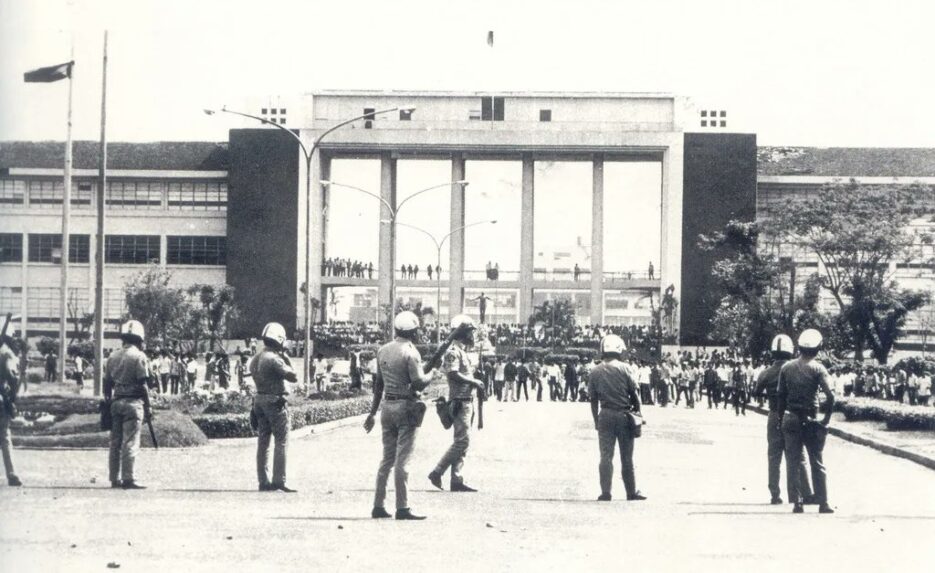
These memories came flooding back to me last week as pro-Palestinian campus protests proliferated across the country, prompting me to tweet about “how awful and off-the-mark most of the professional media” covering the lacrosse case were.
It didn’t have to be that way, nor does it have to be now.
My advice for education reporters and any others covering the swell of campus protests is this:
– Student journalists are great resources. Treat them as professionals. If you’re going to utilize their unique expertise, you should compensate them, or at the very least give them attribution for their work.
– Remember that student journalists probably look up to you, and comport yourself accordingly. I came away from the Duke case absolutely certain I would never want to work in TV news because of how irresponsible and disingenuous the reporters working in the medium were. Don’t be like them.
– Don’t frame stories about the “mood” on campus around the quotes of just a couple of students. Spend time talking to a lot of people both on and off the record (or, if you’re not able to access campus because of draconian media restrictions, seek out students on social media). More importantly, spend time listening.
– Don’t use a single source as a representative voice for a bluntly defined faction of students — Jewish students, for instance. Don’t let your editors shaping your work do it either.
– Always differentiate between students and non-students. Just because a person is on or near campus doesn’t mean they’re affiliated with the university or part of the student movement taking place. Opportunistic provocateurs abound, and they must be identified as such.
– Don’t treat the words of the administration — and certainly not the police — as more worthy, valid, or authoritative than those of students. Adults are fallible, and sometimes they’re simply wrong. (Exhibit A: the disbarred DA from the Duke case).
Don’t use a single source as a representative voice for a bluntly defined faction of students. Don’t let your editors shaping your work do it either.
The Duke case and much of the reporting on it proved to be colossal follies.
As a result, some of the massively consequential issues that informed the crisis — racism, privilege, inequality, toxic masculinity — were never explored in earnest. People wanted to look away, to move on.
Today I’m struck by how the looking away is happening from the start.
Too much of the coverage and commentary about the campus protests dismisses them as impetuous, immature, or unrealistic.
The students — and the faculty supporting them — are envisioning and demanding peace, justice, and a better global future. They’re doing so in good faith and often at great personal risk.
Their ideas deserve to be taken seriously.
Seyward Darby has been the editor in chief of The Atavist Magazine since 2018. Previously, she worked as an editor at Foreign Policy and The New Republic. You can follow her on Twitter/X at @seywarddarby.
Previously from The Grade
Campus protest coverage critique (newsletter)