In this week’s newsletter: Districts continue to stumble in their efforts at helping students recover. A religious charter school application is rebuffed in Oklahoma — for now. Blunt insights from the head of the Alabama Education Lab. And the Education Writers Association awards snub APM Reports’ groundbreaking “Sold a Story.”
STUMBLE & RESPONSE
The big story of the week
The big story of the week is how difficult and potentially ineffective many pandemic recovery efforts appear to be — even as time is passing and districts are losing kids. Free preschool spots are going unused, as are extra days for learning recovery (New York Times, LA Times). Meanwhile, chronic absentee numbers remain high, efforts to help English learners remain low, and special ed evaluation backlogs are massive in some places (The 74, ABC, WPRI, KUT). Looming in the not-too-distant future is the end of federal ESSER funding — and the growth in per pupil spending as enrollments decrease (Chalkbeat, PRISM).
In response, some states are considering changes in attendance requirements (Virginia Mercury). Some advocates are trying to help parents understand just how behind their kids may be — even if their grades are good (Sacramento Bee). Other districts like Portland are competing for kindergarteners (Willamette Week).
Other big education stories of the week:
📰 RELIGIOUS CHARTER SCHOOL RULING: Oklahoma’s state charter school board rejected a preliminary bid from the Catholic Archdiocese of Oklahoma City for what would be the first publicly funded religious charter school in the U.S. But the fight is not over — the board gave the archdiocese 30 days to revise and clarify their plan (StateImpact OK, The 74, Washington Post, USA Today). The issue could ultimately end up at the Supreme Court (The Oklahoman, Chalkbeat). Meanwhile, efforts to expand private school choice are facing a different, but no less bumpy, road in rural Texas and other conservative parts of the country (New York Mag, Texas Tribune, New York Times).
📰 READING LEGISLATION: Efforts to overhaul reading instruction continue to show up in state laws and budgets. A bill in Oregon would put $120 million toward transforming instruction (OPB). Ohio Gov. Mike DeWine’s budget proposal includes $64 million for “science of reading” curriculum (Ohio Capital Journal, The 74). Virginia has become the first state to require schools to offer dedicated support for struggling readers through 8th grade (EdWeek). And Kentucky districts are under a deadline to pick new reading programs (Courier Journal). But teachers in Ohio have expressed concerns about state-level mandates. A Tennessee third grade retention law has proven controversial (Hechinger Report).
AFTER-SCHOOL SEARCH
The best education journalism of the week
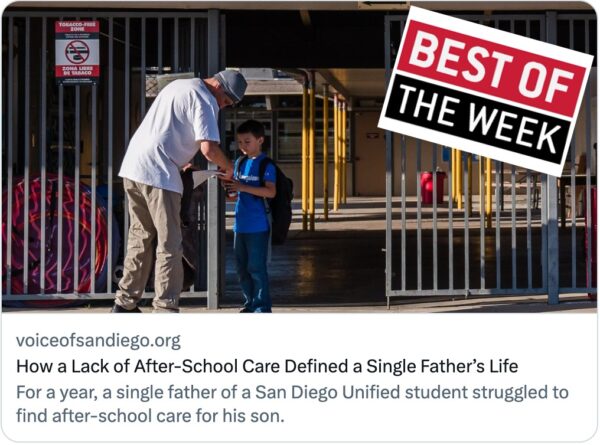
The best education journalism of the week is Jakob McWhinney’s How a Lack of After-School Care Defined a Single Father’s Life for Voice of San Diego.
Like many others, parent Jared Goossens struggles to find after-school care for his child so that he can get and keep full-time work. But after-school programs are full or don’t offer transportation — and searching for options has become a chronic source of frustration. To support himself and his son, he delivers food.
In the end — spoiler alert — a bump in state funding allows the district to expand its after-school program, and Goossens is one of about 1,500 whose children get in. However, there are still thousands of San Diego parents waiting for help. As Goossens says in the piece, “It shouldn’t be this hard for a working parent barely scraping by to find care.”
What I like about this piece is that it uses a single story to illustrate a much larger problem and that it describes an excruciatingly frustrating situation without victimizing the parent or vilifying the school system. If you’re reminded a bit of an Eli Saslow story, you’re not alone.
BONUS
🏆 Six-week waits, 1 counselor for 8 rural districts: These are some of the hurdles facing youth mental health (Green Bay Press Gazette)
🏆 No winners, only losers: $1 million California education contest ends in a bust (SF Chronicle)
🏆 Fake Calls About Active Shooters Are Hitting More Schools (Wall Street Journal) See also Boston Globe
🏆 East High shooting spotlights tenuous balance between school safety, “moral obligation” to educate kids (Denver Post)
🏆 One Month After School Stabbing, Santa Rosa Students, Parents and Teachers See Different Solutions to Safety (KQED San Francisco)
‘WHAT PARENTS NEED’
Our latest columns and commentary
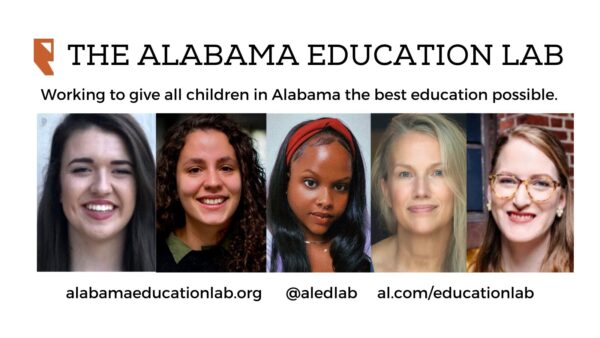
Above: The Alabama Education Lab Team.
I’ve wanted to interview outspoken Alabama Education Lab editor Ruth Serven Smith (far right) for a long time — and she produces sharp insights that should be of interest to anyone in education journalism.
“One thing that’s been challenging to learn is the difference between what journalists are interested in and what readers are interested in,” says Serven Smith.
“I always go back to what parents need to make good decisions for their family — today.”
LOTTERY GROWTH IN DC
Coverage of promising school innovations & signs of progress
💡 After expanding a policy that prioritizes at-risk students, D.C. public schools saw a 3% rise in lottery applications for the 2023-24 school year and a higher-than-normal 74% of families being admitted to a school they applied to (Washington Post).
💡 Fifty four percent of English learners at a school serving mostly low-income Latino students in California’s Central Valley are reading and writing at grade level — more than four times the state average (EdSource).
💡 California’s once-imperiled online community college system is attracting older applicants with flexible course sequences and free materials, including loaned-out Chromebooks and digital textbooks (CalMatters).
💡 A school district in Mass. with mostly white teachers is encouraging young people of color to become educators by recruiting from HBCUs and local high schools (WBUR).
Read more about the importance of covering promising innovations and preliminary successes.

PEOPLE, JOBS
Who’s going where and doing what
Above: Idaho Statesman education reporter Becca Savransky produced a blockbuster story (with amazing photos by the Statesman’s Sarah A. Miller) on the “worst-funded schools in the nation.” Don’t miss it.
🔥 EWA awards: The list of finalists is out — and as usual it’s full of some delightful surprises as well as surprising snubs. One hidden gem? EdSurge’s Emily Tate Sullivan, nominated in the small newsroom beat reporting category for her coverage of “side hustle culture” among underpaid educators. One glaring omission? “Sold a Story,” APM Reports’ standout podcast. “Across all categories in the 2022 awards, we received many high-quality submissions that informed the public about critical issues in education,” said a statement from EWA head Kathy Chow, who declined to be interviewed. “Many worthy submissions weren’t recognized because so many newsrooms have produced such great journalism.” On Thursday, “Sold a Story” received a Peabody nomination.
🔥 NPR Twitter drama: NPR famously suspended its use of Twitter this week after being falsely labeled as “state-affiliated media.” But the outlet has been careful not to say it was quitting the site permanently, and not all NPR ed reporters have suspended their individual use. Elissa Nadworny and Sequoia Carrillo appear to be staying, while Cory Turner says “peace out … for now.”
🔥 Career moves: Maddie Parrish, formerly of Chicago’s South Side Weekly, is joining Yana Kunichoff covering K-12 education at the Arizona Republic. Congrats!
🔥 Job openings & deadlines: The Modesto Bee is hiring an education reporter. WBUR Boston is looking for its next education reporting fellow. Applications are due May 15. And apply by April 27 to be a part of the next “Complicating the Narrative” cohort, part of the Solutions Journalism Network.
🔥 Student journalism spotlight: High schoolers in Pittsburg, Kansas, investigated their principal and found he had fake credentials from a diploma mill, prompting him to resign. Kudos to their journalistic savvy!
APPEARANCES, EVENTS, & NEW RESOURCES
What’s happening and new research
⏰ Upcoming: Stay tuned on April 26 for AFT head Randi Weingarten’s appearance before the House Select Subcommittee on the Coronavirus Pandemic during their hearing on the consequences of school closures. Should be interesting. And the Alabama Ed Lab’s Trisha Powell Crain is set to appear today at the state Opportunity Summit, talking about her series on underfunded but high-achieving schools.
⏰ Research: A UCLA study found that violence in California middle and high schools experienced a steep decrease over 18 years — though the study ended before the pandemic. Another University of California study shows high rates of expulsion from preschools for autistic kids, as reported on NPR. The 74 reported on a new CRPE report showing that schools that focus on SEL, mentoring, and career prep are giving parents what they want.
⏰ Resources: For the Carolina Public Press, Lindsey Wilson calls for a common language when talking about mass shootings, noting the differences in how databases define them, including school shootings. If you’re covering a school voucher expansion in your state, check out this February EWA webinar, featuring Cara Fitzpatrick and others.
⏰ Reporting tip: “As a journalist who often writes about teenagers — and can only print a sensitive interview with a minor with their parent’s consent — if I had a parent tell me the story of their child’s identity without including, let alone consulting, their child, that would be a red flag,” tweets NBC News reporter Kat Tenbarge. Well worth considering for education reporters.
THE KICKER
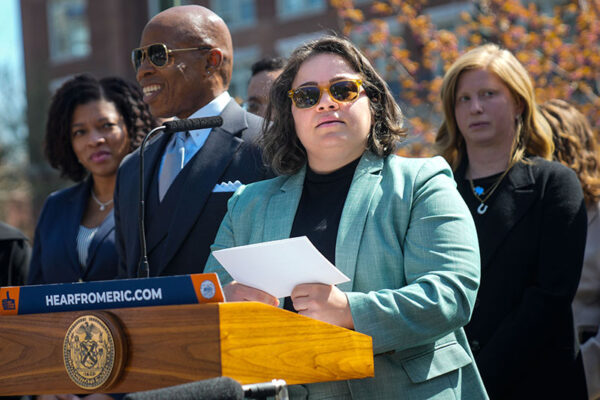
NYC’s first ever “rat czar” Kathleen Corradi (above) used to be a Brooklyn elementary school teacher, notes NY Daily News ed reporter Cayla Bamberger. “There’s always an education angle.”
ABOUT THE AUTHORS

The Grade
Launched in 2015, The Grade is a journalist-run effort to encourage high-quality coverage of K-12 education issues.
Alexander Russo
Alexander Russo is founder and editor of The Grade, an award-winning effort to help improve media coverage of education issues. He’s also a Spencer Education Journalism Fellowship winner and a book author. You can reach him at @alexanderrusso.
Visit their website at: https://the-grade.org/