Over the last two years, AL.com Education Lab editor Ruth Serven Smith has tried to focus on readers’ immediate needs and interests — rather than what journalists might want to write about. It hasn’t always been easy.
By Alexander Russo
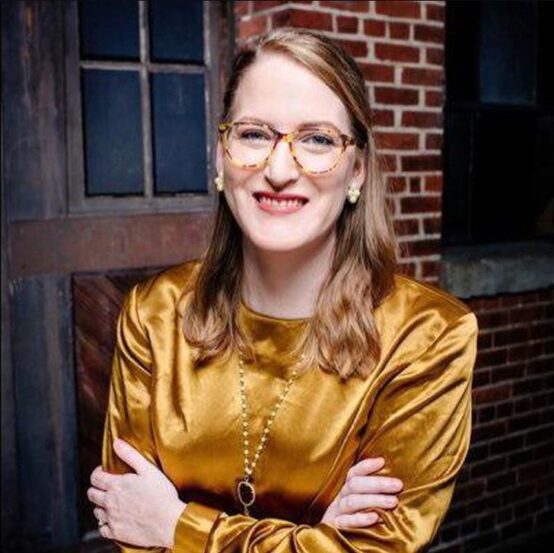
Ruth Serven Smith, the founding editor of AL.com’s Education Lab, is one of the most interesting education journalists out there. An Oklahoma native, she went to a classical Christian school, and she’s been a paralegal. She’s into handmade clothes and has written award-winning fiction.
The Alabama Education Lab at AL.com she’s led for the past two years isn’t your typical education lab, either. It’s statewide, covering all 67 counties and 155 school districts in the state. It’s not the recipient of one or two of large foundation grants like Seattle or Charleston ed labs, according to Serven Smith.
In this new interview, Serven Smith describes parents who confuse news stories with telling them what to do and the challenging process of figuring out what readers really want to know about.
“One thing that’s been challenging to learn is the difference between what journalists are interested in and what readers are interested in,” she told me in a recent interview. “I always go back to what parents need to make good decisions for their family — today.”
I always go back to what parents need to make good decisions for their family — today.
The following interview has been edited and condensed.
What’s it like being an education editor right now?
RSS: I think the tempo has eased up a little bit this past year. When I joined in 2021, it was nonstop just all the time because schools were the most important thing everyone was covering during Covid. My day to day is meetings and phone calls and trying to get coffee with people to understand what the inside of a school is like these days. And I’m trying to get into schools every once in a while. I’m the traffic cop, making sure everybody goes where they need to go.
What are the myths or misperceptions about education labs, if any?
RSS: Every ed lab team is funded and set up differently. I don’t compete with them. My goal is to do the best local education coverage in the U.S. South and make a real difference for families and communities. And my team does that.
What do you wish you’d known coming into this project?
RSS: I typically tell people that I wish I had thought more about how it’s an editing job, but it’s not just about editing stories. It’s about managing a team and making sure people are happy and thoughtful and thinking ahead — not just writing the stories of today, but thinking about the stories for tomorrow.
It’s an editing job, but it’s not just about editing stories.
Looking back two years, what’s the thing that makes you feel proudest?
RSS: I think I have two projects I can mention. One is a project that Trish Crain did called the High Flyers project. She crunched a lot of data and found 43 Alabama schools that were under-resourced but overperforming. And then she went to those schools, talked to people, talked to teachers, talked to students, talked to community members, and we developed this whole package of data driven stories, solution stories, video, social media, and an engagement event. And the response was awesome.
The other coverage I’d mentioned is our ongoing national education collaborative. It’s been great to see some of my reporters really push to get Alabama schools on national news and help them learn how to do that kind of coverage. And we’ve seen a really great response too, from teachers, schools, and colleges when they see those stories.
Examples of the ed lab collaborative include stories about community colleges, reading remedies, and remote school.
Are there things that you haven’t been able to do, or tried to do that didn’t work out?
RSS: One thing that’s been challenging to learn is the difference between what journalists are interested in and what readers are interested in.
During last year’s legislative session, we were covering LGBTQ issues and critical race theory and some people were really interested. I don’t want to make it sound like our LGBTQ coverage wasn’t worth it or didn’t have an impact. It did. Multiple students and parents praised our student-focused coverage, and our feature on an LGBTQ charter school is an EWA award finalist. But it was still sometimes a struggle to help local readers care about the students’ perspectives. We had challenges with budget stories, too.
Is nobody reading the story because it’s not reported very well? Or is nobody reading the story because they just don’t care? And if that’s the case, how do you get people to care? How do you reimagine the way that you’re putting it in front of an audience, and when do you just kind of learn to let the super wonky stuff go until there’s a time when it has a better news hook?
One thing that’s been challenging to learn is the difference between what journalists are interested in and what readers are interested in.
What’s the solution to get readers to read and to care about these kinds of stories?
RSS: We’re talking to kids and parents and teachers. We try and help people see this is not just as a culture war issue for national talk shows but a story that impacts individual students and parents and teachers in your community who have different thoughts and feelings, opinions, and here’s what they’re saying.
Do you have a clear sense of the big stories of the year for AL.com?
RSS: We’re looking at achievement rates. We’re working pretty heavily right now on more coverage of special education and students with disabilities. The other topic that we’re focused on is examining how enrollment is changing around the state. And then the other topic I really want to follow more is we have some college attainment programs in the state that give certain high school students full scholarship to in-state schools.
What’s getting covered too little?
RSS: I always go back to what parents need to make good decisions for their family — today. That’s a pretty narrow lens and that cuts out a lot of the noise. Like “When am I getting my EBT benefits this month?” or “When is kindergarten registration open and what papers do I need to have on hand?”
What does that lens leave out?
RSS: What a presidential candidate says about Harvard University. I don’t care. I mean, you know, it’s just not our lane. I’m not really trying to compete with the New York Times education desk. We have totally different priorities.
“When is kindergarten registration open and what papers do I need to have on hand?”
Where does school gun violence fit into your coverage priorities?
RSS: I’m less interested in gun violence in a specifically school environment. Alabama’s been lucky in that it hasn’t had any mass shootings at schools. But we have really high rates of homicide and children in particular getting injured and killed by guns all the time at home. According to Everytown, the state has the second-highest rate of gun violence in the country.
So we’re really looking at domestic violence and accidental shootings. I’m in the final stages of hiring a violence prevention reporter who will work with my Ed Lab team so they’re really going be looking at those kinds of outside-the-school factors that influence how children and families are affected by all kinds of violence.
What are the misperceptions you see out there?
RSS: We are not trying to tell you what to do with your kid. We’re just trying to help you have more information so you can make the best decision. It’s an accountability beat. It’s not a fluff or features beat. It’s about how local governments spend often the biggest budget that affects the most members of staff in a given area. The decisions made for somebody when they’re 6 through 18 affect the future course of their life. And we take it that seriously.
We are not trying to tell you what to do with your kid.
In what ways is education journalism growing and evolving? Are there any ways it still seems stuck?
RSS: There are a ton of journalists doing great work. It’s hard to take a national assessment of the beat since so much coverage is so localized; a story that looks super boring to me might be what the community needs to read.
Stakeholders in education coverage – parents, teachers, students, community members – often have very different priorities for coverage they want to see. And, finally, some teams have responsibilities to hit certain breaking news or SEO coverage that is targeted toward a specific audience or newsroom need.
But I do think we need more coverage of “news,” for lack of a better word; if nothing happens at a meeting, don’t write it up, or better yet, do more reporting next time to dig something up. And we don’t have to exhaust readers so much with hot-button culture war issues.
I’d like to see more coverage of useful information parents and teachers and students need to make daily decisions. That also helps journalists break out of historical and cultural blind spots and refocus on what the local community really needs.
I’d like to see more coverage of useful information parents and teachers and students need.
What’s your take on newsroom diversity, source diversity, and racial/cultural blind spots in education journalism?
RSS: I’m tired of editors talking about the issue and not stepping up to make their beat the best example of the newsroom in reimagining hiring, sourcing, and coverage that reflects their community.
Since we built my team from the ground up, we had the opportunity to hire and select talented journalists with a variety of backgrounds. My team has people who represent a range of races, ages, experience in journalism, religion, LGBTQ identity, and more.
We bring those experiences to our work. And I’m proud of how my team has stepped up to pilot different initiatives in the newsroom to improve coverage, like source diversity work.
Note: You can read the team’s commitment to telling diverse stories here.
What’s the trick to getting reporters into schools and classrooms, and why is it so worth it to you?
RSS: There’s no trick. Build relationships and cover stories. Not every story needs on-the-ground coverage, but I give my reporters time and space to visit schools regularly. We visit meetings, events, graduations, protests, town halls, and more. We’ve been to schools in about half of the counties in the state. I want to hit all 67 soon. Readers and schools recognize that effort and welcome us back.
Previously from The Grade:
The case for the Ed Lab model
How the Seattle Times education team covered the COVID-19 crisis
ABOUT THE AUTHOR
Alexander Russo
Alexander Russo is founder and editor of The Grade, an award-winning effort to help improve media coverage of education issues. He’s also a Spencer Education Journalism Fellowship winner and a book author. You can reach him at @alexanderrusso.
Visit their website at: https://the-grade.org/