In this week’s newsletter: The Supreme Court ends affirmative action in college admissions, for better or worse. Denver is the latest district to reconsider campus police. Only a minority of Florida districts make sexual abuse reporting information readily available. ProPublica’s Alec MacGillis generates controversy by lamenting the inadequacy of national coverage of school recovery efforts. WBUR’s Here & Now radio show is back producing important national education segments! And a programming note about next week’s newsletter.
RETURN TO SCHOOL POLICE
The big story of the week
The big education story of the week — other than perhaps the Supreme Court’s affirmative action decision — is the decision by Denver and a handful of other school districts to return to having armed police officers on at least some of their campuses. (WSJ, NYT, NY Amsterdam News, Chalkbeat Chicago, Education Week).
Three years after the George Floyd protest and innumerable incidents suggesting that school police can exacerbate student behavior problems and stigmatize BIPOC students, the Wall Street Journal reports that roughly 10 of the three dozen districts ended school policing programs after 2020 have — in many cases reluctantly — reversed course.
“We don’t want 100, 200 policemen,” says the father of a Denver student who was killed, according to the Journal. “But we want a little security so the students feel safe.”
Meanwhile, a jury has acquitted a deputy who failed to enter the building during the Parkland school shooting. A new investigation from Richmond, Calif., finds that while 40% of the past decade’s shootings happened near a school building, few elementary schools have gun safety programs — and most gun safety efforts are focused on mass shootings rather than the more common home and community shootings. District Administration reports a growing backlash against restorative justice in schools. And a judge has given Denver schools extra time to release the recording of its closed-door meeting about school safety.
Other big education stories of the week:
📰 AFFIRMATIVE ACTION: The Supreme Court voted yesterday to end affirmative action in college admissions, reversing course on 45 years of legal precedent and forcing colleges and universities to redesign their admissions processes (The 19th, Reuters, New York Times, Washington Post). While research shows that alternatives to affirmative action tend to leave Black and Latino students underrepresented, at least one expert — former Century Foundation fellow Richard Kahlenberg — thinks colleges could become more socioeconomically diverse in a post-affirmative action environment (Wall Street Journal, PBS NewsHour). For more on how the decision will change higher education, tune in tonight to a GBH Boston conversation on race and college admissions. Also check out this helpful LA Times explainer, debunking various myths and misconceptions.
📰 MORE SUPREME COURT: Earlier in the week, the court decided not to hear the case brought by a North Carolina charter school that wanted to force its female students to wear skirts, dealing a blow to conservatives who hoped they’d rule that charter schools are exempt from constitutional protections (Washington Post, Chalkbeat, LA School Report). This morning, the court also killed Biden’s student loan forgiveness plan, forcing more than 16 million borrowers who thought their loans would be forgiven to repay (Wall Street Journal, NBC News).
📰 SUMMER SCHOOL: It may be summer break, but thousands of kids are already back in the classroom for summer school — an effort to address the need for students to recover from the slow pace of learning during the pandemic (WLRN, NJ Spotlight News). Experts say summer school can offer students a big boost — but only if they actually show up, which is something that isn’t guaranteed (EdWeek, Marketplace). Meanwhile, research shows that reading for pleasure over the summer helps students stay on track, but fewer and fewer kids read for fun these days (EdWeek). And bad air quality is already an issue in places like Detroit and DC and Madison, which canceled school Wednesday.

HIDDEN INFORMATION
The best education journalism of the week
The best education story of the week is Kate Cimini’s Many Florida school districts make sex abuse help hard to find, which came out on June 22 from the News Press.
Sexual harassment and abuse are widespread problems in K-12 education. Federal law requires that schools publish information about sexual abuse and harassment cases online. However, Cimini found that “at just 14 of the 67 Florida public school districts and two independent schools examined did reporters find the information readily available and easily understandable.”
Cimini and her colleagues are doing great investigative work on a critically important topic affecting many students. We featured their efforts to report schools’ failures to report Title IX complaints this spring. This latest piece was highlighted in Local News Matters, a weekly roundup of local investigative reporting.
Bonus:
🏆 Millions unspent: CT criticized for denying dozens of grants to improve air quality in schools (CT Insider)
🏆 Glenn Youngkin’s Effort to Reshape Virginia’s Schools Is Off to Modest Start (Wall Street Journal)
🏆 Charlotte private school had more vouchers than students. And where’s the building? (WFAE)
🏆 Building Diverse Schools in Changing Neighborhoods (Vital City)
🏆 Should high-quality education be a constitutional right? (CalMatters)
🏆 These high school grads are the COVID Class of 2023 and have the stories to prove it (LA Times)

Above: Morning Joe segment featuring Alec MacGillis.
CONTROVERSIAL CRITIQUE
Our latest interviews, columns, and commentary
This week’s interview with ProPublica reporter Alec MacGillis — author of a recent story about schools’ struggles to add school days to learning recovery efforts — proved to be surprisingly controversial.
Not generally known as an education reporter, MacGillis has written a handful of feature-length education stories during and since the pandemic and takes the position that, with a handful of notable exceptions, mainstream national news outlets haven’t shown the necessary urgency or effort at chronicling inadequate recovery efforts — especially when compared to coverage of school culture wars.
“So much of the national education coverage these days has been focused on the culture war stuff,” says MacGillis. “And when you think about the scale of the two stories and … of their consequences, there’s just no comparison.”
A handful of journalists — including Meghan Mangrum, Beth Hawkins, Matt Barnum, and Christina Samuels — pushed back against MacGillis’ views, arguing that local and trade reporters have pursued the recovery story doggedly and that culture wars stories warrant the attention that they are being given.
A MODEL FOR CHANGE, ONE STATE OVER
Coverage of promising school innovations & signs of progress
💡 The latest episode of WHYY Philadelphia’s “Schooled” podcast examines the successful turnaround of nearby Union City, NJ, digging deep into the history of the state’s school funding formula to help listeners understand what it would take for Pennsylvania districts to make similar improvements (WHYY).
💡 Part Two of Chalkbeat’s look at the “post-pandemic crisis” in the teaching profession offers a helpfully straightforward list of research-based suggestions for bringing and keeping more teachers in schools, including some obvious ones like increasing teacher pay and some less so (e.g., a new approach to necessary layoffs) (Chalkbeat).
💡 An Orlando Sentinel piece about a new conflict-resolution model at a Florida middle school uses the perspective of nearly everyone involved — school leaders, counselors, and students — to shed light on a system-wide effort (Orlando Sentinel, 6/22).
💡 Part profile of a teenager working toward his GED, part history of Chicago’s efforts to solve a complex problem, this thoroughly reported piece takes a simultaneously optimistic and skeptical view of the city’s more recent attempts to engage young adults who are neither in school nor the workforce (Chalkbeat Chicago).
Read more about the importance of covering promising innovations and preliminary successes.
PEOPLE, JOBS
Who’s going where and doing what
🔥 Awards: Former WBHM education reporter Kyra Miles — now at MPR — won two Public Media Journalists Association awards for her stories about the impact of gun violence on teens in Birmingham and one of Alabama’s oldest Black communities. Education reporter Holly Korbey was among a group of MindSite News contributors who won 10 awards for their coverage of mental health over the last year. Congrats to all!
🔥 Pro tips: In response to her story breaking down the data on seclusion and restraint in Alabama schools, AL.com’s Trish Powell Crain tweeted, “A good editor once told me, ‘If they won’t give you information, find another way to tell the story.’” Indeed! Former Atlanta Journal-Constitution education reporter Patti Ghezzi lamented the “hand-wringy” coverage of AI in education, telling us, “Some students have always cheated, and ChatGPT is just another way to cheat.” Education scholar and author Tom Loveless also lamented education coverage, this time for its perceived lack of historical context: “I wish ed journalists and advocates read more ed history. I keep reading tweets that claim reading and math debates go back 20 or 30 years. They go back a century or more.”
🔥 Deadline: You have until July 17 to apply for the Solutions Journalism Network’s nine-month Journalists of Color Fellowship, which offers leadership training and mentorship for young journalists.
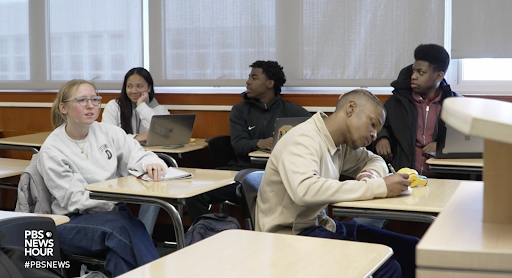
Above: Last Friday, PBS NewsHour ran this in-depth segment about what it’s like inside an African American studies class in Oakland, Calif.
APPEARANCES, EVENTS, & NEW RESOURCES
What’s happening and new research
⏰ Segments & podcasts: St. Louis Public Radio had a long segment on teachers changing jobs in Missouri and in some cases facing steep penalties for breaking contracts. WBUR Here & Now had two education features this week: one with APM Reports’ Emily Hanford on the research behind the “science of reading” and another on plunging NAEP scores featuring Harvard’s Tom Kane. And KQED’s The Bay podcast had The Guardian’s Abené Clayton on to talk about kids growing up with gun violence.
⏰ Research & reports: Future Ed has two new reports out: one showing that — despite little transparency — the largest amount of spending of the third and final installment of ESSER money in California is going toward academic recovery and another looking at how states are redesigning reading instruction. A new World Health Organization paper is out on the impact of COVID school closures on young people’s health and well-being in Europe. Also in Europe, during the first week of witness hearings in the COVID inquiry, British physician Sally Davies lamented the damage to a generation of schoolchildren during the pandemic. And lastly, EdWeek looked at the six states that have made school meals free to all students and asked, will more follow?
⏰ Resources: Stanford’s Big Local News debuted a new platform called Agenda Watch, which “centralizes agendas and meeting minutes from thousands of local city councils.” I’m told they’re working on adding school board and district proceedings as well. And EWA published a write-up about its panel earlier this month on covering civil rights in education from a historical and current lens. They had me at “putting student voices front and center.”
THE KICKER
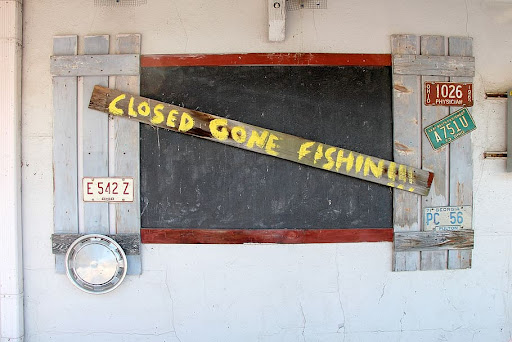
We’ll be off next week for the holiday and back in your inboxes July 14!
ABOUT THE AUTHOR
Alexander Russo
Alexander Russo is founder and editor of The Grade, an award-winning effort to help improve media coverage of education issues. He’s also a Spencer Education Journalism Fellowship winner and a book author. You can reach him at @alexanderrusso.
Visit their website at: https://the-grade.org/