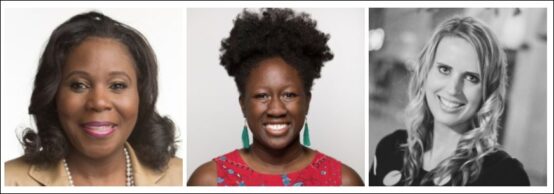
Education editors and reporters whose efforts deserve more attention.
By Danielle J. Dreilinger
Some education journalists carry the spotlight with them. They write for big, national publications and byline stories that Everyone Talks About.
Less noticed are some outstanding journalists at smaller publications — or editors, who don’t get a byline at all — who regularly produce extraordinary work.
Here are three of them: Yvette Ousley, the Philadelphia Inquirer editor who advocates for fairer and deeper coverage of the schools she grew up in; Aliyya Swaby, the Texas Tribune reporter who finds big stories in small places; and Jackie Valley, the Nevada Independent writer who finds the exceptional within the everyday.
Their work inspires their fellow journalists — including us.
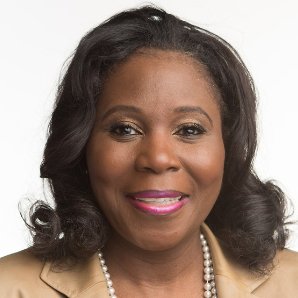
Unsung hero #1: Yvette Ousley, Philadelphia Inquirer
When Philadelphia’s Inquirer and Daily News teams merged in 2016, veteran Daily News journalist Yvette Ousley got a daunting assignment: Manage her former competitors, who had won Pulitzers, in their newsroom. Their former editor said their work came in picture-perfect. Did they even need her?
Yes, they did. Assistant managing editor for news John Martin taught her that “everyone needs an editor,” Ousley said in a phone interview.
Two of the paper’s education-focused Pulitzer winners, Susan Snyder and Kristen Graham, credit Ousley’s support, knowledge, and gut checks with making their work immeasurably better.
“She often will catch things that I miss,” said Snyder in a phone interview, whether it’s as small as a name spelled differently on second reference or as significant as offering a broader perspective.
A North Philly native who attended, covered, and sent her kids to all kinds of schools, Ousley knows local education backward and forward, Graham said. With far-flung family across the city, she’s never short of story ideas.
The only African-American content editor in the newsroom, Ousley speaks up to ensure the paper is fully and fairly covering Philadelphia’s black and brown communities. “If it’s on my heart, I lay it out there,” she said. Along with leading the four-reporter education team, Ousley is a deputy news editor and sits on a number of diversity and leadership committees. “I don’t leave my experiences at the door.”
Ousley has questioned the paper’s tendency to report the criminal records of black people but not those of white people. It’s changed how the news desk operates, she said. When a team of white reporters worked on a deep dive about a highly divisive crime case — an African-American college student was accused of stabbing a popular white real estate developer — they asked their editor if Ousley would read the draft.
Among several pages of changes she suggested, she told them they had to make further efforts to humanize the alleged attacker, even though his lawyer had told friends not to talk. The team sat down with her, did more reporting and made all the changes.
Now the investigative editor calls her all the time for input, she said.
She’s also set up (and provides) informal mentoring relationships for new black reporters and encouraged people in the newsroom to build relationships with co-workers who don’t look like them.
No surprise, the Philadelphia Association of Black Journalists gave Ousley its Impact Award in November.
Asked for examples of particularly fine work that Ousley has midwifed, Graham highlighted her colleague Susan Snyder’s extended profile of Hazim Hardeman, a community college/Temple University student who became a Rhodes Scholar after almost failing high school; her own coverage of the “tattered safety net” at Strawberry Mansion, a high school built for 1,800 that now educates less than a tenth that number; and recent stories about environmental threats that follow up on the Inquirer’s 2018 Pulitzer-finalist “Toxic City” series.
All are deeply descriptive, suspenseful narratives embedded in the fabric of Philadelphia —particularly the Philadelphia that fails to serve the people and communities that need resources.
Ousley credited Martin, her boss, for support big and small. He taught her “how to cut 300 to 400 words out of a piece really quickly and make it sing,” she said. “He definitely wants me to win.”
Start here: Forever Mansion?
Each week, The Grade takes a deeper look at education journalism. Sign up for the free newsletter.
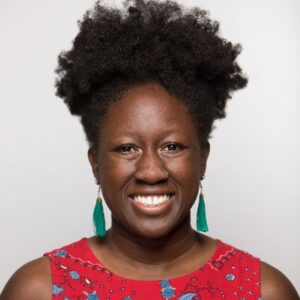
Unsung hero #2: Aliyya Swaby, The Texas Tribune
Perched … in the top row of reserved seats, 87-year-old Glenn Gordon said without hesitation that integration was a process “everybody accepted” in Longview.
“No problems whatsoever that I know of,” said Gordon, who retired from a local chemical manufacturing plant decades ago.
After a short pause, Gordon, who is white, then recalled one exception — the bus bombing.
That’s a moment in the Texas Tribune series Dis-Integration that Texas Tribune education reporter Aliyya Swaby talks about when you ask about her commitment to covering segregation and inequity. The bus bombing of 1970 destroyed “dozens of school buses that were meant to transport black students to white schools,” wrote Swaby and reporting partner Alexa Ura in their 2018 story. The perpetrators were sentenced to 11 years in prison.
Although persistent school segregation has been a big topic in education journalism nationally, the elderly Longview man isn’t the only person for whom the violent history is merely an afterthought, Swaby said in a phone interview. It doesn’t come up often among Texas lawmakers or superintendents during the five months every other year that she covers the legislative session, she said. But Swaby considers race and segregation fundamental to understanding the inequities they do talk about.
Swaby joined the Tribune in 2016 after reporting on education at the New Haven Independent. In phone interviews, the Tribune’s outgoing editor-in-chief Emily Ramshaw praised Swaby’s empathy; Ura praised Swaby’s moral compass. Those two qualities stand out in the many articles that Swaby, based in Austin, sets in rural Texas.
In a state of monster-truck-sized school districts, she takes deep dives into places like Longview, enrollment 8,400; Edgewood, enrollment 10,470, and 900-student Hearne. Places it would be easy to overlook or dismiss. They need the attention, Swaby said: “There’s not a lot of deep journalism happening in the rural places.” And it’s easier to tease out causes and consequences in a small area, as she and Ura did in Dis-Integration, the 2018-19 investigation that details the aftermath of federally mandated desegregation orders after which the state had largely given up on racial integration. The two women were named 2019 Livingston Award finalists for the first three stories in the series.
Ura praised Swaby’s commitment to ethics. “She’s known for sort of this incredibly stubborn, in a positive way, moral compass,” said Ura.
That commitment also comes through in her coverage of Hearne, an ever-shrinking district about an hour south of Waco that is perennially at risk of state takeover for academic failure. Swaby had been watching Hearne for a while, she said, when the Houston Chronicle reported in August that its high school had raised its state report card grade from an F to a B by taking advantage of a provision that lets schools claim students who plan to enlist in the military, whether or not they ever do, as “career-ready.”
While reporting the story, Swaby worried about how to show respect toward the children she interviewed and not reduce them to stereotypes. The stigma of being in a perennially low-performing district was “something the kids were really aware of,” she said.
“It’s really hard when you report on schools that are struggling,” Swaby said. “Every time you report on it, you’re perpetuating the same narrative.” To combat the assumptions, Swaby showed how the academic problems had been shaped by white flight to the neighboring district, reported on the improvement efforts at Hearne’s schools, and gave students, parents, and teachers the chance to rebut outside impressions.
Her 3,300-word story came out in early November. She’s now thinking about how to incorporate the story of segregation and inequality into the state takeover of the Houston school district.
Start here: It took this Texas school district 48 years to desegregate. Now, some fear a return to the past.
Follow The Grade on Twitter and Facebook to learn more about how the media covers education.

Unsung hero #3: Jackie Valley, The Nevada Independent
To ground herself in the education beat at the nonprofit Nevada Independent, Jackie Valley did what lots of education reporters do: She attended a lot of meetings.
But the former Las Vegas Sun general assignment reporter “just can’t get excited about those stories,” she said in a phone interview. “It doesn’t seem like it’s moving the ball forward.”
So she spent a year in an ordinary school in Las Vegas — and made the everyday special.
The school she chose, Sunrise Acres Elementary, wasn’t coping with a specific tragedy or abject failure or any of the other drama that typically gets a school in the news. Valley went in without an agenda or focus or plotline, she said, and chose not to focus on a single child or teacher.
Instead, she took a more holistic perspective. As she wrote, “a school, perhaps more than any other organization, is an ecosystem that builds off the collective work of all people inhabiting it.” Sunrise Acres Elementary was simply trying to continue some small successes amid the problems of poverty, transience, and overwork.
That made it all the more impressive that she was able to shape a five-part series, Stars and Struggles, which won a 2018 Education Writers Association award.
Veteran photojournalist Jeff Scheid, who took the photos for Stars and Struggles, said in a phone interview that he was just “amazed with how she communicates and how she gets people to feel comfortable.”
Among them was principal Margarita Gamboa, who revealed to Valley that she was, essentially, one of Sunrise Acres’ own. She barely spoke English when she entered kindergarten there; she had her first child at age 17 and dropped out of college. Writing about Gamboa’s childhood, including a water faucet that could be turned on only with pliers, Valley’s writing makes it clear how well the principal understood her students and their language barriers.
“You don’t know what’s going on,” Gamboa says. “You feel intimidated because you’re not sure if you are going to pronounce the word correctly.”
Valley searches for telling details to include in her daily stories as well. “I take the writing part seriously,” she said. “I don’t like there to be extra fluff … I want it to flow.” Nevada Independent editor Jon Ralston said in a phone interview that he would recognize Valley’s writing anywhere.
Her recent profile of the winner of a teaching award brought sweetness and substance to what could have been a throwaway story, starting with an anecdote about a mediocre student whom the teacher inspired to make enormous progress. “What can I say?” [the teacher] said, his eyes welling with tears. “You don’t have to make the excuse to change the whole system to change lives.”
The article isn’t all soft moments: Valley expanded the focus to talk about how the Clark County district is fighting a teacher shortage that at the time numbered 751 vacancies. To cover underfunded infrastructure, she followed a school construction supervisor combating a long list of emergencies.
“There’s a lot of unsung heroes,” she said in an interview with the Grade. “They’re all vital in this education ecosystem.”
Start here: A Fresh Start
Know any education journalists worth special attention? Let us know by emailing thegrade2015@gmail.com or tweeting us at @thegrade_.
Related columns:
Favorite bylines, outlets, & education teams for spring 2019
‘The secret sauce behind so much powerful work’: How editors shape education coverage.
“Feel-good” school story highlights concerns about racial blind spots
‘Just knock on the door’: Mentorship moments that changed these education journalists’ trajectories
ABOUT THE AUTHOR

Danielle Dreilinger
Danielle Dreilinger is a New Orleans–based reporter writing a book on the history and future of home economics. Follow her at @djdreilinger.