In this week’s newsletter: The fate of immigrant kids in Tuesday’s election. An education journalist stands up for journalistic independence. Teacher bias and obese students. The sad death of #eduween. Happy Halloween from a scary man with a pumpkin.
THE FATE OF NEWCOMER STUDENTS
The big education story of the week
The big K-12 education story of the week isn’t the handful of school choice measures that are on the ballot for next week, school board elections, or half-hearted proposals from the two presidential candidates. It’s the fate of newcomer kids, whose families former President Donald Trump has pledged to deport en masse (and whose chances for long-term asylum Vice President Kamala Harris wants to restrict).
More than 500,000 school-age children have arrived in the U.S. since 2022 (Reuters). What’s going to happen to those kids, those families, and the schools that are serving them? Politicians like Trump are claiming that immigrants are “poisoning” schools and threatening to carry out the largest deportation operation in history, separating countless families (AP, Chalkbeat). Mass deportation would be expensive and unpopular (Vox, Data For Progress, PBS NewsHour). But even if Trump loses, Harris has talked about restricting asylum and other measures (Axios).
As Election Day approaches, immigrant communities are on edge (Boston Globe). In some districts, the sudden and sharp increase in newcomer kids has strained resources — even as schools want to help them (Boston Globe). In places like Aurora, Colorado, schools have been welcoming to students, but politics outside the classroom are making some families question whether they want to stay (AP).
Well after the election is over, the experiences of newcomer children should remain a top issue for education reporters. For more, see recent columns from The Grade on smart ways to cover immigrant students, tips from seasoned reporters, and how to destigmatize your newcomer coverage.
Other big education stories this week include school closures in Philadelphia and Denver, education ballot measure debates heating up, and schools in Asheville, North Carolina, finally opening again after Hurricane Helene. Check out @thegrade_ for more headlines Monday through Friday!

AN EDUCATION JOURNALIST STEPS UP
Spotlight on education journalists
It’s pretty rare for an education journalist to play a central role in a national debate over journalism, but Karin Klein, longtime education editorialist for the Los Angeles Times (and, until very recently, senior editor for The Grade), is one of just a handful of journalists who have resigned over their newspapers’ decisions not to endorse a presidential candidate.
An astute observer and sharp writer, Klein’s essay about her decision was described by NYU’s Jay Rosen as the “most compelling argument I have come across.” She also wrote about the decision on LinkedIn in more personal terms, calling the announcement a “chickenshit attempt to throw the editorialists under the bus.”
So far, not many other journalists have followed suit. But hundreds of thousands of subscribers have expressed their dismay. Maybe that will get the message through?
TEACHER BIAS AND OBESE STUDENTS
The best education journalism of the week
The best education journalism of the week is Kids with obesity do worse in school. One reason may be teacher bias by Kavitha Cardoza for The Hechinger Report.
In this riveting piece, Cardoza offers that rarest thing: a story that doesn’t seem to have been told hundreds of times. It’s a sharp look into how obesity colors kids’ lives and their interactions with teachers — in some cases so badly that advocates say it should be considered an academic risk factor. There’s even a name for it: “the obesity achievement gap.”
The story focuses on Stephanie, an 18-year-old in the Washington, D.C., suburbs of Montgomery County, Maryland, whose obesity has generated sometimes shameful reactions. In one case, a teacher seated her in the back of a classroom, telling her, “I can’t put you anywhere else because you’re going to block other students.”
Obesity affects nearly one in five students. And while kids’ own health factors come into play, researchers are also shifting their attention to educators, finding that teachers often perceive these kids as “emotional, unmotivated, less competent, and non-compliant.”
Teacher bias is a delicate topic, but Cardoza addresses it gamely, citing research that finds that students with obesity are more likely to get lower grades and repeat a grade — and they’re twice as likely to be placed in special education or remedial classes.
We’ve published at least one piece about the lack of coverage of teacher racism, and this seems like a dynamic worth exploring further. Kudos to Cardoza for bravely offering a narrative that isn’t going away.
Other education stories of the week we liked include teachers struggling to figure out AI cheating on their own (Boston Globe), money turmoil in Chicago (Chalkbeat Chicago), police struggling to separate real from phony school threats (ProPublica), and what happens when the mayor follows the teachers’ union playbook (New York Times).
DETAILING CHOICE
Our latest columns and commentary
School choice is reshaping educational opportunity in America, writes education researcher Ashley Jochim in our latest op-ed. Everybody knows this. But most of the attention from reporters has focused on the opposing sides, the arguments, and the politics of choice rather than its concrete effects and family-level outcomes.
For the public to understand choice fully, journalists must better detail its implementation and effects, Jochim argues. In particular, she recommends that journalists make families the protagonists of the coverage, use available data to contextualize families’ stories, and do more to question the talking points of researchers and advocates.
This is the fourth in our series on covering choice.

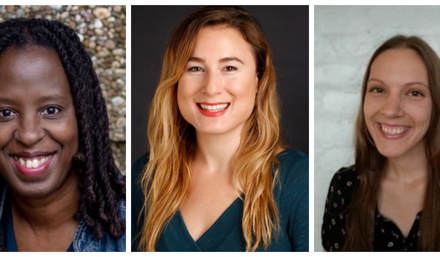
Above: Congrats to NY1’s Jillian Jorgensen (above) for winning a New York Emmy for her story and an accompanying documentary on a student finding refuge in school. Also, The New York Times’ Hannah Dreier won the 2024 Michael Kelly Award for her series on the growth of migrant child labor.
PEOPLE, JOBS, & EVENTS
Who’s going where and what’s happening
📰 RIP #eduween: Is the broad political will to improve schools dead or at least dormant? Pretty much, according to three recent pieces you may have seen — and confirmed by the demise of #eduween. There are lots of reasons, but the never-ending focus on school culture wars is one obvious contributor, according to an Education Next look at public opinion. “The American public is less concerned about these hot-button issues” — culture wars, school choice, cell phones, and AI — “than about the nuts and bolts of teaching and learning.”
📰 Impact: The California attorney general opened a rare investigation into El Monte Union High School District following an investigative series by Business Insider’s Matt Drange into a yearslong pattern of sex abuse and cover-ups at Rosemead High. For more, check out our past interviews with Drange here and here.
📰 Segments, appearances, & podcasts: WWNO’s Aubri Juhasz’s segment on an AI tutor that’s helping kids read in Louisiana was featured on NPR’s “Morning Edition.” NPR’s “All Things Considered” covered a report that revealed fewer Black men are attending HBCUs. For PBS SoCal, CalMatters tech reporter Khari Johnson reported on the LAUSD classroom phone ban, which will start in 2025. Cascade Public Media in Washington ran a story on how kids are still getting guns despite strict laws. Listen to the audio version of the WPLN and ProPublica story about a Tennessee kid who denied making a threat at school but was arrested by police anyway. WBUR’s “Here and Now” rebroadcast a segment on how former students of a Native American boarding school are reclaiming their history.
📰 Sound-off:
- “I think it’s reasonable to take this seriously, and I think it’s reasonable to share experiences from the recent past so that schools can think about how they’ll respond,” Chalkbeat’s Erica Meltzer responded to me in a critique of her story about how Trump’s deportation plans could impact children and schools.
- “It’s amazing how far one thinks they can go on live TV because they know CNN dehumanizes Arabs, Muslims, and Palestinians,” tweets former Sacramento Bee education reporter Sawsan Morrar.
- “Journalism Twitter is weird. These amazing and well-written articles that you can tell reporters put so much time and effort into? Twelve retweets. A photo of a coffee-stained, dog-eared AP stylebook from 1986? … 1,500,000 retweets,” tweets Chalkbeat’s Susan Gonzalez.
- “Am I really short, or is Alderman Ervin just really tall? 😬 ” asks Chalkbeat Chicago’s Reema Amin.
THE KICKER
We saved the best for last
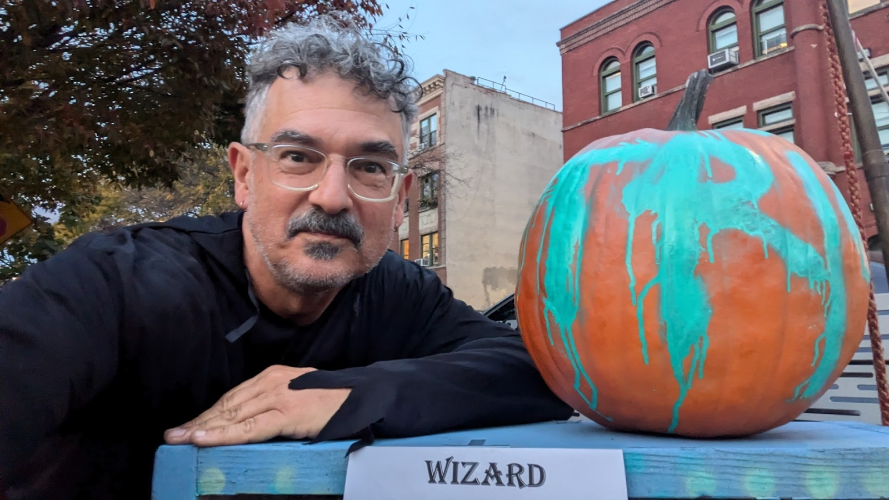
Happy Halloween from Washington Avenue.
That’s all, folks. Thanks for reading!
Reply to this email to send us questions, comments or tips. Know someone else who should be reading Best of the Week? Send them this link to sign up.
Using Feedly or FlipBoard or any other kind of news reader? You can subscribe to The Grade’s “feed” by plugging in this web address: http://www.kappanonline.org/category/the-grade/feed/.
Read more about The Grade here. You can read all the back issues of The Grade’s newsletter, Best of the Week, here.
By Alexander Russo with additional writing from Colleen Connolly.