In this week’s newsletter: Choice is the dominant theme of state education ballot measures. A school culture wars historian confesses he exaggerated their impact. What’s it like being a young Black preschool teacher? Raise your hand if you’re old enough to remember “computer-assisted” reporting.
CHOICE ON THE BALLOT
The big education story of the week
With the election now just days away, the big education story of the week is state ballot measures related to choice.
There are 17 education-related ballot measures in 14 states, with school choice a dominant topic (The 74). Colorado’s Amendment 80 would enshrine the right to school choice in the state constitution — and misinformation is causing some chaos (CBS News, Colorado Sun). Kentucky voters will decide whether some of their tax dollars will support students attending private schools (AP, Lexington Herald Leader). Nebraskans are weighing whether to repeal 2023 legislation that created a private school scholarship program (AP).
While Texas doesn’t have a ballot measure related to school choice, the voucher issue is expected to impact elections nonetheless, with pro-voucher candidates running for the state legislature (Houston Public Media).
While reporters should keep an eye on all these outcomes, it’s important to note that private school choice is not as massive and widespread as it seems — and it’s certainly not an extinction-level threat to public education. Despite the recent spread of choice to more states, only about 569,000 students received $4 billion in eight states with established programs in 2023-24 (K-12 Dive). A FutureEd report concluded that “universal” school choice programs — which exist in 12 states — are not necessarily universal (The 74).
See a full list of education ballot measures from the Education Commission of the States. And check out a new column for The Grade this week from Ballotpedia’s Ryan Byrne on how to improve coverage of state and local ballot measures.
Correction:Last week, we mistakenly said that hurricane season was “almost over,” but it lasts until the end of November. Our apologies.
Other big education stories of the week include school budget problems, controversies over free school meal programs, and college enrollment declines. Check out @thegrade_ for more headlines Monday through Friday!
TEACHING BLACK MEN TO LEAD PRESCHOOLS
The best education journalism of the week
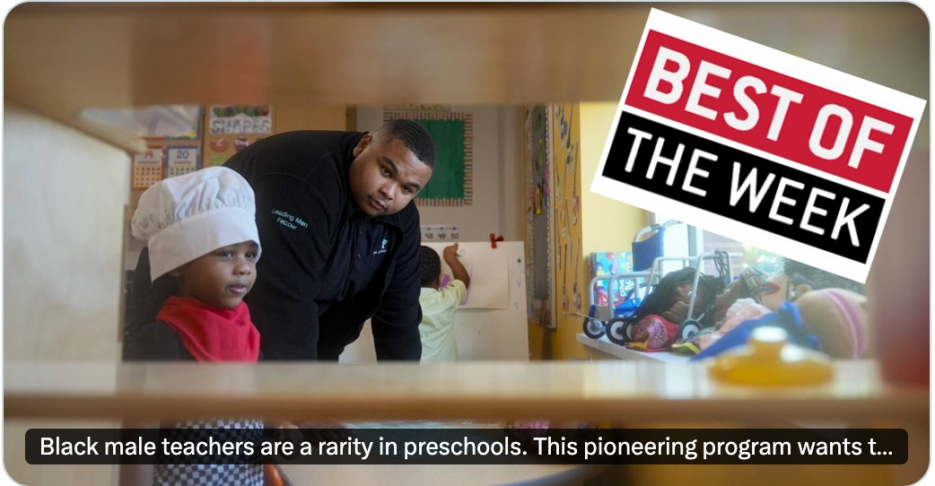
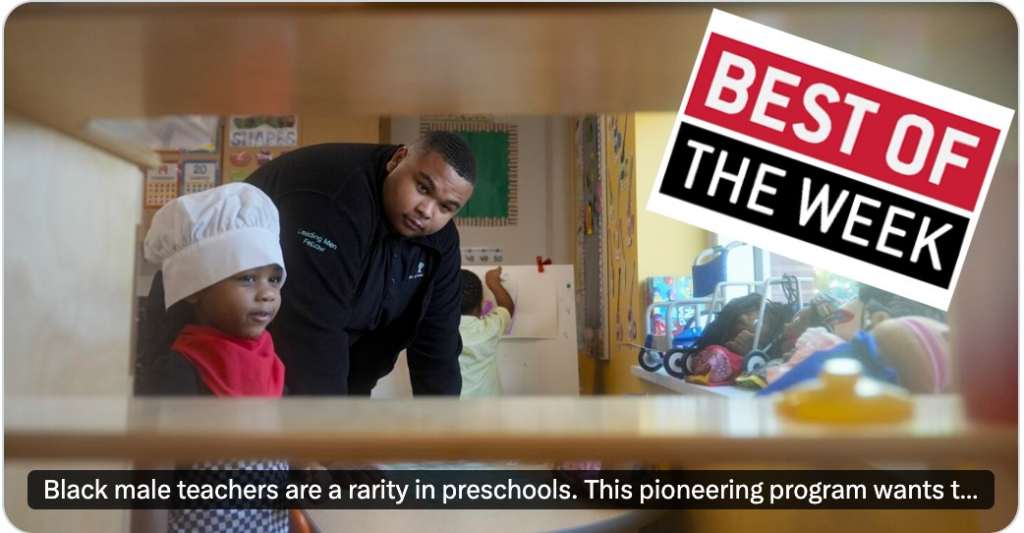
The best education journalism of the week is Black male teachers are a rarity in preschools. This pioneering program wants to change that by Moriah Balingit of the Associated Press.
Balingit, who specializes in early education, writes about an effort in Baltimore that recruits young men right out of high school to address the dearth of Black and Latino male preschool teachers. In the process, she lays out the daunting challenges boys of color face in schools — and of getting young Black men to consider becoming preschool teachers.
Davontez Johnson, 19, is a broad-shouldered bear of a man who’s majoring in politics at the University of Maryland. He leads 4-year-olds in a dance and chant about phonics and sits with a student for a one-on-one penmanship lesson. And he knows that having a Black man in a pre-K classroom is special.
“If I saw someone like me” teaching pre-K, Johnson tells Balingit, “I’d be pretty excited.”
With intimate photos by Stephanie Scarbrough of AP’s Baltimore bureau, the piece nicely covers what seems a promising effort. If there’s one criticism, it’s that Balingit doesn’t give readers a more complete sense of how well the eight-year-old program is fulfilling its goals.
Other education stories of the week we liked include how racism in a Colorado middle school left one student with PTSD (Colorado Public Radio), new coaching models in Alabama (AL.com), religious voters tuning out due to fatigue over The Bible in schools (The 74), and a federal court hearing over alleged AI plagiarism (Boston Globe).
Rebuttal: Ohio State Professor Vladimir Kogan took issue with last week’s pick, a New York Times story about the unintended effects of AI to identify at-risk kids in Nevada. “Why are we assuming AI identification is worse than what was there before?”
CULTURE WARS ‘MEA CULPA‘
Our latest columns and commentary
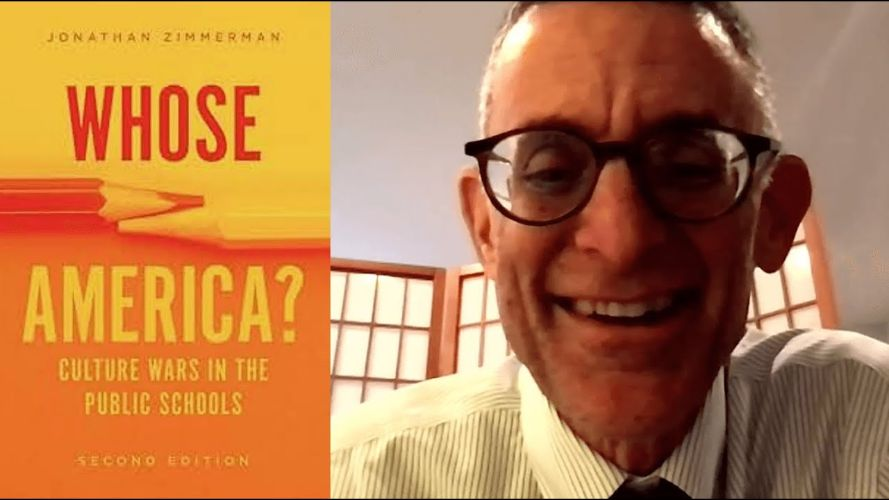
This week’s new column from us is a piece from the University of Pennsylvania’s Jonthathan Zimmerman, reflecting on assumptions about the spread and intensity of school culture wars that — according to a recent American Historical Association survey — don’t match teachers’ experiences.
“I’ve spent my career studying culture wars in American education,” writes Zimmerman. “And it seems like I might have exaggerated them.”
Read it here: I was wrong about the school culture wars.

Above, left to right: The Seattle Times Ed Lab’s Corey Mitchell, the San Diego Union-Tribune’s Kristen Taketa, and The 74’s Jo Napolitano.
PEOPLE, JOBS, & EVENTS
Who’s going where and what’s happening
📰 Career moves: The San Diego Union-Tribune’s Kristen Taketa is leaving the education beat after eight years to become a watchdog reporter for the paper. Her old job is now open to applicants. In case you missed it, former Center for Public Integrity reporter Corey Mitchell is the new Seattle Times Ed Lab editor. And former WAMU education reporter Jenny Abamu is now editor-in-chief of JAM CQ, a new “publication for the cultured + tech-savvy, entrepreneurs, creatives, and global leaders.”
📰 Resources: The 74’s Jo Napolitano was among those who spoke about how to cover discrimination and hate in K-12 schools at last week’s AccessFest. In case you missed it, all panel sessions were recorded and will be available to IRE members soon. A group of reporters on another panel compiled a tip sheet on how to report on communities that aren’t your own. And Street Sense Media has created a glossary of 26 terms and definitions to help journalists better report on homelessness, including homeless kids in school.
📰 Awards: The Scripps Howard Journalism Awards honored NPR’s Elissa Nadworny for excellence in narrative human interest storytelling for her deep coverage of a kindergarten class in Ukraine. The Impact Award was given to the New York Times’ Hannah Dreier for her coverage of migrant kids and labor.
📰 Research and reports: A Rand Corp. study found that the arrival of New English learners in Delaware schools contributed to positive academic performance in other ELs (and former ELs) and had no impact on non-ELs (K-12 Dive). I have a lot of questions about a new study estimating school culture wars cost districts $3.2 billion last year (Chalkbeat, The Guardian, EdWeek).
📰 Sound-off: “Journalism is not about you, it’s about informing the public,” reminded investigative reporter Mc Nelly Torres during IRE’s AccessFest.
THE KICKER
We saved the best for last
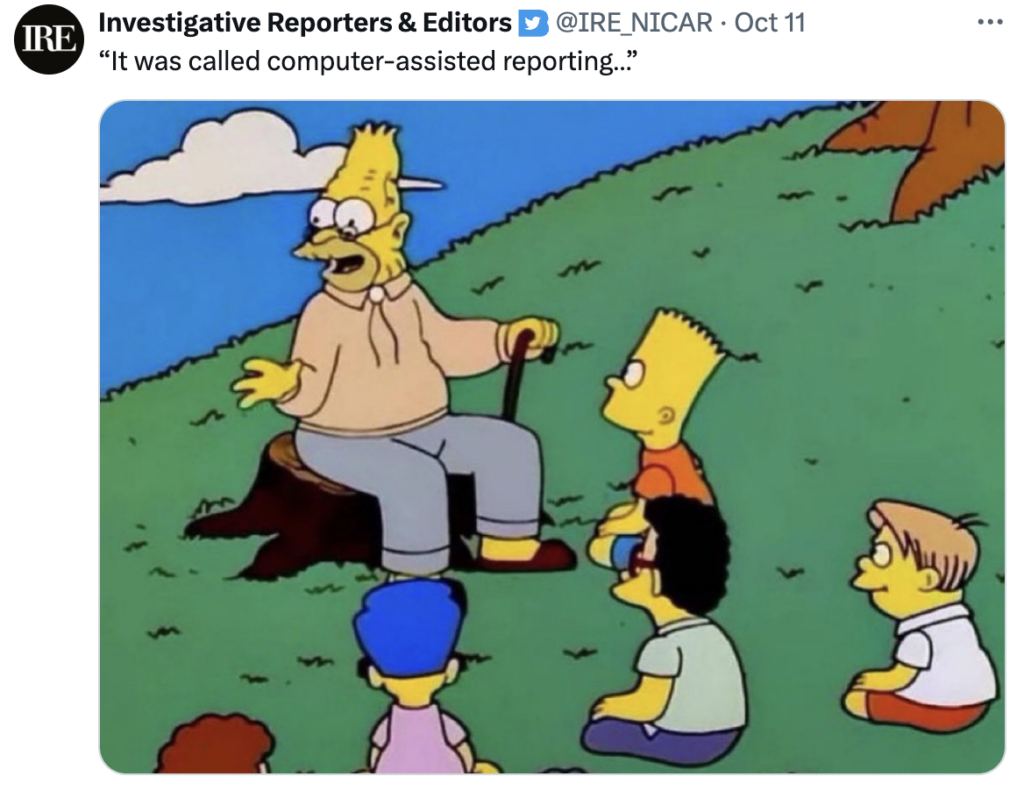
“It was called computer-assisted reporting…”
That’s all, folks. Thanks for reading!
Reply to this email to send us questions, comments or tips. Know someone else who should be reading Best of the Week? Send them this link to sign up.
Using Feedly or FlipBoard or any other kind of news reader? You can subscribe to The Grade’s “feed” by plugging in this web address: http://www.kappanonline.org/category/the-grade/feed/.
Read more about The Grade here. You can read all the back issues of The Grade’s newsletter, Best of the Week, here.
By Alexander Russo with additional writing from Colleen Connolly.