Maine is a rural place. On average, it has only about eight school-age children per square mile. Fewer than half of the state’s 260 school administrative units, or SAUs (akin to school districts), operate a public secondary school. To fill the gap in communities whose SAUs do not provide a secondary school, Maine law provides that the state will pay tuition for a state-approved school of the parent’s choice. Until this past June, these schools had to be “nonsectarian.”
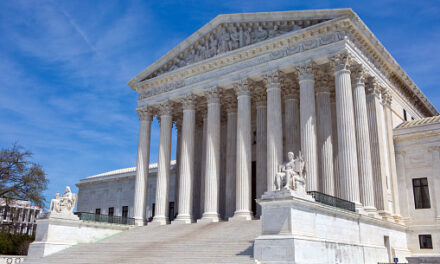
On June 21, the U.S. Supreme Court ruled in Carson v. Makin (U.S. Sup. Ct., 2022) that, if a state offers tuition assistance for students to attend private schools, then requiring that those private schools be nonsectarian violates the Free Exercise Clause of the First Amendment. More broadly, the ruling suggests that any state policy that bars religious schools from participating on equal footing with nonreligious schools in a state tuition assistance or voucher (and perhaps charter school) program is almost certain to be struck down by this court.
The Carson decision impacts law and education policy in several ways, including school funding: To the extent that charter, voucher, and other subsidy programs destabilize the funding of public school systems, we can now predict the acceleration of these effects as more religious schools seek to be included in these programs. (For more on school privatization and its impact on public schools, see Abowitz & Stitzlein, 2018.)
An eroding separation
Carson continues the Supreme Court’s startling reshaping of the relationship between religion and government. To show how, it’s helpful to position Carson within a broader legal and historical landscape.
The pursuit of freedom to exercise one’s religion has powerfully advanced civil rights and liberties in American life, even for those who don’t practice a formal religion. Religious minorities have used the courts to secure rights to send children to private school (Catholic litigants in Pierce v. Society of Sisters, 1925) or home-school them (Amish litigants in Wisconsin v. Yoder, 1972) and to avoid compulsory behavior in the form of flag salutes (Jehovah’s Witnesses in West Virginia State Board of Education v. Barnette, 1943), dress codes (Muslims in Hearn & U.S. v. Muskogee Public School District, 2004), and even prayer (Jews in Engel v. Vitale, 1962). The enforcement of the Free Exercise and Establishment clauses of the First Amendment has served to guard against religious oppression and hierarchy.
But the two religion clauses can also be in tension with one another, such as when a religious organization seeks to participate in a publicly funded program. If the government denies that participation, is it guarding against state establishment of religion? Or engaging in anti-religious discrimination? Increasingly, it’s the latter, according to the Supreme Court.
The Carson decision is among the latest in a string of Supreme Court opinions eviscerating the separation of church and state. In Zelman v. Simmons-Harris (U.S. Sup. Ct., 2002), the Court held that an Ohio voucher program (which, in one school year, sent 96.6% of available funds to religious schools) did not violate the Establishment Clause because the program was “neutral with respect to religion” and merely allowed citizens to direct government funds to religious schools through “their own genuine and independent private choice.” In Trinity Lutheran Church of Columbia, Inc. v. Comer (U.S. Sup. Ct., 2017), the Court held that denying the flow of public grant money to a Lutheran church’s preschool and daycare center constituted discrimination against “otherwise eligible grant recipients . . . solely because of their religious character.” Just two years ago, in Espinoza v. Montana Department of Revenue (U.S. Sup. Ct., 2020), the Court held that Montana’s prohibition against voucher funds going to a school “controlled in whole or in part by any church, sect, or denomination” violated the Free Exercise Clause by prohibiting families from sending children to the religious schools of their choosing.
The Carson decision is among the latest in a string of Supreme Court opinions eviscerating the separation of church and state.
Lastly, just days after issuing the Carson decision, the Court held in Kennedy v. Bremerton School District (U.S. Sup. Ct., 2022) that the decision to not rehire a public school’s athletic coach because of his insistence on praying, often with students, on the 50-yard line immediately after interscholastic football games violated the coach’s free exercise and free speech rights. (More on this case in next month’s column.)
Where these developments will lead is anyone’s guess. Religious charter schools are one possibility: In his dissenting opinion in Espinoza, Justice Stephen Breyer wondered how courts will reconcile the fact that privately run charter school programs are publicly funded with the emergence of a constitutional obligation to include religious schools in any public funding program that includes nonreligious schools. He reiterated this concern in Carson.
Taxpayer-funded discrimination?
Then there’s the issue of religiously motivated discrimination. The plaintiff schools in Carson had admissions policies that allowed them to deny enrollment to students based on gender, gender identity, sexual orientation, and religion. The schools also required their teachers to be born-again Christians. Other sectarian schools have similar policies.
So we’ve reached an unsettling prospect in which taxpayer funds can be directed to religious schools that a) seek to instill values considered discriminatory outside that religion and b) refuse to admit or employ students and educators whose identity or beliefs are inconsistent with those values. Education law professor Kevin Welner (2022) describes this scenario as a constitutionally required “outsourcing of discrimination.”
To be clear, the concern is not whether non-state-funded religious schools and employers can discriminate. Rather, the issue is whether state and local governments will be required to tolerate discriminatory practices at taxpayers’ expense.
At least two major Supreme Court opinions suggest that religious schools won’t automatically be shielded from claims of discrimination. First, just two years ago, in Bostock v. Clayton County (U.S. Sup. Ct., 2020), the Court handed down a stunningly forceful pro-LGBTQ+ rights ruling, holding that discriminating against employees because of their sexual orientation or transgender status constitutes impermissible sex discrimination under federal law (see Kim, 2020). Second, in Employment Division v. Smith (U.S. Sup. Ct., 1990), the Court held that the Free Exercise Clause does not relieve religious entities of the obligation to comply with laws that generally and neutrally apply to everyone and only “incidentally” impact religious practices.
But there are signs that these precedents will not have much bearing on the current Supreme Court. Just three weeks after Bostock, in Our Lady of Guadalupe School v. Morrissey-Berru (U.S. Sup. Ct., 2020), the Court brushed aside allegations of employment discrimination two teachers made against their employers, holding that the religion clauses of the First Amendment shielded the schools from liability. The following year, in Fulton v. City of Philadelphia (U.S. Sup. Ct., 2021), the Court held that enforcement of an antidiscrimination ordinance against a Catholic social services agency for refusing to certify LGBTQ+ couples as foster parents violated the agency’s free exercise rights. Similarly, just prior to Bostock, in Masterpiece Cakeshop v. Colorado Civil Rights Commission (U.S. Sup. Ct., 2018), the Court held that enforcement of an antidiscrimination law against a baker for refusing to make a wedding cake for a same-sex couple violated the baker’s free exercise rights.
In these cases, the Smith ruling in favor of “neutral” and “generally applicable” laws didn’t hold much sway with the Supreme Court. In Masterpiece Cakeshop, the Court determined that the adjudicating state agency showed “hostility” toward religion, which, in the Court’s view, removed the protection afforded by Smith because the law hadn’t been “neutrally” applied. The majority in Morrissey-Berru didn’t mention Smith at all in evaluating teachers’ discrimination claims. And in Fulton, five members of the current Court either flat-out stated that Smith should be overruled or saw “compelling” arguments against it. You don’t have to be Oliver Wendell Holmes to conclude that Smith is on thin ice.
Assessing Carson’s impact
As Carson makes clear, a majority of justices on the current Supreme Court believes that states that subsidize private nonsectarian schools must also subsidize private religious schools. It also likely believes that, in many if not most circumstances, the First Amendment protects religious entities from having to comply with antidiscrimination laws that conflict with their religion. These positions may well result in more teachers and students working in or attending schools with a doctrinal commitment to treating children or employees unequally, at taxpayers’ expense.
These legal and policy changes may also end up harming, rather than fostering, religious inclusion in civic life. In states where taxpayers and policy makers decide they don’t want to support discrimination or religious indoctrination, they may move to scale back or eliminate programs that rely on private — including religious — entities to provide essential services, whether in education, foster care, help for the homeless, or health care. Should that retrenchment come to pass, then the increased state entanglement with religion ushered in by the Supreme Court will have led, paradoxically, to increased estrangement of religion from the public sphere — reminding us of one reason why keeping the church and the state separate was such a good idea to begin with.
References
Abowitz, K.K. & Stitzlein, S.M. (2018). Public schools, public goods, and public work. Phi Delta Kappan, 100 (3), 33-37.
Kim, R. (2020). The historic Bostock opinion and LGBTQ rights in schools. Phi Delta Kappan, 102(2), 64–65.
Welner, K. (2022). The outsourcing of discrimination: Another SCOTUS earthquake? National Education Policy Center.
This article appears in the September 2022 issue of Kappan, Vol. 104, No. 1, pp. 60-61.

ABOUT THE AUTHOR

Robert Kim
Robert Kim is the executive director of the Education Law Center, based in Newark, NJ. His most recent book is Education and the Law, 6th ed.