It’s not every day that a rap song becomes the catalyst for a school district writing a six-figure check to the family of a teenager. Yet, such was the case recently in Vernon, Connecticut, where the school board finalized a $100,000 settlement over a Vernon Center Middle School student’s complaint about a rap video.
The complaint was ignited by a teacher showing a film during class that featured the music video for Kendrick Lamar’s Billboard hit, “Alright.” According to the lawsuit filed by his parents, the student, a son of a police officer, was traumatized by the anti-police images in the video. Whether that experience warrants the label of harm is its own discussion. However, when zooming out, this incident clearly highlights a deeper issue: America’s schools continue to serve as battlegrounds in our strange and polarized political moment.
The initial reaction might be to dismiss this story as an isolated news event. After all, as the recent rap beef between Lamar and fellow rap star Drake demonstrated, controversy attracts attention. However, what if we dig a little deeper? When we do, we may find that this and similar incidents show us how education has become and may continue to be the place where America’s divided political worlds will clash.
A closer look at Vernon
The Vernon school district is an interesting microcosm of what is happening right now in American politics. While the culture war issue dominates the headlines, the real story has been student achievement. According to the Education Recovery Scorecard, a joint venture between Stanford and Harvard researchers, Connecticut students, on average, lost over half of a grade level in reading and three-fourths of a grade level in math during and after the pandemic. Of the 30 states the team examined, Connecticut ranks in the bottom five in both math and reading. Students fell behind at alarming rates.
The most vulnerable were hit the hardest. Connecticut saw the second largest increase in the math achievement gap between rich and poor students and ranked sixth among the states with widening reading gaps. The achievement gaps between Black and white students, as well as Hispanic and white students, grew by half a grade level from 2019 to 2023.
Connecticut’s story, though, isn’t exactly Vernon’s. While Vernon’s overall learning loss and recovery mirrors state estimates, there is one unexpected difference: The district’s recovery process has reduced, if not erased, the Black-white and Hispanic-white achievement gaps in both reading and math. Although white students in Vernon still underperform relative to state targets, their Black and Hispanic peers have been meeting and exceeding these targets since 2022. A key driver of this districtwide improvement is strong student performance at Vernon Center Middle School, which has a large minoritized student population. It’s the success story that so many of our policy makers strive for.
Why isn’t this the headline?
Symptom of a larger concern
Since the Brown v. Board decision in 1954, America has sought to marry educational success with racial justice. Yet, Vernon’s triumphs in closing racial achievement gaps are overshadowed by controversies over rap lyrics in the classroom. Instead of celebrating academic progress, they are fighting culture wars.
To me, this signals that intensely cultural politics will continue to make their way down to local school boards and will be a central part of the national debates in this upcoming presidential election. That was clear during the Republican primary campaign. Almost two months prior to the first official debate between the candidates, parent rights group Moms for Liberty held a national summit. Among the list of speakers were former President Donald Trump, Ambassador Nikki Haley, Gov. Ron DeSantis, Congressman Byron Donalds, and entrepreneur Vivek Ramaswamy. These people have been at the center of the Republican push to reclaim the presidency this November. They are among the partisan leaders who have been inserting politics into education.
In my research, I find clear evidence that policy preferences related to COVID-19 safety measures in schools were largely motivated by partisan and ideological identity (Collins, 2023). In fact, partisan identity was a stronger predictor of whether someone would comply with a district’s order to reopen a school than whether they had had any contact with or lost a loved one to the virus. Parent groups flanked by partisan networks have been leveraging this divide.
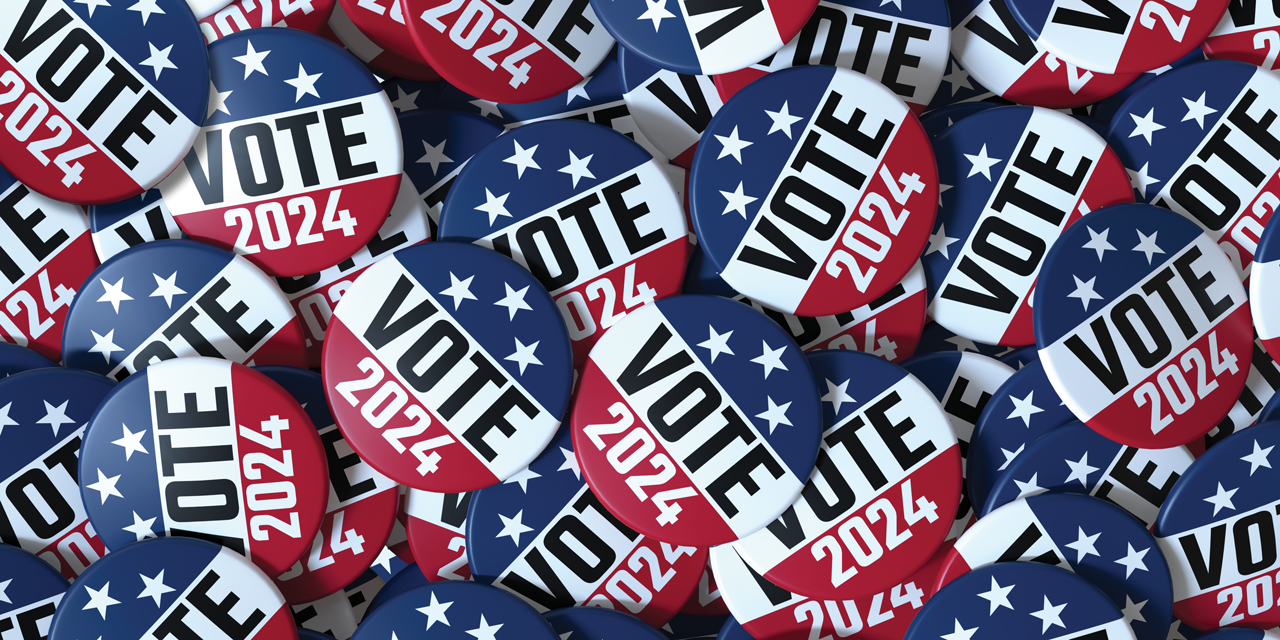
Local school board elections and recall efforts are becoming increasingly partisan. By mid-2024, we’re on track for the second-largest number of school board recall elections in modern history. Most of these are based on culture war issues tied to partisan politics. For instance, a local coalition in Colorado is pursuing a recall election, accusing board members of partisan bias for endorsing a social studies curriculum from American Birthright, a coalition of conservative education groups like Moms for Liberty, Moms for America, and No Left Turn in Education, along with conservative think tanks and Republican state legislators.
Candidates in the upcoming presidential election will likely take strong positions on schools in ways that reflect the ongoing culture war. Republican vice-presidential nominee JD Vance has espoused the notion that schools are sources of left-wing indoctrination (Stanford, 2024), an idea that will most likely be part of campaign messaging. Meanwhile, Vice President Kamala Harris has spoken passionately of her personal experience with what many view as the original culture war: Post-Brown v. Board school desegregation (Meltzer & Belsha, 2024). She addressed the nation’s largest teachers union, the American Federation of Teachers (AFT), for one of her first speeches as the presumptive Democratic Party nominee (Belsha, 2024). They were the first labor union in the United States to endorse her. And she selected Minnesota Gov. Walz, a former teacher, as her running mate. The politics of education are taking center stage.
The time to act
Polarizing views on these controversial issues are at the center of the conversation about education and the election in 2024. If you care deeply about education, this is your moment. But you don’t have to leap into the crossfire of culture wars and partisan politics.
Instead, leverage the attention on schools and education policy to push for something greater. An entire generation of kids lost significant instructional time during the pandemic, and there are serious questions about how schools can indemnify them. We must meet this challenging moment with democracy, not politics. Politics forces us to see education as zero-sum, as your kids versus mine. Politics-oriented solutions traffic in dominance and control, while democracy summons the rule of the people, sharing power, and pursuing what is best for the collective. Prioritizing the protection and advancement of those most vulnerable to harm at the hands of a more powerful majority is a societal interest.
Post-pandemic American education desperately needs a functioning, salubrious multiracial democracy. We need school boards that engage in open, generative dialogue with parents from diverse backgrounds united in overcoming learning loss. Community members must attend board meetings and join committees with collaborative intentions. Note that this year’s PDK Poll found that only 9% of Americans and 22% of parents attended a school board meeting in the last year. Those numbers should be higher. And increasing those numbers needs to result in problem solving.
Parent groups that lean on adversarial politics should instead seek common ground and work toward helping kids recover academically. When disadvantaged students succeed, we should celebrate and build on it. We should be proud of what is happening in Vernon. In 2020, Vernon school officials crafted a districtwide equity plan aiming to create an educational environment where student outcomes are not predicted by gender, race, ethnicity, economic background, sexual orientation, language, or abilities. Vernon Central Middle School prioritized democratic principles, fostering student, family, and community connections. And they got results.
If America allows odious, hate-filled divisions to dictate the upcoming presidential election, we risk destruction. But if this election ignites a search for a better education system fueled by strong, collaborative, and morally sound local democracy, then, to quote Kendrick Lamar, “we gon’ be alright.”
References:
Belsha, K. (2024, July 25). Kamala Harris backs teachers unions and LGBTQ rights, blasts book bans in AFT speech. Chalkbeat.
Collins, J.E. (2023). The politics of re-opening schools: Explaining public preferences reopening schools and public compliance with reopening orders during the COVID-19 pandemic. American Politics Research, 51 (2), 223-234.
Meltzer, E. & Belsha, K. (2024, July 22). As Kamala Harris ascends to Democratic presidential frontrunner, get to know her education record. Chalkbeat.
Stanford, L. (2024, July 15). Trump’s VP pick: What we know about JD Vance’s record on education. Education Week.
This article appears in the September 2024 issue of Kappan, Vol. 106, No. 1, p. 52-53.

ABOUT THE AUTHOR

Jonathan E. Collins
Jonathan E. Collins is an assistant professor of political science and education at Teachers College, Columbia University, New York, the associate director of the Teachers College, Columbia University Center for Educational Equity, and the founder and director of the School Board and Youth Engagement (S-BYE) Lab.