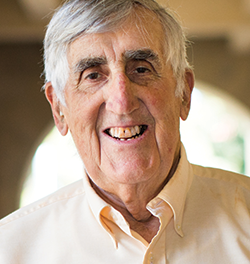
Kappan’s editor talks with renowned scholar Susan Moore Johnson about teaching as a career and the working conditions under which teachers can thrive.
Phi Delta Kappan: In the introduction to your new book, Where Teachers Thrive, you recall that when you went back to graduate school for your doctorate — after many years teaching high school English — you were surprised to learn that your own experience as a public school teacher had been unusual. How so?
Susan Moore Johnson: It was unusual because it was so manageable and satisfying. Right after college, I enrolled in a master’s program in teaching and pretty quickly found myself working at a suburban high school just outside of Boston. It was a district that funded its schools very well and gave its teachers — even novice teachers — a lot of discretion and time to design their curriculum and plan instruction together. Plus, I had outstanding colleagues. That included the school’s administrators, such as department heads, who were themselves excellent teachers and continued to teach part time. When I went back to grad school some years later, I discovered that, of the doctoral students in my cohort who had been teachers, few had experienced anything like I had. As new teachers, most had been thrown into the classroom and left to fend for themselves — essentially a sink-or-swim policy. There was little that was fun or energizing or inspiring in their early teaching experience, just frantic efforts to get through it. Personally, I couldn’t have made it through those early years without my colleagues and a supportive school culture.
I wondered what explained the difference between schools like mine that supported teachers’ best work and those that discouraged or prevented it. What forces shaped teachers’ professional lives, from state and federal policies to district-level decision making, collective bargaining, and local school leadership? And what might it take to ensure that all teachers have a productive workplace? Though I didn’t realize it at the time, those questions would preoccupy me as a researcher over the next 40 years.
Kappan: When you began to study this topic, in the late 1970s, what was already known about the school as a workplace? For instance, you often cite Dan Lortie’s now-classic work, Schoolteacher, which was published in 1975.
Johnson: I encountered Lortie’s research as a doctoral student and was stunned to find that an academic could capture the nuanced, complex truth about the work I’d been immersed in. By systematically interviewing and surveying large numbers of teachers, he was the first scholar to empirically study the teachers’ career and workplace. And what Lortie found is still very relevant. For instance, he observed that teachers’ careers tend to be flat over time. That is, after 20 or 30 years in the classroom, most teachers have the same job description and responsibilities they had on their first day. That’s largely true today. He recounted how teachers seek “psychic rewards” — the joys of connecting with students and helping them learn — but that those rewards remain elusive because of the uncertainty that permeates their work. He stressed the persistent isolation that most teachers contend with, using the metaphor of the “egg-crate” school, where teachers and their students work in their separate classroom compartments arranged along corridors. I still find that metaphor provides a powerful explanation of the prevailing professional isolation that many teachers face.
After many years in the classroom, some teachers become totally self-sufficient and are fine with life in the egg crate. But for most people, isolating work is hard and demoralizing, and it’s a major factor in attrition, especially among new teachers. But isolation has other costs, too. The more that teachers — even the best among them — keep to themselves, the more the content and quality of instruction varies from classroom to classroom. As students move from class to class and grade to grade in the egg-crate school, they are very likely to get an uneven and incoherent education.
Kappan: But while the egg-crate model is still with us, and while teaching careers still tend to be pretty flat over time, a lot has changed about teachers’ professional lives over the last 30 or 40 years, right?
Johnson: Well, there certainly have been dramatic changes in who decides to go into teaching and what they expect to find. When I began teaching, there were few professional careers open to well-educated women and especially to men of color. Business, medicine, engineering, law . . . they were more or less off-limits. So my generation — those of us who began in the 1960s and ’70s — tended to assume teaching would be our lifelong career.
Around the late 1990s, teachers from my generation began to retire, and suddenly there was a wholesale turnover in the teaching force. Working with my doctoral students in the Project on the Next Generation of Teachers, I wanted to know who those new teachers were, why they were choosing to teach, what they expected from the profession, and what they would find. So we launched a four-year study focusing on 50 first- and second-year teachers in a wide range of Massachusetts schools. When we completed the study, roughly a third of them had remained in their original school, a third had changed schools, and a third had decided to leave public school teaching (which was consistent with the national data). Through our interviews, we found that their decisions to stay in teaching, change schools, or leave the profession, hinged on the same few questions: Did their school support their work? Was their workplace collegial or isolating? Was their principal a good, fair leader? Whether they could achieve what one teacher called “a sense of success” depended far more on the professional environment of their school than on the population of students they served, the size of the school, the grade level, the teacher prep program they attended, or any other factor. Again and again, teachers told us that if they felt connected and supported, then they would stay; if they didn’t, they would leave — and, unlike my generation, they could leave because they had many other career options.
And then, in 2002, No Child Left Behind (NCLB) happened. So, in addition to a dramatic generational change in the teaching force, we also had a dramatic change in the policies that shape teachers’ work.
Kappan: You’ve described NCLB as having a mixed effect on the teaching profession — largely negative but also positive in some ways.
Johnson: Yes, NCLB’s requirement that schools account for all their students’ performance meant that those who had been ignored for many years were finally getting attention. But NCLB introduced problems as well. Around the time it was conceived, economists reported that of all the school-level factors that influence student learning, the classroom teacher is the most important. At first, I thought that was a brilliant endorsement of everything I believed — hooray, the economists recognize that teachers matter! But what really captured the attention of policy makers was that some teachers matter more than others. Very quickly, the discussion shifted from investing in teaching, as a profession, to improving the “quality” of individual teachers.
In well-organized schools, teachers constantly work with and learn from each other. Those schools are designed to build the collective capacity of all teachers to ensure that students receive consistently good or great instruction.
I won’t review all the methodological problems involved with using student test scores as the basis for evaluating teachers — Kappan has already explored and documented those. It also has been widely reported that little to nothing came of the vast amounts of money that the federal government (through Race to the Top) and nonprofits, especially the Gates Foundation, poured into their “human capital” strategy for building a better teaching force by measuring teachers’ effectiveness and swapping out weak teachers for strong ones. What they got wrong was not that good teachers matter. Of course they do. The problem was that these reforms ignored the schools where those teachers worked — schools that still largely functioned like egg crates. The human capital strategy did nothing to address teachers’ isolation or to build a more supportive and collegial environment. It just tried to repopulate the egg crate.
To be sure, some individual teachers are more effective than others. It’s very convincing to see data showing that a particular teacher keeps getting great results with students, year after year, while another one keeps getting subpar results. But the question is: Why does that happen? What should you do with that information? It makes sense to recognize and promote excellent teachers and dismiss those who shouldn’t be in the classroom. If teachers are ineffective and unwilling or unable to improve, they should be asked to leave. And that should happen within their first year or two on the job, assuming of course that they’ve gotten the support they need. But many more teachers are adequate or better and they can improve. Also, teachers may be terrific in some areas but not in others. This is what economics studies don’t reveal. In well-organized schools, teachers constantly work with and learn from each other. Those schools are designed to build the collective capacity of all teachers to ensure that students receive consistently good or great instruction.
Kappan: In education, we have no trouble recognizing how much our students influence each other’s learning. So why the blind spot when it comes to peer effects among teachers?
Johnson: That’s an interesting question. We can’t help but see that students influence each other every day in the classroom. They inhabit the same space at the same time, so their interactions are obvious. But we seldom see comparable interaction among teachers because they’re required to spend virtually all of their time working alone with their students. It’s hard to overstate just how frenetic the daily life of teachers can be. They might spend time in the same building, or have lunch at the same table, or see each other in the parking lot, but in many schools — especially schools that are struggling and under-resourced — they have no meaningful, sustained opportunities to improve together. Maybe that’s why reformers haven’t looked for teachers’ professional interactions or noticed their absence, especially in the struggling schools that people keep trying to reform.
Plus, few of us remember our own teachers working together. As a student, it never occurred to me to wonder whether my 7th-grade math teacher had anything to say to my 8th-grade math teacher. And as adults, we recall our teachers as individuals, whether they were our favorite or least favorite ones. Either way, in the public imagination, teachers are lone actors, not members of a group with a shared purpose and practice.
Kappan: In your new book, though, you describe the results of a concerted effort to study the ways in which teachers interact with and influence each other. Tell us about that research and what you found.
Johnson: In my early research studies, I made a point of interviewing teachers from a very large number of schools, in order to learn about broad trends in teachers’ professional lives. Starting around 2008, though, my team and I decided to focus on fewer schools and interview more teachers, administrators, and staff in each one, so we could take a deeper look at professional relationships and working conditions within schools. Also, we decided to focus only on schools serving low-income communities, since they face the greatest challenges and have the most pressing need for useful guidance from researchers.
All of that is to say that the book, Where Teachers Thrive, draws from teachers’ experiences in a small set of schools (14 in all, ranging from struggling to highly successful), relying on interviews and survey data we collected over the last dozen years. However, much of the book focuses closely on six schools that we studied in 2014 and 2015. All were high-poverty schools located in the same large Massachusetts city, but three were district schools and three were state charter schools. Also, all of them had received the highest rating, Level 1, in the state’s accountability system.
Over the years, I’ve spent a lot of time studying ineffective schools and explaining what professional life is like for teachers working there. Often, it’s pretty discouraging. But there’s also a lot to be said for seeking out best practices in schools that are doing very well. These six schools differ in their teaching missions and organizational models, but they all serve students from the same community, and they’ve all been successful. So, we wanted to know, what is the professional environment like for the teachers who work there?
Kappan: Spoiler alert: You found a lot of similarities in teachers’ working conditions across the successful schools, including the amount of care that they put into hiring teachers and supporting their induction; opportunities and time for teachers to design the curriculum and plan instruction together; efforts to create consistent behavioral norms and rules throughout the school (so individual teachers aren’t left to fend for themselves in out-of-control classrooms); a teacher evaluation system designed mainly to inform and improve practice, not call teachers out for their deficiencies, and clear opportunities for teacher leadership and career development. It seems like on every level, these schools were organized with teachers’ professional needs in mind. What accounts for that consistency? Were there any common threads that tied everything together?
Johnson: I would say there are at least three major findings that span all of the chapters in the book.
The first is that the principals in these successful schools viewed teachers as genuine partners in defining and addressing the challenges their school faced. And by “partners,” I don’t mean that teachers were just allowed to participate. Administrators knew it wasn’t enough to ask for their buy-in. The key was in working side by side with them. Several principals pointed out that teachers have distinctly valuable perspectives on what’s going on in the school. Simply put, they know and understand things administrators don’t notice or grasp. So whatever the problem at hand — a jumbled curriculum, persistent turnover, unproductive meetings, or disorderly hallways — these schools relied on teachers to help diagnose that problem and decide what to do about it.
Second, not only were teachers fully involved in identifying the challenges their school faced, but they also worked with administrators to create their own systems to address them. They weren’t interested in hiring consultants who would study their problems and recommend changes. In the successful schools, teachers and administrators devised their own ways to do things, whether it was a process for recruiting and hiring teachers, guidelines for working in teams, or a new approach to handling student behavior. Sometimes they borrowed and adapted practices that worked in other schools. But they always tailored those to their school’s needs and realities. In short, the adults working in these schools were personally invested in developing “the way we do things here.”
Third, in every one of these successful schools, the principal was key to establishing the positive working conditions that teachers valued. That’s no surprise, given decades of research showing just how much the principal matters. But we were able to see a lot of very specific ways in which principals influence the quality of the workplace, through both skilled management and effective leadership. For instance, in these schools, teachers devoted significant amounts to time to collaborating with colleagues. Most worked on teams, meeting at least once a week with colleagues in the same grade level or subject area. And this could never have happened if principals hadn’t recognized the benefits of collaboration and created schedules to make it possible.
One of the things that struck me most was that team time in successful schools was absolutely inviolable. Teachers could count on it every week. And because they could count on it, they would prepare for it and use the time productively. In less effective schools that purportedly have teacher teams, principals often create a schedule for team meetings, but then fail to convey its purpose and protect it from interruption. As a result, little gets done. Unless the principal is absolutely committed to protecting teachers’ team time, it will be whittled away. Maybe it’s no surprise, but all of the principals in successful schools had themselves been successful teachers, and they understood how valuable it is for colleagues to work together to plan instruction, review student work, decide which teaching applicants to consider, and so on. So if teachers are going to play these roles, then the principal has to make teamwork a priority and ensure that nothing gets in the way. That’s just one example of how the principals of the successful schools were true instructional leaders.
Kappan: Just to reiterate, you didn’t find evidence to support one school model or another. Rather, the point is that while successful schools differed in lots of ways, they all provided a professional environment in which teachers have a mutual investment in creating shared organizational norms, making consequential decisions, and learning from each other.
Johnson: That’s right. For example, two successful schools in our most recent study were described as “no excuses” schools. They weren’t interested in providing wrap-around services, or soliciting parent input, or adapting instruction to individual students’ needs and interests — rather, they were intent on holding students to very specific behavioral expectations and academic standards. Now if I were going to create a school, that’s not the model I would choose. But I can say that the teachers in these schools had a clear and consistent sense of what was expected and how to do their work together. They had many opportunities to identify problems, contribute to decisions, and develop their skills with feedback and support from colleagues and administrators. The teachers in those schools had been hired because they backed both the mission and the model. They had demonstrated that they could effectively teach the school’s students. And, therefore, experienced teachers were motivated to invest in their new colleagues’ development.
Kappan: Final question: What’s most important for policy makers and practitioners to understand about this research?
Johnson: A lot of readers have told me that they recognize their schools and themselves in the book’s case studies. The problems described by the teachers and administrators we interviewed were familiar — whether they had to do with poor discipline, inadequate supports for students, a piecemeal curriculum, parents who kept their distance from the school, or teachers who tried to cope on their own. Readers also recognized many of the failed responses that schools tried — a block schedule created without teachers’ input; administrators micromanaging teachers’ team meetings, or an evaluation system exclusively dedicated to targeting weak teachers for dismissal.
At the same time, the case examples also include some very specific practices that could be adapted to any school: a hiring process that included demonstration lessons and gave current teachers a role in assessing candidates; common planning time for teachers at contiguous grade levels to encourage vertical curriculum development; student support teams that focused not only on students’ academic progress, but also on their social and personal well-being; a weekly visit by a local food bank, so that teachers could talk informally with parents who stopped by; videos of teachers’ instruction posted online so that they could be discussed during professional development sessions, an effort to document the agendas and minutes of team meetings on Google Drive so they could be shared by teachers and administrators. . . There are a lot of promising, concrete practices here that support teachers’ professional learning and, ultimately, students’ learning as well.
Note: A user’s guide to the book is available at http://bit.ly/374QuTy
SUSAN MOORE JOHNSON is the Jerome T. Murphy Research Professor of Education at the Harvard Graduate School of Education, where she studies and teaches teacher policy, organizational change, and administrative practice. A former high school teacher and administrator, she has conducted many research studies into teachers’ experiences of public school as a workplace, in addition to conducting research into related topics such as the leadership of district superintendents, the effects of collective bargaining on schools, and the use of incentive pay plans for teachers.
From 1993 to 1999, Johnson served as academic dean of the Harvard Graduate School of Education. A member of the National Academy of Education, she is the author or coauthor of many published articles and six books: Teacher Unions in Schools (Temple University Press, 1984); Teachers at Work (Basic Books, 1990); Leading to Change: The Challenge of the New Superintendency (Jossey-Bass, 1996); Finders and Keepers: Helping New Teachers Survive and Thrive in Our Schools (Jossey-Bass, 2004); Managing School Districts for High Performance (Harvard Education Press, 2007); Achieving Coherence in District Improvement (Harvard Education Press, 2015), and Where Teachers Thrive: Organizing Schools for Success (Harvard Education Press, 2019).
ABOUT THE AUTHOR

Rafael Heller
Rafael Heller is the former editor-in-chief of Kappan magazine.