An elementary school uses improvement science to help students express and share their thinking.
Mr. Matt’s 1st graders sit on the carpet for their number talk. He writes the problem on the board — 17 = 20-? — and then asks students to give a thumbs up when they have an answer. Students share their ideas: 3, 10, 7, 8, and 6. Next, he asks volunteers to defend their answer. One by one, students come to the board. After each student defends his or her answer, Mr. Matt asks, “Are there any questions or comments?” The room is silent.
Fast-forward one month. Mr. Matt has introduced the sentence frames, “I agree because . . .” and “I disagree because . . .” He writes 2 = ?-5 on the board and, as before, calls on volunteers to defend their answers. Yeretzi confidently walks to the board and writes the number 3. She holds up her hand and says, “I have 5 fingers and if I take away 2, there are 3 left.” Mr. Matt asks, “Does anyone have any questions or comments?” There’s a buzz of excitement in the room. Three hands shoot into the air. Taylor says, “I agree with Yeretzi because if I hold my fingers up and take away 2, I have 3 left, too.”
Kaleo raises his hand and says, “I agree with Yeretzi because she used her fingers.” Leilani raises her hand and quickly lowers it.
“Leilani, I saw you raise your hand. Do you agree?” asks Mr. Matt.
“No, I disagree,” says Leilani.
“Oh! Tell us why,” says Mr. Matt.
“Because if it’s saying you minus something [-5], you might want to add a bigger number [as the minuend].”
Mr. Matt asks Leilani to come to the board to share her thinking. After she solves the problem, four students raise their hands, using a hand signal that indicates they’ve revised their original answers. The discussion continues for several more minutes with students revising their earlier answers on the basis of Leilani’s explanation.
Let’s look at how this transformation happened so quickly. Matt is from High Tech Elementary Chula Vista, a project-based charter school in California that serves a diverse student population of about 330 students in grades K-5 (Hispanic, 60%, Asian 20%, Caucasian, 8%, African-American 7%, Native American, 3%, and Pacific Islander 2%). The student population is 55% free and reduced-price lunch, 20% English language learners, and 13% students receive special education services. He’s part of a group of teachers who have been using improvement science, a method for solving a problem of practice with disciplined inquiry, to help students make their thinking visible. These teachers wanted to increase students’ use of “how” and “why” language to articulate their thinking. For the past six months, the group has been using short cycles of inquiry, action, and reflection to test different “change ideas,” like the introduction of sentence frames.
Improvement science as professional learning
At the core of improvement science are three simple questions (Langley et al., 2009): What are we trying to accomplish? How will we know if a change is an improvement? What changes might we introduce and why?
As educators, we generate new ideas, reflect on our practice, and make changes that we hope will improve student learning. Yet we often struggle to set clear, measurable goals, let alone develop systematic ways for tracking our progress. With its emphasis on developing a clear theory of action, “practical measures,” quick iterative cycles to guide teacher learning, and a network structure that facilitates sharing and accelerated learning, improvement science is a promising framework for scaffolding teacher learning and scaling good ideas (Bryk, Gomez, & Grunow, 2011; Yeager et al., 2013).
Improvement science is a promising framework for scaffolding teacher learning and scaling good ideas.
To build teachers’ investment in the improvement science process, the authors asked teachers to reflect on the following questions:
- What are my dreams for our school and for my students?
- How do I want to grow as an educator over the next year?
- If equity is at our core, what areas — in my practice and our school — are ripe for improvement?
Teachers identified four topics that were most likely to advance equity at the school and that most inspired them to improve:
- Making thinking visible;
- Designing equitable group work;
- Developing student agency; and
- Improving writing instruction.
We’ll focus on the work of the Making Thinking Visible team, which was inspired by the work of Harvard’s Project Zero (Ritchhart, Church, & Morrison, 2011).
The hub — a person or organization that helps guide the work and maintain the team’s focus — is crucial to improvement science. One of us — Kristen — served as the hub for the Making Thinking Visible team, helping team members dig into existing research and craft knowledge to develop a theory of action to guide their next steps. The team shared resources, read articles, and examined various thinking routines. They reflected on aspects of their classes where thinking could be richer (such as class discussions or end-of-activity reflections) and practices they felt would promote visible thinking (such as creating a class blog). As the hub, Kristen planned and facilitated biweekly meetings and supported teachers in collecting, analyzing, and reflecting on evidence. Team members met every two weeks to share their learning and plan their next cycle of inquiry, action, and reflection.
Developing a theory of action
In improvement science, learning comes from doing. Improvement science encourages educators to avoid “solutionitis” and first get grounded in a deep understanding of the problem. To begin, the team conducted empathy interviews with students. Each team member asked a student to talk about a time the student felt successful sharing his/her thinking in class and a time when it was hard to share thinking and what advice they would give other students who were having trouble sharing their thinking. For example, students said they felt most comfortable sharing ideas when they could talk with a partner first, then the class. Students said sharing their thinking was difficult when they felt rushed and/or if they felt others might judge their ideas negatively.
Improvement science encourages educators to avoid “solutionitis” and first get grounded in a deep understanding of the problem.
Team members then used a fishbone diagram to identify the multiple factors that might contribute to students’ difficulty sharing their thinking with the class. Drawing on their own experiences and what they had learned from empathy interviews, the team identified a variety of root causes such as a lack of strong models and insufficient opportunities to practice sharing thinking. They discussed factors related to language; teacher language might be too complex and wordy, and students might lack the academic vocabulary to express their ideas clearly. Another root cause was related to student agency and students’ perceptions that it felt risky to share ideas with the class. As a result, many teachers decided to focus on developing structures and routines to minimize this sense of risk and create safety for sharing.
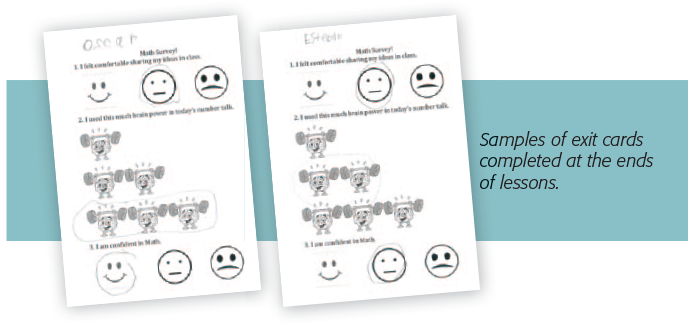
Having deepened their understanding of the problem, the group developed a theory of action. Drawing on research and craft knowledge, they constructed a driver diagram that articulated the aim — students will increase their use of how/why language to explain their thinking — as well as the “drivers” or areas of focus the group would need to attend to in order to achieve the aim. Drivers included classroom routines, structures, and modeling; teacher language; and student vocabulary/academic language. The group also identified concrete change ideas related to these drivers — specific, measurable interventions they wanted to try in their classrooms, such as using sentence frames like, “I agree because . . . ,” “I used to think/now I think . . . ,” and prompting students with the phrase, “What makes you say that?” At the end of a lesson, they would use exit cards to capture students’ thinking. The driver diagram served as a guide for their work and evolved as they learned how best to achieve their aim.
Plan, do, study, act
Improvement science uses a structure called a PDSA (plan-do-study-act) cycle (Langley et al., 1996) to capture learning and guide short cycles of inquiry, action, and reflection. In the planning stage of each PDSA, teachers documented what they wanted to learn from the cycle and what data they would collect to answer their questions. Once they tried an idea and collected data, they analyzed the results and synthesized their learning. The questions in the PDSA form pushed them to reflect using data: What happened when you implemented the change idea — observations, surprises, questions, challenges? What are your key findings and take-aways from this cycle? The cycle concludes by articulating future actions: What are possible next steps? What refinements might we make? If we recommend abandoning the change idea, why? Only two pages long, the PDSA form served as a powerful tool to document action plans and record learning.
Take-aways
Improvement science fosters reflective practice grounded in evidence.
Although many models of professional learning embed reflection, inquiry, and the use of data, improvement science uses just enough data to accelerate teacher learning, facilitate deep reflection, and guide further action. This approach differs from other forms of data-driven professional learning in which teachers have little choice about the types of data collected (such as test scores or schoolwide assessments) or must deal with an abundance of data that is challenging to analyze in useful ways. Such data can feel divorced from day-to-day teaching practice. As a result, many data-driven discussions fail to support teachers in generating concrete steps for improving student learning.
In contrast, Making Thinking Visible team members collected user-friendly data they could easily analyze to determine whether an idea worked. For example, the team tallied who participated in class discussions and how frequently students used sentence frames, assessed the quality of student comments on a class blog, and administered short exit cards to gauge students’ comfort level with sharing their thinking with the class. Examining these data enabled teachers to gain a deeper understanding of how their actions affected student learning and to develop new questions to pursue in the next PDSA cycle.
Remember Matt and his 1st graders? Matt noted a dramatic increase in student engagement when he used sentence frames in that second number talk. He described this moment as a critical point, not only because he learned about his students’ thinking but also because he came to new understandings about his teaching. Matt began asking himself questions to push his teaching practice such as, “How can I get more feedback from students?” and “How can we hear new voices in our class conversations?”
Other team members also benefited from this type of reflective practice grounded in evidence. Rosemarie, a kindergarten teacher, gathered video data to capture her students’ thinking. “I learned that video is a powerful documentation tool because we were able to revisit student thinking and, in turn, respond,” she said. For example, Rosemarie noticed that several of her language learners began to say, “I need more time” when the class was sharing their thinking after an activity. After recognizing this pattern on video, she developed her next change idea: preconferencing with her language learners before the whole class reflection.
Capturing just enough data specific to a focused inquiry helped teachers get better at making student thinking visible. The teachers examined their data, reflected on their learning, and adapted their idea to improve practice.
Improvement science helps teachers take action.
Reflecting on the difference between more traditional professional learning and improvement science, one teacher noted, “In my experience, meetings often lack an action-based approach and end up with people simply talking about change ideas, not actually trying them.” The opportunity to go beyond talk and take action is a powerful component of improvement science, one that facilitates teacher ownership. At High Tech Elementary Chula Vista, teachers chose an area of focus that was meaningful to them and then engaged in PDSAs where they decided what to do, how to do it, and what data they would collect to know if they were making progress toward their goal.
For example, Matt noted on one PDSA form that he wanted to “try to find ways to have more one-on-one conversations with students and also see if I can gain more access to student thinking [for those students] who aren’t sharing regularly in math.” Grace, a 5th-grade teacher, wanted students to be “more creative in how they work on problems and assignments.” She came up with the following actions to push student thinking: Ask students to respond to one another’s reading and writing rather than simply sharing their own. Ask more open-ended questions and spend more time on them.
There were times when teachers didn’t complete their PDSA, either because they hadn’t clearly articulated what they wanted to learn, or they were unsure what data to collect and how to collect that information. Working through these challenges collaboratively helped teachers regain control and take action.
Improvement science facilitates collaboration and sharing.
Improvement science brings teachers together in networked improvement communities to share data, talk about the effectiveness of change ideas, and accelerate learning. As LeMahieu and colleagues explained, “Networks are rich sources of innovation; they provide diverse contexts in which to learn from testing, they allow the detection of patterns that would otherwise appear singular, and they provide the social connections that accelerate knowledge production and dissemination” (LeMahieu, Edwards, & Gomez, 2015, p. 447).
Four characteristics of networked improvement communities are unique to improvement science. These communities are:
- Focused on a specific aim;
- Guided by a deep understanding of the problem and the system that produces it;
- Disciplined by the rigor of improvement science; and
- Networked to accelerate the learning into varied education contexts (Martin & Gobstein, 2015).
As we examined teacher reflections about their participation in this process, we identified two consistent themes that aligned with these characteristics.
First, the structures of networked improvement science — planning and documenting through PDSAs, support from the hub, and regular meetings — provided both support and accountability for teachers to remain engaged in the work. “I really appreciated the chance to debrief ideas with my group and our leader because it provided accountability and inspiration,” Grace said. Matt reflected, “I don’t think [this experience] would be the same without having a mentor to guide me along the way.”
Second, participating in a networked improvement community accelerated learning. As teachers shared ideas, other teachers were inspired to implement a colleague’s work. Grace noted how much she had learned from Rosemarie about the importance of taking time each day to reflect with her students on how their thinking had changed, and how powerful it was to see that progression of thinking over time through the video data that Rosemarie had gathered. Paul wrote, “The social aspect of this experience has been empowering. If it hadn’t been for Kristen’s work with Matt around number talks, I probably wouldn’t have embraced them in my own classroom. Now I’m doing them two to three times a week, and students are really enthusiastic about sharing their math thinking!” Teachers are continually innovating in their classrooms. The structure created opportunities for teachers to share their learning in authentic and meaningful ways.
How did we do?
Did teachers reach their aim of increasing students’ use of “how” and “why” language to articulate their thinking? We can’t say with 100% certainty that all students are using that language to explain their thinking daily, but we can say with confidence that they’re getting closer. Five of six teachers said they have increased the number of opportunities that students have throughout the day to share their thinking. In addition, five of six teachers reported an increase in students’ use of how and why language to share their thinking. These data are supported by observations and video data from each teacher’s classroom.
Paul expressed pride when students in his class began to develop deeper wonderings through classroom blogging, one of Paul’s change ideas. He said one student wrote a profound blog comment expressing her dissatisfaction with racism. Through improvement science, he was able to offer students a way to share their thinking that hadn’t existed in his class before. Grace’s change idea, encouraging students to use sticky notes to make their thinking visible, gave her a new way to capture student learning. She wrote that one of her students was able to write two “wows” and two “wonders” from a book he was reading, which offered her insight into his thinking. Matt now has students who are confident in their ability to explain erroneous thinking, and students who never used to participate in discussions are now joining in. Now when Matt asks, “Are there any comments or questions?” his students can hardly wait to share!
Improvement science has provided a powerful framework for engaging teachers as collaborative problem solvers. It grounds inquiry and actions in a shared goal and provides an invaluable tool to assess the effect of those actions on student learning.
References
Bryk, A.S., Gomez, L.M., & Grunow, A. (2011). Getting ideas into action: Building networked improvement communities in education. In M.T. Hallinan (Ed.), Frontiers in Sociology of Education (pp. 127-162). The Netherlands: Springer.
Langley, G., Moen, R., Nolan, K., Nolan, T., Norman, C., & Provost, L. (2009). The improvement guide: A practical approach to enhancing organizational performance. San Francisco, CA: Wiley.
LeMahieu, P.G., Edwards, A.R., & Gomez, L.M. (2015). At the nexus of improvement science and teaching: Introduction to a special section of the Journal of Teacher Education. Journal of Teacher Education, 66 (5), 446-449.
Martin, G. & Gobstein, H. (2015). Generating a networked improvement community to improve secondary mathematics teacher preparation: Network leadership, organization, and operation. Journal of Teacher Education, 66 (5), 482-483.
Ritchhart, R., Church, M., & Morrison, K. (2011). Making thinking visible: How to promote engagement, understanding, and independence for all learners. San Francisco, CA: Jossey-Bass.
Yeager, D., Bryk, A., Muhich, J., Hausman, H., & Morales, L. (2013). Practical measurement. www.carnegiefoundation.org/resources/publications/practical-measurement
Citation: Macconnell, K. and Caillier, S. (2016). Getting better together. Phi Delta Kappan, 98 (3), 16-22.
ABOUT THE AUTHORS

Kristen Macconnell
KRISTEN MACCONNELL is a school leadership resident at High Tech Elementary Chula Vista, Chula Vista, Calif.
Stacey Caillier
STACEY CAILLIER is director of the Center for Research on Equity and Innovation at the High Tech High Graduate School of Education, San Diego, Calif.