
Preparing leaders for a changing world begins by developing leadership skills in schoolchildren.
The world’s billion school-aged children share one overwhelming factor regarding their future, whether they live in countries large or small, rich or poor: change.
Their future is marked by volatility, uncertainty, complexity, and ambiguity. Globalization and technology are shrinking their world and making it spin faster. The children will thrive if they develop the competence and the confidence to navigate complex environments as resourceful problem solvers who are results-oriented and resilient.
Specifically, children increasingly need to learn how to navigate change, forge their own opportunities, deal with difference (and leverage diversity), and take on problems whose answers aren’t spelled out in a textbook. How well are schools preparing young people to thrive in this future? If the answer is “not so well,” what can we do to help education rise to this challenge?
What we do to prepare children in their early years will shape their mindsets and actions. The role of schools in this process can hardly be overstated. Schools can do a great deal to equip young people for a dynamic future. But how?
Ravenscroft
Take Ravenscroft in Raleigh, N.C., a 150-year-old independent day school with a mission to “nurture individual potential and prepare students to thrive in a complex and interdependent world.” Ravenscroft is implementing a schoolwide preK-12 citizen leader initiative called Lead From Here. Launched in partnership with the Center for Creative Leadership (CCL), Lead From Here focuses on developing all students — indeed, the whole community, ranging from faculty to administrators to parents — as citizen leaders. Through a deeply collaborative “discovery” process with stakeholders from across the school community, Ravenscroft and the Center for Creative Leadership cocreated a citizen leader framework with developmental competencies that guides this work.
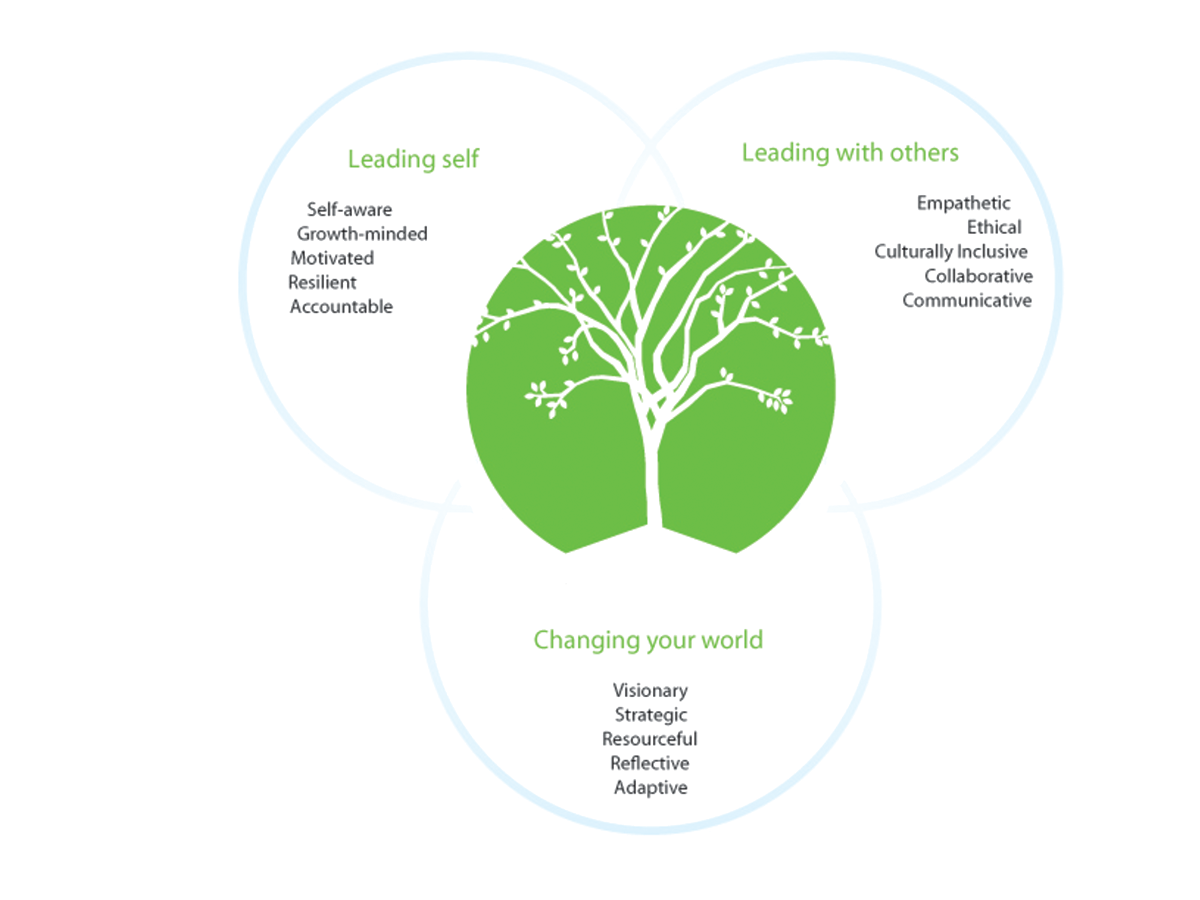
Equipped with the leadership framework and competencies, Ravenscroft and CCL are developing thematic cycles for each grade in a developmentally appropriate way. Kindergarten through 2nd grade is focused on leading self; 3rd and 4th on leading with others; and 5th grade on changing your world, realized through campus change projects. The cycle repeats itself in the middle grades — 6th (leading self), 7th (leading with others), and 8th (change project) — and again in high school. The themes are woven into every aspect of student learning through highly experiential activities, retreats, curriculum integration, time in advisory groups, community outreach, team-based change projects, arts, athletics, and more. All of this is grounded in a robust evaluation model where learning outcomes are clearly defined and measured in the short, medium, and long term for all of the school’s constituencies.
After three years, an evolving leadership culture is emerging across the preK-12 community. Nearly 80% of the 180 faculty and staff report incorporating citizen leader concepts into teachable moments. In lower school, a 4th-grade gym teacher said students worked through a challenge using their newly learned collaboration skills and then self-debriefing their experience. A middle school teacher said students are “doing better science” because she is weaving leadership models into her class. In upper school, a graduating senior is awarded a prestigious merit based scholarship by describing her own leadership journey. And teachers share how they apply these leadership principles to become better teachers and developmental partners with students.
Ravenscroft’s Lead from Here initiative uses this statement to guide its work: As members of the Ravenscroft community, we take responsibility for our behaviors and actions and strive to grow and learn through action and reflection. We honor the perspectives of others and seek to lead through a spirit of collaboration and compassion. We strive to serve our communities by helping put bold ideas into action for positive change through courage, creativity, civic engagement, and dedication.
“These are non-negotiable skills for our students and represent a critical path forward for our school. The world is demanding leaders who are self-aware, collaborative, and proactive problem solvers, and we are committed to helping all members of our community get there,” said Doreen Kelly, Ravenscroft’s head of school.
African Leadership Academy
Learning by doing is a fundamental building block of the African Leadership Academy (ALA) in Johannesburg, South Africa. Founded in 2004 by Fred Swaniker and Chris Bradford, the private boarding school recruits 15- to 19-year-olds from across the African continent who have demonstrated leadership potential, an entrepreneurial spirit, a passion for Africa, and significant community service. Through a two-year, academically rigorous preuniversity program coupled with a commitment to lifelong engagement, ALA exposes these young leaders to opportunities, mentors, and transformative learning experiences that fundamentally change the trajectory of their lives and prepare them to be Africa’s next generation of change makers. Over the next 50 years, the Academy wants to transform Africa by developing a powerful network of over 6,000 leaders who will work together to achieve extraordinary social impact.
The cornerstone of the ALA program is an entrepreneurial leadership curriculum designed to help students “develop a mindset and skillsets” critical to becoming change agents in Africa. In the first year, students experience a combination of classroom and “lab” sessions that deepen their understanding of each of ALA’s core pillars that include Self, Others, Africa, Communication, and the BUILD Process, ALA’s model of human-centered entrepreneurship.
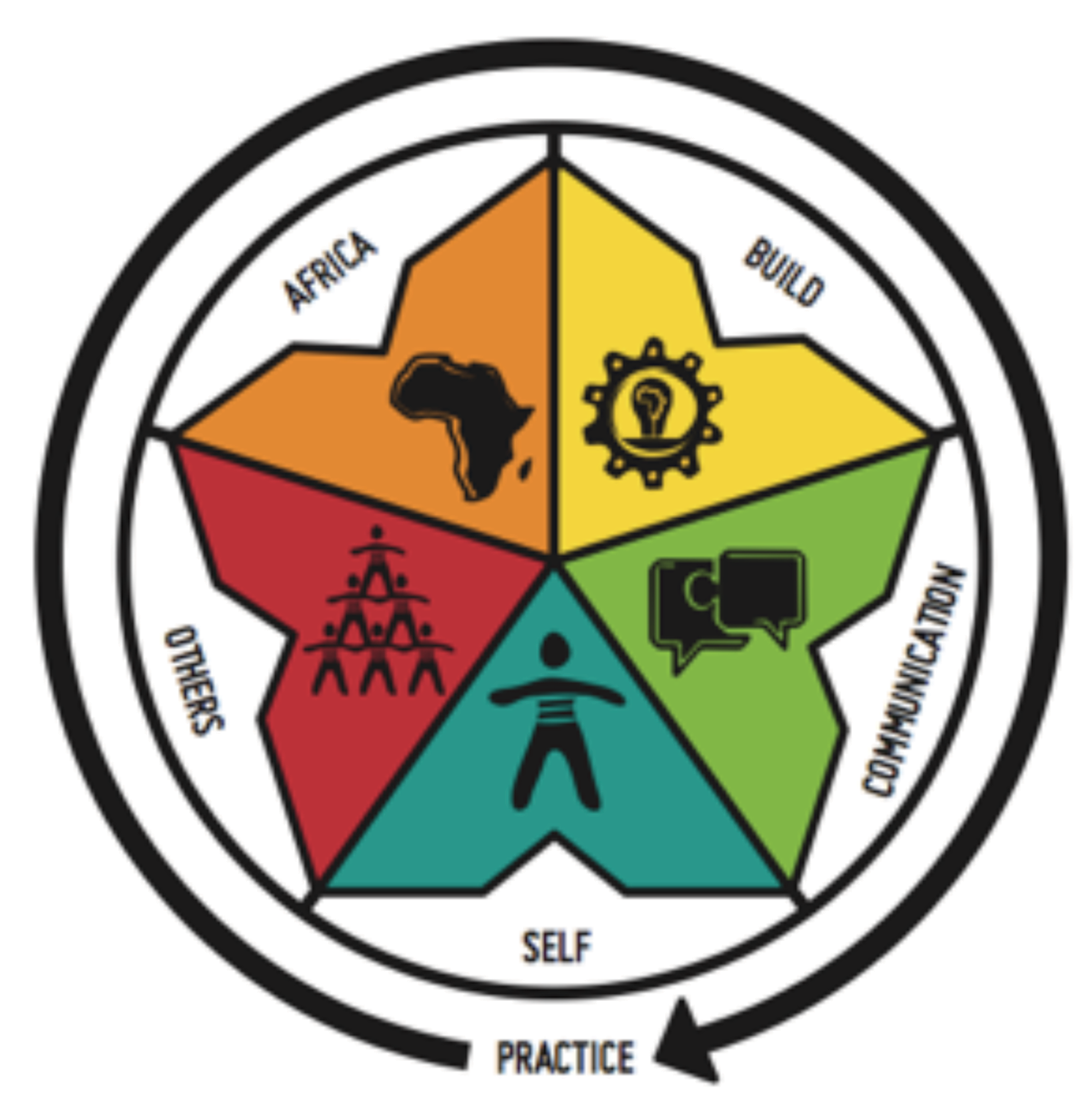
These five pillars are strengthened through the sixth pillar: Practice. Students participate in a series of BUILD Labs, where they work in teams to understand challenges facing a community and prototype solutions. Other learning modules focus on topics ranging from mental models and empathy to speech and presentation, values-based leadership, and emotional intelligence. Each module includes group activities and individualized learning, reflection, and direct feedback and coaching from faculty. Faculty use a variety of teaching methods, including team-based design challenges, guest speakers, simulations and games, case studies, and experiential learning.
In the second year, ALA young leaders put the first year’s lessons into action through the Student Enterprise Program, which simulates the real world by placing each student in a team to run an enterprise that has direct impact on the ALA community or a neighboring one. Emerging enterprises include Pen-Africa, which promotes African literature by encouraging African youth to write; EmoArt, which uses the arts to teach life skills and emotional intelligence to South African girls; and The ME Project, which designs educational games to help teachers transform classrooms to make math and English interactive and to foster creativity.
To strengthen students’ personal leadership journey, a member of the community shares his or her life story during the weekly community gathering. Regular feedback comes through 360-degree peer reviews and a personal entrepreneurial leadership assessment on the front page of report cards, which measures how young leaders have embodied values such as humility. “This is about creating habits of excellence,” said Chris Bradford. “We are trying to help students create a culture of continuous improvement, ongoing self-reflection and feedback, and shared respect regardless of hierarchy — all within an environment where it is safe to fail.”
It may seem audacious to expect ALA’s students to catalyze social change and drive economic growth across the continent at such a young age. Fred Swaniker disagrees. “We are consistently surprised by how much people at this age are able to absorb and learn about themselves while developing the skills to lead with others. It is clearly not too early to be introducing these important lessons in these students’ lives,” he said.
Riverside School
Over the past decade, the Riverside School in Ahmedabad, India, has pioneered a model that is preparing young people to shape the future with courage and conscience. With a strong focus on leadership development, Riverside’s intent is to develop students who have both passion and compassion. The focus is not just academic skills but also what the school frames as the 21st-century skills of collaborative enterprise — agency, empathy, problem solving, and critical thinking.
“The future is going to be so uncertain. We have to help children be comfortable in being uncomfortable,” said founder Kiran Bir Sethi.
At an early age, students think anything is possible, she said. Schools need to cultivate their passion and curiosity. The Riverside School uses design thinking to prepare young people for solving problems. Children, said Sethi, are born social entrepreneurs; they’re born to make life better. Yet education often takes away their sense of belief and optimism, Sethi said. What is valued instead is smarts rather than being kinder or empathetic.
Riverside helps students become skilled learners and independent thinkers who reflect and learn from experience, make connections, and draw conclusions. Students are encouraged to have opinions and express their own perspective. Teachers encourage them to identify and investigate problems, to probe assumptions, to seek reasons, and to be reflective.
A third stage is focused on moving children from independence to interdependence and empowerment. Students are charged with understanding and addressing local issues, and connecting with their potential to enact change in the community. Agency is built from a sense of optimism that it is possible to make a difference. Using the process of design, children learn by experience and by prototyping solutions to solve problems. Design thinking is a process that demystifies innovation, said Kiran. It gives young people the tools to create a better future. Through projects in their community — from filling potholes to stopping child marriage — children realize they can make a difference. Also, real experience engages the whole person and not just the intellect, allowing learning to be deep and meaningful.
Riverside School’s focus on a broad array of competencies far from undermines academic performance. The school is consistently ranked in the top 10 in the country. “When kids are out there, speaking more, gaining confidence, and feeling good about themselves, it enhances cognitive development,” Kiran said.

Ideas into action
Underlying the approaches used by each of these schools is a model grounded in a process of leadership development that we developed within CCL, called the ARC leadership model — representing the path from self-agency to developing relationships necessary to lead with others to creating long-term contributions made possible by putting ideas into action for the greater good.
As one moves up the axis from the bottom left to the upper right, the leadership journey begins to unfold to higher levels of effect. Through cycles of action, reflection, learning, and adaptation, a sense of purpose and empowerment becomes more present. As students awaken to self-discovery and empowerment (often through a transformative experience or event), they discover that they can shape the future for the better.
They also discover that this journey is not a solo one. To create a better life for oneself and a better life for others, individuals must build meaningful relationships. Interpersonal skills represent the most significant deficit that employers note in new hires. But interpersonal skills are also critical skills for would-be change leaders. In researching key behavioral traits among the social entrepreneurs it has invested in, the global nonprofit Ashoka discovered that a critical ingredient was the power of empathy.
The change-making journey also includes being able to identify opportunities to contribute in a way that aligns with an individual’s personal passion. Solving challenges takes skill as well as will — skill in innovation as well as leadership. Social challenges are great stretch assignments and open to all takers. These problems seldom have obvious answers and often require appreciation and empathy for an array of stakeholders and their needs.
The futurist Alvin Toffler predicted that “The illiterate of the 21st century will not be those who cannot read and write, but those who cannot learn, unlearn and relearn.” Learning is best acquired through a process of action, reflection, and adaptation. Direct experience helps internalize learning in ways far deeper than reading a text or hearing a lecture. Action helps one not only learn about the external world but also about oneself. The individual confronts his or her own identity, beliefs, emotions, and capabilities and asks what else is possible.
Action learning in teams also allows individuals to build interpersonal skills. Teams comprised of people from different backgrounds and personalities present the challenge of working together. World views and values clash, giving students the opportunity to recognize that their point of view is the product of their unique personal history and that someone else can genuinely have a vastly different perspective on the very same issue. By learning to check their initial assumptions and listen respectfully, young people often find that insights from a diverse team can yield a fuller understanding of issues and a broader range of solutions beyond their own. This is very evident at Ravenscroft, the African Leadership Academy, and Riverside, where students learn to pause, listen, and learn from others.
Institutions that embrace this approach have a commitment from the highest levels, but that is just a starting point. These practices need to become part of the institution’s DNA so that it is at the core and has the commitment of all teachers. Commitment is not compliance and cannot be enforced. Teachers with busy course loads often resist at the outset and question how to make time for something that seems peripheral to what they’re teaching. The path to commitment is to put teachers through the process first to experience for themselves the methods and insights. Burdened with stress and interpersonal challenges, teachers are hungry for this professional development and growth. They become even more enthused about it when they see how students react to the material, often by delivering a module themselves. Teachers are often surprised by the level of engagement they experience and students’ ability to process these concepts.
As one Ravenscroft teacher shared: “I believe Lead From Here is providing our teachers with the skills to teach children where they are . . . student-focused education. This is profoundly different than how our teachers were taught to teach and how everyone over the age of 21 was taught. Lead From Here provides meaning to education and purpose to learning. It equalizes the playing field for students; it is no longer about one learning style, the brightest child, the best test taker. It is about my journey and how I impact my community.”
The payoff for society is far greater. Imagine a world where every child arrives at the threshold of adulthood with the essential skills of self-awareness, learning agility, creativity, collaboration, and resilience. Would our world not be a vastly different place?
A paradigm shift in the development of leaders is not just bringing this development into schools but infusing leadership development in an integrated way for all teachers and students in all schools. This is a prime focus of our work within the Center for Creative Leadership’s Leadership Beyond Boundaries, which is working to democratize leadership development in the world. The need is more readily met in affluent schools, but its greatest contributions occur among marginalized populations.
Bringing models to scale
Riverside School is scaling out its Design for Change Challenge to thousands of schools in India and internationally. The African Leadership Academy is also exploring how to share its curriculum and approaches to schools across Africa. Ravenscroft is discussing how to help private and public schools adapt what they learn so all students, not just the more privileged students, can learn and grow as citizen leaders. CCL through its Early Leadership Toolkit is developing hundreds of teachers and trainers who serve youth in schools and community organizations. The toolkit encompasses the development of leadership and life skills and is built on the framework of emotional intelligence.
We are at the cusp of a remarkable new era where knowledge, globalization, technology, and networks offer potential as never before. What we do in schools is key to realizing this promise.
Citation: Gergen, C., Rego, L., & Wright, J. (2014). Developing a billion leaders. Phi Delta Kappan, 96 (1), 53-58.
ABOUT THE AUTHORS

Christopher Gergen
CHRISTOPHER GERGEN is CEO of Forward Impact and Innovator in Residence at the Center for Creative Leadership, Greensboro, N.C.
Joel Wright
JOEL WRIGHT is director of early leadership development, Leadership Beyond Boundaries at the Center for Creative Leadership, Greensboro, N.C.
Lyndon Rego
LYNDON REGO is global director of Leadership Beyond Boundaries at the Center for Creative Leadership, Greensboro, N.C.