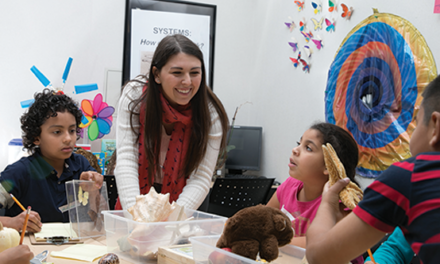
Inclusive educational opportunities in Italy are bolstered by classifying fewer students as disabled and by the expectation that classroom teachers will be supported to assume ownership for their instruction.
Italy is a favored destination of travelers from around the world for good reason! Visitors flock to Rome’s ancient treasures, marvel at the Renaissance art and architecture of Florence, and enjoy exploring the canals of Venice. Whether hiking the Dolomites, strolling the hill towns of Tuscany, wandering among the Greek ruins of Sicily, or admiring the ever present coastline, many guests to the Italian peninsula look forward to tasting their way through the gastronomical diversity of regional cuisines for which Italy is so well known. While these and innumerable other opportunities are reason enough to visit Italy, what is less well known to most Americans is Italy’s distinction of being world renowned for its more than 40 years of including students with disabilities in general education, known as “integrazione scolastica” (school integration) (D’Alessio, 2011). We were introduced to “integrazione scolastica” in the late 1980s and followed the limited amount of English-language literature on the topic with interest until 2011. Then we began studying it in earnest, including three months visiting schools and universities in five regions of Italy — Lazio, Lombardia, Puglia, Sicilia, and Veneto (Giangreco & Doyle, 2012).
Although “integrazione scolastica” first emerged in the 1970s, its roots can be traced to the democratic constitution of the newly formed Italian Republic following World War II, with its emphasis on social dignity and equality of all citizens. It established the responsibility of the Republic to remove economic and social obstacles that limited freedom and equality or impeded the full human development of citizens and their participation in society. The constitution declared schools open to everyone and explicitly stated that persons with disabilities were entitled to education.
During the 25 years following World War II, Italy established a segregated system of public education for students with disabilities (e.g., residential institutions, special schools, special classes), much as we did in the United States. Political and social unrest in the late 1960s spawned a grassroots, anti-segregation movement centered on guaranteeing fundamental human rights. “Integrazione scolastica” emerged from those turbulent times as a key social policy initiative. Beginning in the 1970s, Italy passed legislation that rapidly eliminated most segregated schools and classrooms for students with disabilities in favor of placement in typical classrooms. The relative speed of this change led to several years that some characterized as chaotic. Others considered this rapid change necessary; they persuasively argued that, without the widespread presence of students with the full range of disabilities, schools would not have had a sufficiently compelling impetus to pursue inclusionary changes, thus delaying students’ access to their educational and civil rights (Canevaro & de Anna, 2010). Over the past four decades, Italy has enacted a series of national laws to refine and strengthen its commitment to including and supporting students with disabilities (Kanter, Damiani, & Ferri, 2014).
A slower incremental approach to including students with disabilities occurred in the U.S. over the same period, vividly illustrating a counterpoint to the Italian experience. In the 1970s, both Italy and the U.S. reported placing about 20% of students with disabilities in general education classes. Since the 1980s, Italy has been reporting that about 98% of students with disabilities attend general education classes. In contrast, the U.S. has inched up about one percentage point annually, not surpassing 60% of students with disabilities in general education classes as their primary placement until 2010 (Giangreco, Doyle, & Suter, 2012). These differences may not be quite as wide as they appear due to definitional differences. The U.S. statistic is based on students with disabilities being placed in general education classes 80% or more of the time, whereas the Italian statistic does not include a corresponding parameter, so the percentage of time Italian students with disabilities are in general education classrooms is unknown.
Contextual differences are important reminders of why we should avoid the temptation to engage in overly simplistic cross-cultural comparisons. Just as there is wide variation in special education service delivery among U.S. states and between schools within states, there is not a singular Italian model or standard implementation of “integrazione scolastica.” Italian schools enjoy substantial regional autonomy, although there is agreement on a set of foundational points:
- Small special classes where students with disabilities are grouped together should be avoided;
- Students with disabilities and those with other special educational needs should be educated in general education classrooms;
- Specialized support teachers are available to the entire class, not exclusively assigned to support students with disabilities; and
- A general education teacher is expected to support students with disabilities in the general education classroom (Vianello, Lanfranchi, & Pulina, 2013).
We are not suggesting that Italy is an inclusive educational utopia; to the best of our knowledge, no such country exists. Even in progressive schools around the world, much work remains to be done to ensure equitable, inclusive, and quality educational opportunities and outcomes for students with disabilities and other nonstandard needs. Yet in the Italian context, we find important attributes to admire and from which to learn. Here are four we find especially notable.
#1. Welcoming attitude
Creating an atmosphere of welcome and belonging has long been identified as a hallmark of inclusive schooling. It is widely acknowledged that students are better positioned to learn and families to be contributing partners when educational personnel genuinely welcome them into the school community. Some U.S. schools offer welcoming experiences for students with disabilities, yet significant variability persists. Too many parents who have children with disabilities report they or their child do not feel welcomed in school. Some families find themselves compelled to advocate for access to the same educational environments and opportunities that are readily available to students without disabilities. Such experiences tend to be more prevalent when families have a child who requires intensive supports, such as those with intellectual disabilities, autism, multiple disabilities, or challenging behaviors. These students also are more likely to be educationally segregated in the U.S.
In Italian schools, students with a wide range of disabilities, including those with intensive support needs, are more consistently welcomed in typical classrooms; this is a widely accepted cultural norm. Many Italians are astonished to learn the extent to which students with disabilities in the U.S. are separated from peers without disabilities. There is a pervasive sense that students with disabilities should be as valued as those without disabilities and have equal educational access. For the most part, including students with disabilities in Italy is not controversial, an experiment, a passing fad, or a right that needs to be earned by meeting certain criteria or functioning at a particular level. Students with disabilities are welcomed simply because they are human.
#2. Defining disability differently
Spending time in Italian schools, we found ourselves noticing that what Italians perceived as “normal” is substantially wider than what we were accustomed to among Americans. We found this refreshing as well as educationally and culturally valuable. For many years, Italy has identified only 2% to 3% of its students as having a disability that would qualify as eligible for specialized supports under their education laws.
In contrast, the U.S. identifies about 13% of students as having disabilities who are eligible for special education. Just to be clear, Italy does not have a substantially different and smaller population of children with disabilities than in the U.S. Rather, the two countries define disability differently. Students identified with “specific learning disabilities” are eligible for special education in the U.S.; they represent 36% of all American students receiving special education (National Center for Educational Statistics, 2014). In Italy, these same students are acknowledged to have learning challenges but are not identified as “disabled.” Current Italian laws require teachers to make accommodations for these students to ensure their educational access. The majority of students we consider “disabled” in the U.S. — those with relatively mild learning difficulties — are simply part of a wider range of what it means to be a “regular” student in Italy, albeit ones who may require some level of individualized support or accommodation.
#3. Expectations of teachers
There is a long-standing expectation that Italian teachers should take primary ownership for the learning of all students in their classrooms, a disposition widely considered foundational to quality inclusive education. Teacher ownership may look somewhat different in Italy than in some American classrooms. First, since Italian students with mild or high-incidence disabilities (from an American perspective) typically are not considered “disabled,” they typically are not pulled out of Italian classrooms for instruction.
Italian teachers expect the presence of students with more severe disabilities in their classrooms. Effort is not wasted attempting to hasten their removal. The Italian approach encourages teachers and special educators to figure out how to educate students with disabilities in general education classrooms. Italy purposely eliminated most of the “special places” where students could be readily sent if they still existed (e.g., special education classrooms).
Classroom teachers are expected to function independently during certain parts of the school day with all of their students, including students with more severe disabilities. The services of an “insegnante di sostegno” (support teacher) are available to a classroom only part of the time for an individually determined number of hours per week (e.g., 4 to 12 hours). Although these support teachers are placed in typical classrooms where students with disabilities are present, their role is to support the teacher and to be available to all students. This provides support while attempting to minimize the potential stigma associated with receiving special education services. Similarly, a paraprofessional might be assigned to some classrooms but only in a small number cases would this person be present all day.
Many American teachers function independently in their classrooms with students who are considered to have relatively mild disabilities but are rarely expected to function on their own with a student who has a more severe disability; many are assigned full-time, one-to-one paraprofessionals. We are not suggesting that teachers be expected to support this wide range of student needs alone or without individually determined supports. Rather, the work of Italian teachers provides demonstrations of teacher ownership that might be useful in assessing our own assumptions, expectations, and actions related to teacher roles.
#4. Less use of paraprofessionals
Over the past couple of decades, using special education paraprofessionals to support students with disabilities in general education classes in the U.S. has steadily risen. Simultaneously, their roles have become increasingly instructional. This direction has advanced despite evidence identifying a host of unintended detrimental effects associated with the extensive and potentially inappropriate use of paraprofessionals (Giangreco, 2013).
Historically, schools in Italy have relied far less extensively on paraprofessionals to support students with disabilities. Proportionally, there are far fewer of them, and typically they provide noninstructional supports (e.g., personal care, mobility). A subset provides some instructional, communication, or social supports designed to advance student autonomy. “The national position is that special education and general education teachers [rather than teacher assistants] should be primarily responsible for the education of students with disabilities” (Palladino et al., 1999, p. 256).
In inclusion-oriented schools in the U.S., it is not uncommon to find at least twice as many special education paraprofessionals as special education teachers. In Italy, this ratio is reversed. In a recent study of Italian schools, on average, there were more than twice as many special education teachers as paraprofessionals (Giangreco, Doyle, & Suter, 2012). Italy’s approach provides an alternative to consider when designing personnel utilization in inclusive schools.
Conclusion
Imagine how U.S. schools might improve if we consistently applied these foundational insights learned from Italian schools. While the U.S. focus on curricular standards and evidence-based instruction is laudable, Italians remind us of the foundational importance of creating learning environments where all students are welcomed. How might students’ opportunities expand and outcomes improve if we replaced our current approach of sorting and separating students who are “different” with an approach dedicated to including students while meeting their individualized education needs?
By ensuring the presence of students with the full range of disabilities, Italians have created the constructive disequilibrium required to advance. They seem to embrace the messiness associated with change because they view it as beneficial for students (Canevaro & de Anna, 2010). For example, Italian students with intellectual disabilities reportedly perform above expectations, academically and socially, compared to students with similar disabilities in other countries where they are less likely to be included (Vianello & Lanfranchi, 2009). American teachers who have included students with intensive support needs have reported that, after initial trepidation, they gained new dispositions and skills, which helped them become better teachers (Giangreco et al., 1993). Our Italian counterparts encourage us to consider that such positive student and teacher outcomes will be less likely to occur so long as we maintain the wide range of segregated schooling options that now exist.
Given that both Italy and the U.S. have national literacy rates of 99%, what might we learn from Italy’s approach to disability labeling? Are we unnecessarily labeling too many students as disabled? American culture seems to increasingly pathologize ever-smaller differences in people as a “disability.” Has the absence of students with more severe disabilities in regular classes in some schools caused us to lose perspective? While identifying students as disabled is purportedly done with positive intentions, entry into special education placements has a long history of low expectations, stigma, questionable postschool outcomes, and disproportionate placement based on race.
Can we design schools that better meet students’ educational needs in general education classes without labeling so many of them disabled or separating them from the rich opportunities and high expectations present in general education classrooms? Some U.S. schools have headed down this path, although such opportunities still depend on where you live. American students with virtually identical disability characteristics end up in vastly different educational placements, from special schools and classes to regular classes with supports. This suggests that whether students with disabilities are included is as much, or more, a function of the characteristics of the adults and systems where they live than their disability characteristics.
Italian approaches to providing special education supports in regular classrooms are congruent with contemporary initiatives to build the capacity of general education teachers and offer them support (e.g., coteaching, multitiered systems of support, universal design for learning, differentiated instruction). Italian models of service delivery encourage us to examine the roles and capacities of teachers and explore how to support them.
Finally, Italian deployment of paraprofessionals to support students in inclusive classrooms can be a reality check. Our current ways of operating, namely the extensive use of paraprofessionals to provide instruction, are not sacrosanct. While American schools wrestle with how to address the increasing use of paraprofessionals, the path to progress will not be achieved by simply reducing their numbers but rather by developing alternatives such as building inclusive service delivery models that take into account the full range of student diversity (Giangreco & Suter, 2015). While Italy may not be an inclusive education utopia and many Italian educators have identified issues about which they are concerned (Giangreco, Doyle, & Suter, 2014), there is still value in dreaming about a more inclusive world and much to learn from Italy’s inclusionary efforts.
References
Canevaro, A. & de Anna, L. (2010). The historical evolution of school integration in Italy: Some witnesses and considerations. ALTER, European Journal of Disability Research, 4, 203-216.
D’Alessio, S. (2011). Inclusive education in Italy: A critical analysis of the policy of “integrazione scolastica.” Rotterdam, Netherlands: Sense.
Giangreco, M.F. (2013). Teacher assistant supports in inclusive schools: Research, practices, and alternatives. Australasian Journal of Special Education, 37 (2), 93-106.
Giangreco, M.F., Dennis, R., Cloninger, C., Edelman, S., & Schattman, R. (1993). “I’ve counted Jon”: Transformational experiences of teachers educating students with disabilities. Exceptional Children, 59, 359-372.
Giangreco, M.F. & Doyle, M.B. (2012). “Integrazione scolastica” in Italy: A compilation of English-language resources. International Journal of Whole Schooling, 8 (1), 63-105.
Giangreco, M.F., Doyle, M.B., & Suter, J.C. (2012). Demographic and personnel service delivery data: Implications for including students with disabilities in Italian schools. Life Span and Disability, 15 (1), 97-123.
Giangreco, M.F., Doyle, M.B., & Suter, J.C. (2014). Italian and American progress toward inclusive education: Common concerns and future directions. Life Span and Disability, 17 (1), 119-136.
Giangreco, M.F. & Suter, J.C. (2015). Precarious or purposeful? Proactively building inclusive special education service delivery on solid ground. Inclusion, 3 (3), 112-131.
Kanter, A., Damiani, M., & Ferri, B.A. (2014). The right to inclusive education under international law: Following Italy’s lead. International Journal of Special Needs Education, 17 (1), 21-32.
National Center for Educational Statistics. (2014). The condition of education: Children and youth with disabilities. https://nces.ed.gov/programs/coe/indicator_cgg.asp
Palladino, P., Cornoldi, C., Vianello, R., Scruggs, T.E., & Mastropieri, M.A. (1999). Paraprofessionals in Italy: Perspectives from an inclusive country. Journal of the Association for Persons with Severe Disabilities, 24 (4), 254-258.
Vianello, R. & Lanfranchi, S. (2009). Genetic syndromes causing mental retardation: Deficit surplus in school performance and social adaptability compared to cognitive capacity. Life Span and Disability, 12 (1), 41-52.
Vianello, R., Lanfranchi, S., & Pulina, F. (2013). Students with disabilities and with special educational needs: A reply to Giangreco, Doyle, and Suter. Life Span and Disability, 16 (2), 219-227.
Citation: Italy presses forward in educating students with learning disabilities. Phi Delta Kappan, 97 (3), 23-28.
ABOUT THE AUTHORS

Mary Beth Doyle
MARY BETH DOYLE is a professor of education at St. Michael’s College, Colchester, Vt.
Michael F. Giangreco
MICHAEL F. GIANGRECO is a professor of education at the University of Vermont, Burlington, Vt.