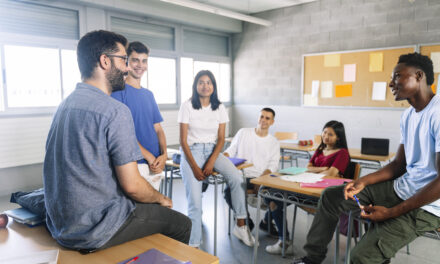
In today’s digital age, social media influencers, with their massive followings and relatable content, have transformed how trends are set, decisions are made, and opinions are shaped. The impact isn’t confined to the virtual world. It’s spilling over into classrooms, where students — much like digital influencers — are shaping the educational landscape in meaningful ways. As classrooms evolve to stay attuned to cultural shifts, students are no longer passive recipients of knowledge. Instead, they are becoming active participants, influencing how lessons are shaped and how educational spaces respond to their varied needs.
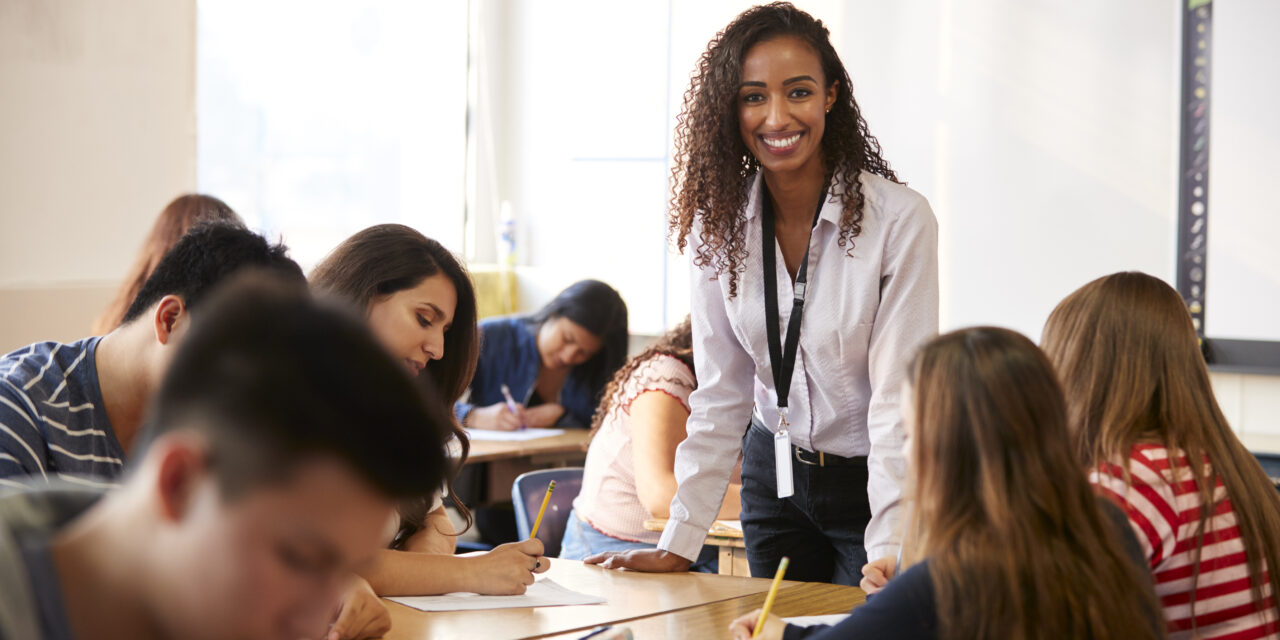
This evolution is reshaping the role of educators, who are increasingly recognizing the value of student voice. More educators are fostering a student-centered approach by adapting their teaching practices to create spaces where students feel heard, valued, and empowered to influence their own educational journeys. The classroom is no longer a place where teachers simply impart knowledge; instead, it’s a collaborative space where students help shape the learning environment.
As an educator with extensive experience in inclusive and special education classrooms, I’ve been fascinated by the intricate dynamics between students and teachers. Reflecting on my current work in teacher preparation programs and insights gained from my student mentee, Angela Cerriteno, following the recent Educators Rising 2024 National Conference, it’s clear that we’re witnessing an exciting shift. A current high school senior from New Mexico and a future teacher, Angela highlighted a growing trend: Students are the new “classroom influencers,” shaping not only how lessons are delivered but also how learning environments reflect the values of diversity and belonging. The rise of student agency, blended with teacher adaptability, offers rich opportunities to create exceptional classroom experiences. We see this most clearly in how educators use technology, how students give feedback, how schools cultivate inclusion, and how they address mental health.
Technology: Empowering, but insufficient
Technology enables teachers to engage students in interactive, personalized, and dynamic learning experiences that mirror their digital lifestyles. In the world of special and inclusive education, technology has been a game-changer. Tools like speech-to-text applications or adaptive learning platforms provide vital support for students with varying abilities. Artificial intelligence and other technologies are present many exciting opportunities for all learners (Nguyen et al., 2024).
However, as Angela wisely pointed out, “Teachers should be aware not to depend too much on technology but instead use it to enhance student skills.” Studies show that while technology helps, it’s not a cure-all. For example, in a survey from the National Center for Education Statistics (Gray & Lewis, 2021) teachers agreed that tech tools can increase student engagement. However, students and teachers alike still want that personal touch. A study by Loukia David and Netta Weinstein (2024) noted that technology alone wasn’t enough to maintain motivation and well-being. Rather, activities intentionally designed by teachers —like the need for teamwork— are beneficial.
Although technology enhances accessibility — whether by enabling differentiated instruction or making learning more interactive — students like Angela crave genuine interactions. (No offense to Siri or Gemini). In my own classrooms, I’ve learned from my students that technology works best when it complements a solid relational foundation. After all, no app will ever replace the moment when a student finally “gets it” after a supportive conversation — or when they ask you for the 300th time how to find the assignment link.
Student feedback: A key to successful instruction
In education, feedback isn’t just nice to have; it’s essential. We often think of feedback as given by the teacher following an evaluation of the student. However, there is also value in the feedback students give teachers about what worked well in their teaching approach and what did not. As a university educator who is often frustrated by the need to have my students complete course evaluations of my teaching, I know firsthand that not everything that they shared is something I want to hear. However, students, especially those with unique learning needs, often know best what works for them.
Angela shared a story about how her feedback helped shape her teacher’s practice: “My first year with my biology teacher was difficult, as the lessons and assignments were more student-led. But after receiving feedback, she completely changed her approach the next year for chemistry, incorporating notebooks to help us stay on track.”
This kind of transformation isn’t an isolated incident. Teachers in K-12 schools have improved their practice by eliciting student feedback through discussions, written reflections, gestures like thumbs up/down, and even emojis (Edutopia, 2023). What’s more, inclusive environments where student voice matters show an increase in academic achievement and participation (Kahne et al., 2022). Angela’s experience reflects what I often tell fellow educators: Listening to our students not only makes them feel heard, but also leads to smarter teaching strategies.
Feedback loops can be the difference between a student barely surviving the school day and that student thriving academically. Asking students what helps them succeed isn’t just about making our jobs easier (or more difficult) — it’s about ensuring we provide equitable opportunities for all learners.
Mental health: The elephant in the room
We’ve all heard it: mental health matters. Yet, in many schools, mental health discussions remain sporadic at best, despite students’ willingness and interest in the subject. Angela touched on this issue, noting, “I would like to see an increase in discussing topics regarding mental health.” Her observation reflects a larger trend among students today, particularly after the disruptions of the COVID-19 pandemic. According to Schultz (2024), in an article for Education Week, more than 80% of teachers believe they are called to support students’ mental health. Inclusive classrooms must step up — not just as spaces for academic learning but as safe havens where students feel supported emotionally. Integrating social-emotional learning into the curriculum is one way to address this growing need (Shah, 2022).
In my classrooms, I make a point to weave in mental health check-ins and stress-relief strategies — not only for my students but for myself (because teachers are human, too). Whether it’s through mindfulness exercises, open discussions, or simply encouraging students to take a breather, these small interventions make a big difference in fostering a positive and inclusive learning environment. After all, no student can focus on algebraic equations or historical timelines if their minds are tangled in stress and anxiety.
The long-lasting influence of teachers
Finally, while I’ve focused here on the power of student voice, it’s crucial to remember that teachers continue to have a profound, lasting impact on their students. Angela’s personal story about Christine Reyes of New Mexico Educators Rising, who helped her overcome self-doubt, serves as a powerful reminder: “Thanks to her, every day I feel more confident, capable of facing challenges, and motivated to achieve my goals.”
This is a familiar narrative. Many students attribute at least one life-changing influence to a teacher who invested in their personal development (Uitto et al., 2018). When teachers model empathy, cultural responsiveness, and adaptability, they create an environment where students can blossom — not only academically but as future leaders, advocates, and change-makers.
In classrooms where student voice is valued, teachers often play dual roles as both educators and mentors. In special education settings, this influence can be even more profound. I’ve seen firsthand how a teacher’s belief in a student’s potential can transform that student’s trajectory, leading them to achieve goals they once thought were out of reach. And sometimes, the best part of teaching is being able to say, “I knew them when,” while watching your former students soar in ways you never imagined.
The future of classrooms
Angela Cerriteno’s reflections highlight the evolving nature of today’s classrooms, where students and teachers collaborate to shape educational environments where all students feel they belong. Whether it’s through the integration of technology, the power of feedback, or the critical need for mental health support, the future of education lies in these small, intentional steps toward creating classrooms where all students feel empowered and valued.
Building these classrooms isn’t just about checking off boxes or following trends. It’s about listening — really listening — to our students and creating learning spaces where they can thrive, both academically and emotionally. As Angela wisely put it, “Small steps can accomplish big changes.” Let’s continue taking those steps together, making room for every student to shine while keeping a sense of humor and remembering that, in the end, we’re all in this together.
References
David, L. & Weinstein, N. (2024). Using technology to make learning fun: technology use is best made fun and challenging to optimize intrinsic motivation and engagement. European Journal of Psychology of Education, 39 (2), 1441-1463.
Edutopia. (2023, Nov. 17). Question: How do you use student feedback to change your practice?
Gray, L. & Lewis, L. (2021). Use of educational technology for instruction in public schools: 2019-20. First look–Summary (NCES 2021-017). National Center for Education Statistics.
Kahne, J., Bowyer, B., Marshall, J., & Hodgin, E. (2022). Is responsiveness to student voice related to academic outcomes? Strengthening the rationale for student voice in school reform. American Journal of Education, 128 (3), 389-415.
Nguyen, A., Kremantzis, M., Essien, A., Petrounias, I., & Hosseini, S. (2024). Enhancing student engagement through artificial intelligence (AI): Understanding the basics, opportunities, and challenges. Journal of University Teaching and Learning Practice, 21 (06).
Schultz, B. (2024). Teacher morale dips yet again: 5 takeaways from new survey. Education Week.
Shah, B. (2022). The basics of social-emotional learning. Zoy.
Uitto, M., Lutovac, S., Jokikokko, K., & Kaasila, R. (2018). Recalling life-changing teachers: Positive memories of teacher-student relationships and the emotions involved. International Journal of Educational Research, 87, 47-56.
This article was written as part of PDK’s 2024 Emerging Leader and Distinguished Educator programs.
ABOUT THE AUTHOR

Amanda Ramoutar
Amanda Ramoutar, a PDK 2024 Emerging Leader Fellow, is an assistant professor of education and psychology at Walla Walla University, Washington.