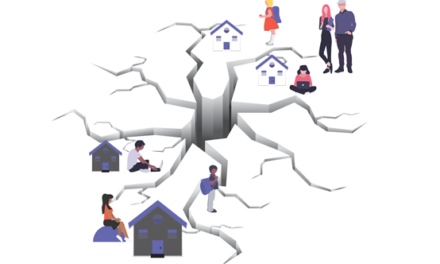
A small group of New York City teachers channeled their disgust with “Waiting for Superman” into their own film about the realities of the current education reform movement.
In summer 2010, it seemed that everyone was preparing for “Waiting for Superman” to open at their local theaters. After its premier at the Sundance Film Festival, the film and producer Davis Guggenheim was showered with accolades as talk mounted about the possibility of an Oscar nomination. Oprah gushed about it on her show, President Obama talked about the film, and parents throughout the country planned house parties to watch and discuss the film.
The film generated a much different response among teachers. Retired New York City teacher Norm Scott and Julie Cavanagh, a current New York City public school educator, were disgusted when they saw the film’s trailer.
Guggenheim’s film was a direct attack on public schools, teachers, and their unions, and someone needed to mount a defense. Rather than just sit back and complain about it, Scott and Cavanagh began to plot a counterattack: They would make their own film in response to “Waiting for Superman.” Initially, Scott and Cavanagh intended their film to be a short spoof of Guggenheim’s film. But after nine months of collaborative work, the Grassroots Education Movement (GEM) had created a 65-minute film rebutting Guggenheim’s assertions. “Superman’s” push for charter schools as the solution to all of our country’s educational challenges also included a more subtle attack on the very concept of the neighborhood public school. For over a century and a half, strong local public school systems have been a mainstay of American democracy, but now their utility was somehow in question.
On May 19, 2011, GEM released “The Inconvenient Truth Behind Waiting for Superman” in front of an enthusiastic audience of 650 people, including education historian Diane Ravitch as keynote speaker, at Riverside Church in New York City. “The Inconvenient Truth Behind Waiting for Superman” highlighted the real-life experiences of public school parents, students, and educators to show how the so-called reforms embraced in “Superman” are actually hurting public education. The film also discusses the kinds of real reform inside schools and in society as a whole that are urgently needed to genuinely transform education in this country.
We were able to find everyday heroes to tell the story, people who were desperate to have their voices heard.
Two years later, over 100,000 people have viewed the film, thousands of copies have been requested and mailed around the globe (many to universities and libraries), hundreds of grassroots screenings have been organized, and the film has propelled many to join the fight for preserving public education. The filmmakers hoped the film would spur activism but have been humbled and energized by its reach.
What a small group of teachers did in New York City could be replicated by any group of teachers in the United States. Such grassroots projects can inspire other educators and mobilize communities around important public education issues.
The work begins
Julie Cavanagh had been a special education teacher for over a decade in a public school in Red Hook, Brooklyn. Her school served a high-poverty neighborhood and was forced to give over a huge percentage of its space to a charter school in a process known as colocating. Norm Scott had taught in the New York City public schools for over 30 years and had always been active in working to transform the teachers union into a progressive force for change. For many years, Scott had been videotaping and archiving Department of Education hearings, many of which were held to close public schools and colocate charter schools.
“When we saw the trailer we were immediately moved to respond; we recognized how misleading and subversive this film was going to be. We felt both angry and inspired,” Cavanagh said. “Angered that the elites were using Hollywood to propagate myths and mistruths about education and inspired to do something. Their goal was to dictate a conversation about a predetermined reform agenda; we wanted to encourage engagement and empowerment and reframe that conversation to be about real reform.”
Cavanagh drafted a script, and she and Scott began interviewing public school supporters across the city. Their plan was simple: Talk to the people on the ground (teachers, parents, students, community members), and use their words to highlight the inconvenient truths in Guggenheim’s films. Then, somehow they would learn to edit the footage and compile it into a compelling rebuttal.
Cavanagh and Scott shared the film idea with Darren Marelli, a public school social worker, and he jumped on board. Marelli worked in a public school forced to share its space with two charter schools. His public school had been losing resources and students at the same time that the charter schools in his building, loaded with enormous resources provided by private donations and favored treatment from the Department of Education, renovated bathrooms, built dance studios, and hired extra teachers. He wanted to expose the inequality in his school building, an inequality that was rampant across the city.
The team dubbed itself Real Reform Studios and chose “The Inconvenient Truth Behind Waiting for Superman” as the title for the film based on the irony that Guggenheim’s previous film, the global warming venture done with Al Gore, had been “The Inconvenient Truth.”
The plan was to complete the film within a month of the September 2010 “Superman” release. On the night of the “Superman” premier, GEM organized a large protest, with participants wearing red capes. Instead of the superman “S,” these capes had an “RR” logo, representing the Real Reformers. The press release for the protest mentioned the film in progress, and the project received a great deal of attention. Immediately, messages of support poured in from educators, parent groups, and union locals around the nation.
Throughout the fall, the team attended community education hearings, spoke with educators and parents, and attended protests organized against school closures and charter school takeovers. The issue was clearly bigger than the Guggenheim film, and the filmmakers realized they needed more time to do the topic justice.
Organizing the film
From September to early February, we kept accumulating new footage. We worked on a rough edit, searching for those brilliant nuggets that would give the film its legs. We searched the Internet for supporting facts to document our case and looked for video footage of the leading backers of the corporate reform movement. Early on, the footage collected was daunting in quantity. How would we organize it? What was worth including? What should be left out? How would we string together all of the talking heads in a way that would be captivating?
Since none of us had a background in film, we had to make it up as we went along. We realized very quickly that we needed narrators to guide viewers through the film and to offer a consistent voice throughout. Cavanagh was clearly going to be one of them. We soon identified Harlem teacher Brian Jones as cohost. Jones was roughly the same age as Julie and a professional actor to boot. He had previously stood toe-to-toe on NBC’s Education Nation with two prominent “Waiting for Superman” stars: Harlem Children’s Zone CEO Geoffrey Canada and former superintendent of Washington, D.C., schools Michelle Rhee. He was just as passionate about mounting a defense of our public schools as the rest of the Real Reform Studio crew.
Cavanagh sketched out a brilliant script, and Scott began filming their narration in various locations around the city.
With the narration in place, a structure for the entire piece eventually emerged. The film would revolve around the three “inconvenient truths” of Guggenheim’s film:
- The corporate reform movement won’t improve education.
- Charter schools aren’t a silver bullet.
- Teacher and union safeguards also protect children.
Then the focus would shift to a short section on the 10 real reforms needed to improve public schools:
- Small class sizes;
- Excellent community public schools for all children (instead of privatized charters);
- More teaching, less testing;
- Parent and teacher empowerment and leadership;
- Equitable funding for all schools;
- Antiracist education policies;
- Culturally relevant curriculum;
- Prekindergarten and early intervention programs for all children;
- Qualified educators to educate our children and run our school systems; and
- Democratic and social justice unionism.
Once this structure was in place, we sorted interview clips into these categories. From there, weaving them together wouldn’t be quite as difficult. While the clips of interviewees were powerful, we needed something more to break up the monotony of talking heads. Scott and Marelli had been filming and photographing education events in New York City for years so we had lots of b-roll (supplemental footage) to work with. We started working on charts, drawings, and other graphics to include and Marelli continued scouring the web for video clips of prominent education “reformers” spouting the “Waiting for Superman” line.
By mid-February, we had a viewable, 52-minute draft made completely in iMovie. As first-time filmmakers, editors, and scriptwriters, we were hungry for feedback but also hopeful that the project was nearly finished. We organized a screening at the Bluestockings Bookstore in lower Manhattan, and, with GEM’s help, more than 50 people attended and participated. We passed out feedback forms with specific questions and asked viewers for criticism, praise, support, and suggestions.
The audience was very responsive to the film — it had excellent promise, but needed some reorganizing. Viewers pointed out graphics that were confusing, clips that were inaudible, and important points that needed expansion or tamping down. Two audience members — Lisa Donlan and Mollie Bruhn (who had already been loosely involved in the film’s production) — were quite moved at the screening and felt compelled to join the Real Reform Studio team. Donlan, a local parent, had been active in her local Community Education Council for years and had countless experiences dealing with Department of Education policies. Bruhn had only been teaching a few years in the public schools, but had firsthand experience working in a charter school. She had actually been fired without cause from the charter school where she worked and felt very strongly about the importance of union protections, the very protections Guggenheim argued against.
One key piece of feedback came from Leonie Haimson, director of Class Size Matters and a strong voice for public education in New York City. Haimson spoke directly to the need to create racial balance in the film. Most of those claiming to be education “reformers” are privileged and white, and most of their reforms are pushed on economically impoverished communities of color in urban centers. We took a hard look at who we had interviewed and realized we were short on diversity. So we ventured back to the community to add more and diverse voices. We interviewed mothers who had sent their children to charter schools because they had been swayed by the promises of “something better.” But they had been thoroughly dismayed by how their children were treated once accepted. They described rigid and controlling discipline codes, children being harshly punished for simple infractions, and their own children’s unhappiness in school. Adding these interviews added incredible strength to the film.
Throughout February, March, and April, the film changed continually. We revised, reworked, edited, shifted, and altered the flow of the film. Again and again, we invited people to come in and provide another set of eyes. Fellow GEM members offered fresh perspectives that helped tighten the film. In the end, the film truly was a grassroots, community-based project.
Ready for the big screen
In the early spring, we set our eyes on a May premier and began to feel the crunch as the weeks rolled by. While each of us wanted to continue tweaking the film, inevitably the film finally had to be finished. Riverside Church offered its large auditorium space to GEM for the premier, and the group began promoting the event. It became immediately clear that people were hungry for the film.
People began to rally around the film, asserting that it provided a much-needed platform for voices that were so often silenced by the corporate reform movement.
We ordered over a thousand DVDs to distribute and set up a web site and online request form for the DVD. RSVPs for the premier rolled in by the dozen, and orders for the DVD began to tally up by the hour. The group discussed selling the film but eventually decided to give it away while encouraging donations to GEM by cash, check, or even PayPal. Instead of holding on to ownership, we told those who requested the DVD to do with it as they pleased, organize screenings, and burn copies to distribute themselves. GEM members created a House Party/Screening Guide with background information, suggestions for organizing screenings, discussion questions, ideas for further action, and information on other groups working to preserve and promote public education.
By June, we had mailed over 1,200 copies and received close to $3,000 in donations (over $2,000 at the premier alone). Even with minimal promotional effort, people around the country all seemed to be talking about the film. Filmmaker Michael Moore posted about its completion, articles popped up left and right, and bloggers around the country added blurbs about the film and posted links for ordering copies and learning more. Requests for screenings poured in, and we found ourselves invited to panels and discussions at universities, libraries, in small independent theatres, and with various community groups. People began to rally around the film, asserting that it provided a much-needed platform for voices that were so often silenced by the corporate reform movement.
What we learned
Two years have passed since the film premiered. The film is viewed over 100 times each day online and DVD orders and donations continue to trickle in. To date we have mailed 6,100 copies and received $21,000 in donations to cover production and distribution costs. Having never made a film before, we learned a great deal in the process of putting it together. If we were to do it all over again, much of our approach would remain the same, though we certainly have many mistakes from which to learn.
When we began the process of creating the film, the ideas and content seemed a bit avant-garde, but once the film was finished, much of what we highlighted had become part of the common vocabulary and accepted knowledge by those connected to education. Instead of fearing what the reception to the film might be, we forged ahead into uncharted territory. The idea for our film came from a place of passion and urgency: Cavanagh had been so incensed by “Waiting for Superman” that her drive motivated the rest of us. This driving force could not have been manufactured — the anger we all felt was real, and, once we got into the community, we found many others who felt it, too. Instead of telling the entire story through narration, we were able to find everyday heroes to tell the story, people who were desperate to have their voices heard. Their diverse perspectives kept the viewers engaged and the story rich.
While compiling and editing the footage, the Real Reform team kept power distributed and our roles fluid. We found a way to leverage everyone’s talents and abilities. Cavanagh brought passion and precision to the team and worked diligently to get out the word about the film. Scott was dedicated to filming and willing to venture out again and again to shoot more b-roll and do more interviews. Marelli worked well alone, focusing in on the screen and experimenting with reworkings to share later with the rest of the group. Bruhn and Donlan pushed the group to go back to the drawing board more than once when clips just didn’t play well. And many others contributed editorial assistance. We found a way to work with each other’s strengths while also all giving up some degree of individual control, which can often stifle such projects. Consensus is never easy, but our commitment to it made the film that much stronger.
We could not have made this film without the feedback and input of the larger community. The early screening at Bluestockings and other smaller screenings in our editing room with fellow GEM members allowed us to receive invaluable feedback since everyone brought a different perspective. With each small showing, the film evolved, getting tighter, more concise, and more visually creative.
We were also quite fortunate to have such substantial stock footage. Had Scott and Marelli not been filming every Panel for Educational Policy meeting, every rally, every protest, and every press conference for several years, we wouldn’t have been able to illustrate the pervasive pushback to the corporate reform movement that the media so often ignores.
Another stroke of luck came with our timing. There was a genuine desire for a film like ours. While the film is far from perfect, it came at a time when teachers, students, and parents needed something to rally around. Our decision to give away the film made it possible for others to use it as an organizing tool and enabled thousands to view it. At the premier and so many screenings afterward, we said to our audiences, “This is your film.” We didn’t have the capacity or funding to do much in the way of promotion, so giving it away turned out to be incredibly useful and likely a big part of why so many chose to donate to support it.
Our greatest weakness was our lack of experience with the technical aspects of filming and editing. We used iMovie for editing but should have taken the time to become familiar with more advanced software. Using iMovie limited us in many ways because the software isn’t intended to handle a project of this size. We also struggled with sound quality. Since we were novice filmmakers, we didn’t understand all of the details we needed to attend to during filming. Traffic noise, passing pedestrians, and even the wind rustling does a great deal to distract the viewer. Sound equipment is expensive, but it would have been worth the investment. Because we made the film in such a rudimentary way, it lacks the polished and crisp visual quality of Guggenheim’s film. For some viewers, this amateurishness is too distracting, and they have discounted our message. Perhaps they weren’t inclined to hear what we had to say from the start. If we had more secure funding at the beginning, we probably could have overcome some of these technical challenges. Unfortunately we didn’t think about fund-raising at the outset.
Making a film is painstaking, and while we don’t have another film in the works, we hope others will be inspired to find a platform for telling their stories when they feel they aren’t being heard. Such grassroots projects have the capacity to inspire great activism, as we’ve seen in New York City. Numerous new groups have formed and hundreds — if not thousands — of teachers and parents have chosen to become active in speaking out and joining the education debate around the city. Our film was not the first nor the only thing to clue people in to the dangers of the corporate reform movement, but “The Inconvenient Truth Behind Waiting for Superman” has proven to be an important piece of the ever-growing pushback and effort to preserve public education.
CITATION: Bruhn, M. (2014). Challenging “Waiting for Superman.” Phi Delta Kappan, 95 (5), 47-51.
ABOUT THE AUTHOR

Mollie Bruhn
MOLLIE BRUHN is a kindergarten teacher for the New York City Department of Education and was an editor for “The Inconvenient Truth Behind Waiting for Superman.”