In this week’s newsletter: Banned Book Week has produced a slew of stories on the topic, which is all too easily oversimplified. A veteran education reporter reflects on her recent schools coverage and doesn’t like what she sees. And student journalists work to reclaim their podcast brand — by suing their school district.
LET’S TALK BANNED BOOKS
The big story of the week, according to us
To mark Banned Book Week, the American Library Association and PEN America released a report documenting how many books have been banned since 2021:
🔊 Schools banned books 2,532 times since 2021. It’s all part of a ‘full-fledged’ movement. (USA Today; see also Washington Post)
🔊 Who’s Behind the Escalating Push to Ban Books? A New Report Has Answers (EdWeek)
🔊 Advocacy Groups Are Helping Drive a Rise in Book Bans (New York Times)
🔊 How to beat a book ban: students, parents and librarians fight back (The Guardian)
🔊 Banned books: What a new wave of restrictions could mean for students (USA Today)
🔊 Texas has banned more books than any other state, new report shows (Texas Tribune)
However, reporters and readers should consider whether it should really be called a “ban” if the book is still widely available elsewhere. And it’s important to understand — and remind readers — that books often end up back on school library shelves following the review process. Last but not least, remember that the book ban narrative is being pushed by groups including the national teachers unions. Deeper stories add nuance to the drama.
Other big stories this week: Some states like California are delaying the release of test score results, and it’s being noticed. Minnesota’s “Feeding Our Futures” child nutrition scandal keeps getting bigger and seems likely to spread to other states. UNICEF released a sobering report showing that only a third of 10-year-olds globally are able to read and understand a simple written story. And in Virginia, Gov. Glenn Youngkin has restricted protections for transgender students, even though it may be illegal and some schools are fighting back.

THE REAL SHORTAGE
The best education journalism of the week, according to us
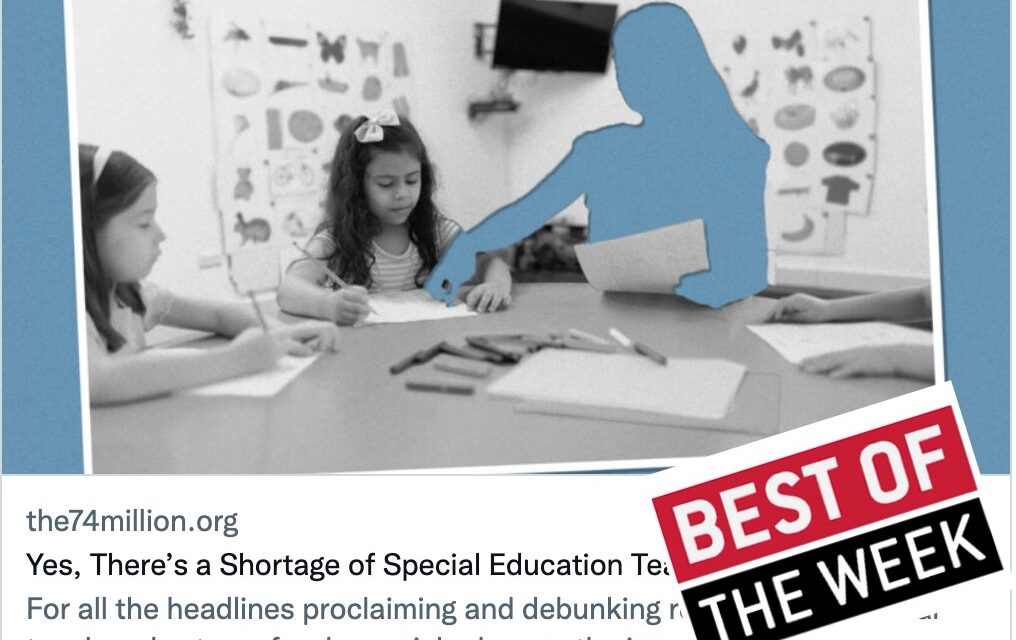
🏆 BEST: The best story of the week is Yes, There’s a Shortage of Special Education Teachers. And That’s Nothing New by Beth Hawkins in The 74. I love the way Hawkins cuts to the chase in this story, pointing out that amid all the stories about teacher shortage “crises,” one important piece has been left out: special education teachers are in short supply — and have been for half a century. Hawkins makes the case that this is the teacher shortage story we should really be talking about. And the cause of the shortage is no surprise, say advocates: few policies at the college level encouraging more special ed teaching graduates, a lack of incentives for teachers to specialize in it, and not enough support to keep them in those positions when they are hired. Schools are scrambling now to fill those positions as they try to catch kids up after pandemic learning losses, but “that’s kind of a Band-Aid on a bullet hole,” says one advocate. As always, it’s good to dig deeper into the teacher shortage story, and Hawkins does an excellent job on that with this piece.
See also: This special education school’s classrooms are so understaffed parents say it’s unsafe (WFYI).
🏆 RUNNER-UP: This week’s runner-up is How Arizona became America’s school choice lab by Harry Bruinius in the Christian Science Monitor. School choice is a thorny topic for education reporters to cover given the political polarization that surrounds it, but Bruinius covers it fairly and puts parents and kids in the center rather than advocates and experts. He features the story of one family: the mom, a former educator herself, looked long and hard for a good school fit for her son. Thanks to an education savings account that Arizona calls “empowerment scholarships,” she was able to enroll her son in a 16-student “microschool” that combines equine therapy and personalized instruction, and he’s thriving there. “Arizona is a lot more free when it comes to parent-directed education,” she tells Bruinius. The pros and cons of parental choice are difficult to untangle, given the politics that surround the topic. Most stories focus heavily on the downsides or the advantages. But it’s a story worth telling with nuance and balance, as done here.
BONUS STORIES:
🏆 Basic skills test waived to ease teacher shortage in Pa. Experts debate whether it will help. (Inquirer)
🏆 Our classrooms are increasingly diverse, yet 9 of 10 teachers are white. Why that’s a problem and what can be done about it. (Wisconsin Post-Crescent)
🏆 State finds Denver violated the rights of Black boys with disabilities (Chalkbeat Colorado)
🏆 Despite Promises of Equity, Students at This San Francisco Middle School Still Lack Teachers (KQED)
🏆 Traumatized and displaced but determined, kids in Ukraine head back to school (NPR)
🏆 What’s driving teachers to expel students from preschool and daycare? (WBEZ Chicago)
WASTED TIME
New commentary from The Grade
Many journalists don’t feel comfortable discussing their work publicly until long after they’ve left the business, but not longtime Providence Journal education reporter Linda Borg.
“We wasted a lot of time on the latest school to close, how superintendents felt unsupported, and how Providence was screwing up online learning,” says Borg in a brutally candid interview we published this week.
Thanks to Borg and others like her who are willing to share insights and consider adjusting their approaches in 2022-23.
Follow @alexanderrusso for thought-provoking commentary on education journalism all day, every day.
STUDENTS STAND UP
Promising innovations & signs of progress
💡 A high school student in Boise, flanked by his supportive friends, beat out a school board candidate from a far-right group (HuffPost).
💡 According to a new report, at least 33 state boards of education include positions for youth reps or advisors, giving them more of a say in education policy (The 74).
💡 The Massachusetts state board of education approved a literacy screening mandate to detect learning disabilities (Boston Globe).
💡 While many districts experienced enrollment declines, San Francisco counted 1,000 more students than expected, bolstering hope that fewer families are fleeing (SF Chronicle).
💡 A high school in Philadelphia has become the first in the district with all freshman core subjects taught by Black men (Chalkbeat).
💡 Students in Detroit are finding joy in school again through music (Chalkbeat).
💡 The Corn Kid is doing fine (New York Times).
Read more about the importance of including promising innovations and preliminary successes.
PEOPLE, JOBS
Who’s doing what, going where
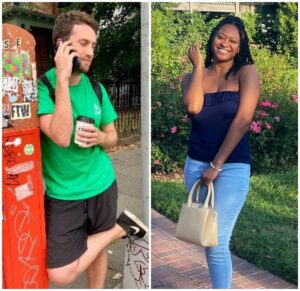
Above: Chalkbeat New York’s Michael Elsen-Rooney, left, and the Better Government Association’s Jewél Jackson are both heading to new newsrooms.
🔥 Career moves: Michael Elsen-Rooney is leaving the New York Daily News after three years to join Chalkbeat New York. And say hello to Jewél Jackson, who published her first story for the Better Government Association in Illinois about the call for special education classroom assistants to participate in required IEP meetings. Tell her where she can get the best shawarma in Chicago! We’re still waiting to find out new hires at the Boston Globe and USA Today, among other places.
🔥 Appearances: The CT Mirror’s Ginny Monk was on the outlet’s Long Story Short podcast talking about her story on parents and students calling for anti-racism policies. And the LAist education team — Julia Barajas, Mariana Dale, Kyle Stokes, and editor Ross Brenneman — discussed their summer series on how California’s education system addresses dyslexia, answering questions and talking about things that didn’t make it into their final stories.
🔥 Job openings: The Hechinger Report is hiring an audience engagement editor. KQED MindShift is looking for an editor who’s passionate about education. The Connecticut Mirror is hiring an education reporter. WAMU is also hiring an education reporter. Check previous versions of the newsletter for more jobs that may still be open.
🔥 New endeavors: The 74 is launching a new twice-monthly newsletter called School (in)Security, edited by Mark Keierleber, about the tension between keeping students safe in school and safeguarding their rights. Former NPR education reporter Anya Kamenetz is advising a new project from the Aspen Institute called This is Planet Ed, which aims to get more climate narratives into kids’ media.
EVENTS, RESOURCES
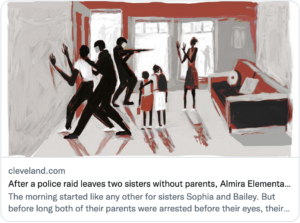
Above: The Cleveland Plain Dealer/Cleveland.com has launched a new series featuring embedded reporting from a local elementary school and compelling stories about tough topics like a school intervention team’s response the morning two students’ parents are arrested. But some local observers are not impressed.
⏰ Awards: Congrats to the Chicago Tribune and ProPublica for being named a finalist in the Online Journalism Awards in the explanatory reporting category for their series on schools and police working together to punish students.
⏰ Podcasts & documentaries: The New Yorker has reviewed a new documentary about “Katrina Babies,” with a pointed critique that “the experience of young people in New Orleans was essentially engineered by an inhumane government.” The Seattle Times Education Lab is hosting a Sept. 28 screening of the documentary “One Thousand Steps,” about innovations at Highline Public Schools in Washington, followed by a panel discussion. APM Reports’ Emily Hanford says they’ll have a new podcast coming out in a month about — you guessed it — reading. You can join their email list to get the latest updates.
⏰ Reporter resource: Following the release of their “State of the American Student” report last week, CRPE published a guide for reporters, with critical questions for the media to consider as they follow the pandemic recovery.
⏰ Surveys, polls, & reports: Vox has a polling story out showing that many of the issues reporters and editors like to cover (like student loan forgiveness) don’t match up with what voters care about. RAND has a report on racially diversifying the K-12 workforce, including this tidbit: teachers of color identify increased pay and loan forgiveness as their top approaches to recruit and retain more teachers of color. In a Pew survey, voters ranked education sixth in importance — ahead of abortion, immigration, and climate change. The 74 shared findings on surveys showing a 9% enrollment drop in district schools and evidence showing an all-time high of staffers hired per student.
THE KICKER
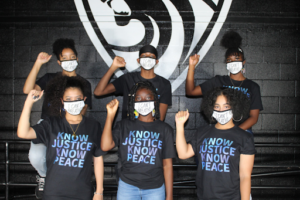
Don’t mess with student journalists! The former high school students who created the popular “Know Justice, Know Peace” podcast are now suing the school district for allegedly trying to steal their podcast name.
That’s all, folks. Thanks for reading!
Reply to this email to send us questions, comments or tips. Know someone else who should be reading Best of the Week? Send them this link to sign up.
Using Feedly or FlipBoard or any other kind of news reader? You can subscribe to The Grade’s “feed” by plugging in this web address: http://www.kappanonline.org/category/the-grade/feed/.
Read more about The Grade here. You can read all the back issues of The Grade’s newsletter, Best of the Week, here.
By Alexander Russo with additional writing from Colleen Connolly.
ABOUT THE AUTHOR
Alexander Russo
Alexander Russo is founder and editor of The Grade, an award-winning effort to help improve media coverage of education issues. He’s also a Spencer Education Journalism Fellowship winner and a book author. You can reach him at @alexanderrusso.
Visit their website at: https://the-grade.org/