In this week’s newsletter: Schools are struggling to retain teachers and find enough to help out with tutoring, summer school, and other programs for getting kids caught up. One Washington state school district is shifting its reading instruction methods and finding quick improvement. The case for better teachers union coverage and some Earth Day resources and examples of education coverage that addresses climate change.
TEACHER TROUBLES
The big story of the week, according to us:
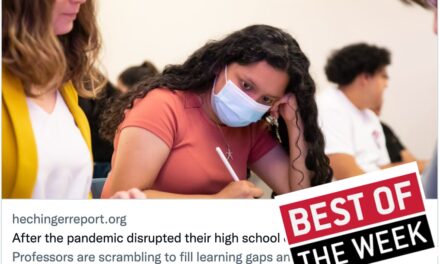
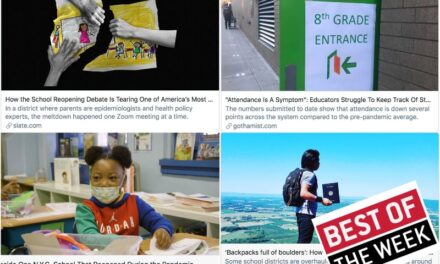
The big story of the week is how districts are struggling to attract and retain enough teachers to staff classrooms and supply tutoring initiatives. Some teachers are quitting mid-year. Others aren’t interested in summer school or aren’t signing up to tutor English language learners, kids with special needs, and kids who disengaged during the shutdown. One note of caution: make sure there is actually a teacher shortage first. Too often, journalists rush to tell sky-is-falling stories about teacher shortages that don’t actually exist.
🔊 Students with disabilities have a right to qualified teachers — but there’s a shortage (NPR)
🔊 L.A. teacher shortage crisis hits poor kids hardest (LA Times) See also LA Daily News
🔊 Despite More Money Than Ever, Teacher Shortages Threaten Programs (The 74/Oregon Capital Chronicle)
🔊 Schools are struggling to hire special education teachers. Hawaii may have found a fix (NPR)
🔊 Amid a teacher shortage, some Texas educators are losing their licenses for quitting during the school year (Texas Tribune)
🔊 Middle school science teachers often struggle with shaky scientific knowledge (Hechinger/USA Today)
🔊 California Struggles to Recruit Bilingual Teachers As Demand Grows (KQED)
🔊 How Illinois is addressing the nationwide substitute teacher shortage (NPR)
Other big stories this week: The Florida Department of Education rejected 42 proposed math textbooks because they allegedly contained social emotional learning and critical race theory concepts (Miami Herald, Tampa Bay Times, WLRN, New York Times). And legions of schools are pouring money into tutoring programs — oftentimes without evidence they even work (Wall Street Journal, EdWeek).
COVER UNIONS LIKE YOU COVER DISTRICTS
New commentary from The Grade
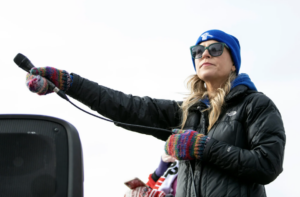
Above: A member of the Minneapolis Federation of Teachers during a recent teachers strike.
All too often, education news downplays or glosses over the role collective bargaining agreements play in shaping school decisions and district policies, perhaps because reporters don’t understand how influential they are or seem to think that including them is too “inside” or somehow anti-union.
The lack of coverage of teachers unions and their role in school districts is giving readers an inadequate understanding of how schools operate, according to longtime union observer (and critic) Mike Antonucci. “Nothing goes on in a school district without consulting the contract,” he writes. “The unions affect all that stuff you do write about.”
RETHINKING READING
The best education journalism of the week, plus a runner-up and some bonus stories.
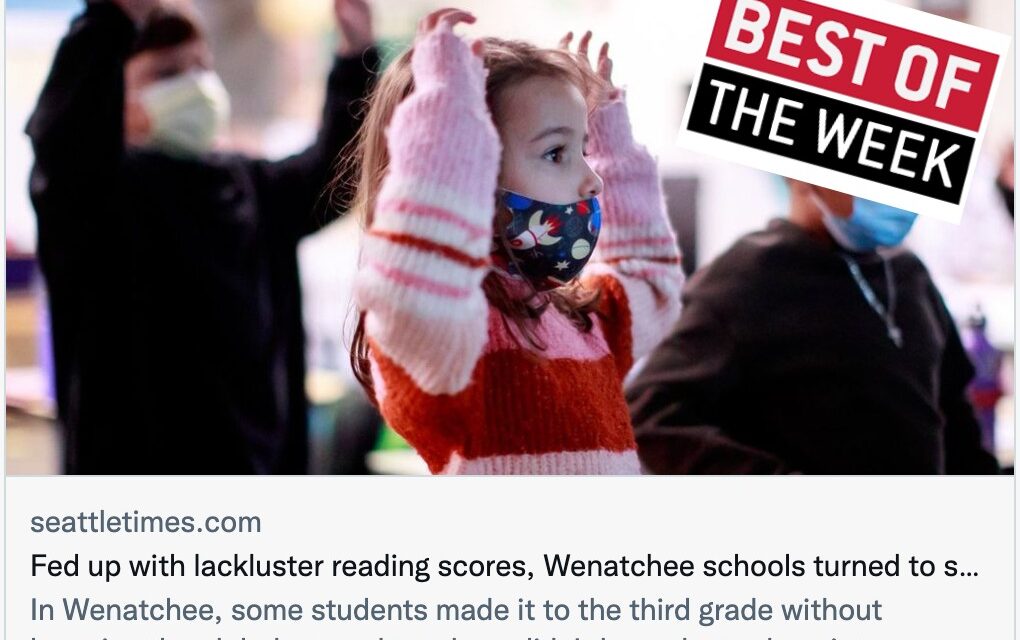
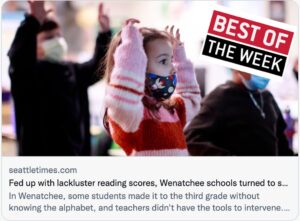
🏆 BEST: The best story of the week is Fed up with lackluster reading scores, Wenatchee schools turned to science by Dahlia Bazzaz in the Seattle Times. In it, Bazzaz looks at one district’s turn to a structured literacy reading model, which includes phonics, partly in response to a state law requiring dyslexia testing for K-2 students. The results so far are promising. Reading scores are rising faster than usual. At the student level, teachers and parents are seeing the results too. One third grader who wasn’t much of a reader a year ago is now tackling 200-page chapter books and reading — and comprehending — above grade level. Literacy and approaches to teaching it are hot-button issues in education, but this story does a good job of looking past the politics and reporting on what the data shows. A second story by former Seattle Times Ed Lab editor Joy Resmovits looks deeper into the structured literacy model.
Related: How one California district invested its Covid funds in literacy, boosting student achievement — and morale (EdSource)
🏆 RUNNER-UP: This week’s runner-up is Too big to fail? Texas’ largest teacher prep program riddled with problems, state finds by Emily Donaldson, Talia Richman, and Corbett Smith in the Dallas Morning News. The trio of reporters looked into Texas Teachers of Tomorrow, the largest teacher training program in Texas — and the nation — which last year enrolled nearly 70,000 prospective teachers. The program specifically recruits career changers and provides instruction mostly online. But it doesn’t always meet basic requirements like providing teachers with mentors and demonstrating its training is based in research. Some teachers said they quit teaching after being misled by the program and ending up with financial troubles. Teachers of Tomorrow continues to churn out more teachers even as it faces state scrutiny. As APM Reports showed last year, Texas Teachers of Tomorrow has had a huge influence on teacher training and helped diversify the workforce, but it’s hardly been a silver bullet for producing quality teachers who stay on the job.
BONUS:
🏆 The Chronically Absent Student (New York Times)
🏆 Pittsburgh school salaries show disparities between Black and white staff (Public Source)
🏆 Arrested Teacher Offers His Side (New Haven Independent)
🏆 Here’s How We Can Prevent the Next School Massacre (Mother Jones)
🏆 A smarter approach to active shooter drills (LA Times)
🏆 How Oakland closed the digital divide for nearly all its students (Hechinger Report/Christian Science Monitor)
🏆 CDC struggles to help schools during pandemic (Chalkbeat)
🏆 Once a crown jewel of BPS, Roxbury’s Timilty Middle School will close in June (Boston Globe)
MEDIA TIDBITS
Thought-provoking commentary on the latest coverage.
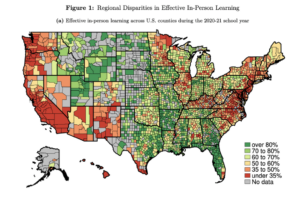
Above: A report from the IZA Institute of Labor Economics measured regional disparities in effective in-person learning during the 2020-2021 school year, with the areas in green being most effective. Jacksonville, Florida, came out on top, with Riverside-San Bernardino-Ontario, California, on the lowest end. (H/T to John Bailey and his COVID-19 Policy Update newsletter.)
📰 KEEPING YOUR EXPECTATIONS HIGH & FOCUSING ON THOSE MOST IN NEED: WBEZ Chicago’s Sarah Karp and Colorado Public Radio’s Jenny Brundin recently reflected on how easy it is “to be seduced by the official line,” as Karp put it, or to lose focus on those who need coverage most. “The hardest thing about being a long-time education reporter covering a big city where most students come from low income families is not to accept for these students what education experts say is unacceptable,” tweeted Karp not too long ago. Reporters have to guard against becoming “willing to believe that ‘not terrible’ is acceptable.” In Colorado, Brundin tweeted about wishing more reporters — herself included — would focus on the Adams 14 district instead of always focusing on Douglas County, the one often portrayed as a “bellwether nationwide” — another form of adhering to the official line. “One district is extremely wealthy with an incredibly engaged group of parents who actively organize and interact on social media, so stories get thousands of clicks (not the reason to cover),” Brundin said. “The other district is smaller, extremely poor, less visible.”
📰 WHAT’S IT LIKE COVERING A SUCCESS STORY? It’s often uncomfortable for journalists covering success stories, but Houston Chronicle investigative reporter Alex Stuckey tells us that her experience producing a recent story about a district that takes in “kids facing the biggest mental health challenges — and saves lives” has been a good one. She and reporter Stephanie Lamm learned about promising results from Sanger ISD while looking at state data. They decided to write up the Sanger story as part of a larger series. “It’s one of the more positive stories I’ve written in a while and it was honestly a little strange,” Stuckey told us via email. But the experience has been a good one. “People have really responded to the story and enjoyed the fact that there was kind of a positive ending to the stories… at least one school district has figured it out and created a blueprint of sorts for others.”
📰 CONNECTING SCHOOLS & CLIMATE: It’s Earth Day 2022 and there still aren’t nearly enough climate-related education stories as I’d like to see. But some education reporters like NPR’s Anya Kamenetz are finding ways to write about how climate change interacts with schools, perhaps the biggest story of our generation. See Kamenetz’s recent story This school wasn’t built for the new climate reality. Yours may not be either. Also, check out Katie Worth’s 2021 book Miseducation: How Climate Change Is Taught in America and this recent Nieman Lab piece on how reporters who don’t normally cover climate change can incorporate it into their beat. And lastly, take it from journalist Amy Westervelt, who notes that there are several ways to think about climate and education together, including familiar concerns about fossil fuel companies influencing classroom curricula and shaping student perceptions.
📰 LEVEL UP YOUR MASK MANDATE & QUARANTINE KNOWLEDGE: You may well be sick of school mask mandate and quarantine stories, but they’re not going away anytime soon. Even as the federal mandate to mask on planes and trains has been suspended (and the school bus requirement was lifted several months ago), a handful of districts (including Milwaukee) are back to mandatory masking and young kids are still required to mask in some places like New York City. So it’s worth remembering the next time you’re reading or writing about masks and quarantines that the U.S. is “an outlier in its policy on pediatric masks,” according to a recent New York Times piece by Amelia Nierenberg. And a recent story from Chalkbeat’s Matt Barnum notes that “many of those quarantined [during delta] might have been unnecessary if the CDC’s guidance had been understood and adhered to.”
📰 THREAT ASSESSMENT, SCHOOL ACCOUNTABILITY, & MEDIA COVERAGE: School gun violence has returned in 2021-2022, and with it issues around schools’ responsibilities and media coverage. Longtime journalist Mark Follman has written a new book about threat assessment called “Trigger Points” and a Mother Jones article about the recent school shooting in Oxford, Michigan, that makes the argument that threat assessment could prevent the next school massacre. Media coverage of mass shooters is a major part of the book, according to Follman, including the unfortunate tendency to sensationalize events and the recycling of myths about mass shooters (that they are all mentally ill people who suddenly “snap”). About the media’s responsibility to examine school responsibilities, Follman is clear. “Absolutely there must be scrutiny of how schools handle threat cases and prepare for potential violence.” In his book, he writes about school systems that have pioneered threat assessment, a community-based approach that many admire but some worry will stigmatize too many students. For more on threat assessment, school gun violence, and the media’s role, check out Maureen Kelleher’s The limits of ‘threat assessment’ and my piece about the need for journalists to determine what really happened before the Oxford shooting started.
Looking for media commentary and analysis all day, every day? Follow me at @alexanderrusso.

PEOPLE, JOBS, AWARDS
Who’s doing what, going where.
Above, left to right: Giulia Heyward, Jeanie Lindsay, and Adria Watson.
🔥 Job announcements: New York Times reporting fellow Giulia Heyward (who’s been doing some great education reporting) is moving on to Capital B to be their new national education reporter. Former Indiana Public Broadcasting education reporter and Washington native Jeanie Lindsay has officially started as a reporter for the Seattle Times Education Lab. And former Report for America fellow and Connecticut Mirror education reporter Adria Watson has started her new gig as a digital producer for the Boston Globe’s Great Divide team. Congrats to all!
🔥 Awards: Belated congrats to former education reporter Alexandria Neason for being named a 2022 Mirror Award finalist for her CJR exposé on news outlets’ apologies for past racism and how they could do better.
🔥 Job openings: USA Today is looking for an education editor to replace Chrissie Thompson, and among the perks are a remote work option, the ability to focus on both breaking news and enterprise, and a salary of at least $95,000. They’re also still hiring a K-12 enterprise reporter to replace Erin Richards. The Washington Post is hiring a higher education investigative reporter and a culture of higher education “roving reporter.” EdSource is hiring an editor, an equity reporter, and a California student journalism corps editor. The Dallas Morning News is hiring a reporter for their Education Lab. Check previous editions of the newsletter for other listings that may still be open.
EVENTS, APPEARANCES, BOOKS
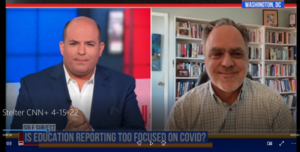
Above: CNN’s Brian Stelter (left) debates education coverage with longtime education reporter Greg Toppo (right).
⏰ Appearances: Great to see Greg Toppo last Friday discussing his recent column Making education news more useful with Brian Stelter on the ill-fated CNN+. Chalkbeat NY’s Christina Veiga was on WNYC’s Brian Lehrer show last Friday, talking about NYC’s latest gifted and talented education changes. “Tune in as I try to play it cool and act like I’m not black-out nervous!” she tweeted.
⏰ ICYMI: Watch Chalkbeat Detroit’s Lori Higgins, Hechinger Report’s Christina Samuels, NPR’s Cory Turner, and USA Today’s Alia Wong talk about the biggest stories in K-12 education.
⏰ Resources: The Georgetown Edunomics Lab has a new ESSER expenditure dashboard tracking federal relief spending by district. For EWA, The 74’s Beth Hawkins wrote about How to Better Cover LGBTQ Students in the Pandemic Era of ‘Don’t Say Gay,’ Book Bans and Other Issues. (To learn more about trans coverage challenges, check out contributor Noah Berlatsky’s piece about misleading coverage of trans youth.)
⏰ Books: Chalkbeat Chicago’s Samantha Smylie asked for good books for education reporters to read and got a slew of great recommendations. Also check out these 11 books recommended by reporters including Cara Fitzpatrick, Erica Green, and Amanda Ripley.
THE KICKER
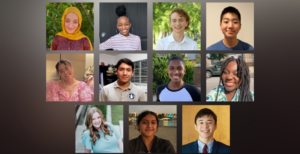
“I remember thinking so often as a student that adults didn’t get where me and my peers were coming from,” recalls Asher Lehrer-Small, who helped gather The 74’s inaugural Student Council, a group of students gathered to help reporters identify what issues are most important to students.
That’s all, folks. Thanks for reading!
Reply to this email to send us questions, comments or tips. Know someone else who should be reading Best of the Week? Send them this link to sign up.
Using Feedly or FlipBoard or any other kind of news reader? You can subscribe to The Grade’s “feed” by plugging in this web address: http://www.kappanonline.org/category/the-grade/feed/.
Read more about The Grade here. You can read all the back issues of The Grade’s newsletter, Best of the Week, here.
By Alexander Russo with additional writing from Colleen Connolly.
ABOUT THE AUTHOR
Alexander Russo
Alexander Russo is founder and editor of The Grade, an award-winning effort to help improve media coverage of education issues. He’s also a Spencer Education Journalism Fellowship winner and a book author. You can reach him at @alexanderrusso.
Visit their website at: https://the-grade.org/