The paper’s latest moves illustrate progress toward a more coordinated national approach. However, several challenges remain.
By Alexander Russo
After a long period during which it often seemed ad hoc and uneven, the New York Times’ national education coverage seems to be moving in a new, more coherent direction.
A recent series explored the diverse school responses to the pandemic. Then came the announcement Friday that the education newsletter is being expanded.
Deputy national editor James Dao’s involvement has almost certainly played a key role.
“Over the last few years, different desks had different people doing things,” said Dao in a recent interview. “My role is to coordinate what has been somewhat diffuse coverage.”
No longer quite as splintered, the Times’ national education coverage has a clearer vision behind it now.
The next challenges include expanding the effort into deep, well-themed projects and backing away from the paper’s much-noted tendency to amplify COVID dangers and center teachers’ experiences.
After a long period during which it often seemed ad hoc and uneven, the New York Times’ national education coverage seems to be moving in a new, more coherent direction.
Up until a few months ago, it hasn’t been entirely clear how the New York Times was making decisions about its coverage.
There was no dedicated national editor coordinating education assignments within the sprawling organization. The paper’s beat reporters worked on different desks — national, metro New York, Washington, D.C. — and were edited by different people. The education reporters didn’t always seem to know what their colleagues were doing, and it showed.
To be clear, the Times has talented reporters and editors. Some of the individual stories have been extremely impressive. But there wasn’t much of a sense of direction or coordination. It often felt like the coverage was going from one story to the next, following reporters’ or readers’ interests.
That seems to have changed a bit recently.
A recent seven-part package, 13,000 School Districts, 13,000 Approaches to Teaching During Covid, suggested a willingness and an ability to produce more robust, intentional work than in the past.
The series explored the wide range of district responses to the pandemic, featuring some districts whose efforts have become familiar (Los Angeles; Washington, D.C.; Providence, Rhode Island; Cherokee County, Georgia) and others that may not be (Edison, N.J.; Lubbock, Texas; Wausau, Wisconsin).
“What we tried to do differently here was to put in one place a bunch of descriptions of schools with the idea being that you could get a good feel for what’s happening nationally, by looking at them together,” said Dao, who now oversees national and metro education reporting and edited the series along with colleagues Scott Dodd and Clinton Cargill.
The effort wasn’t perfect, but it showed intent and effort, rallying quality coverage from reporters stationed all over the country.
Another positive development: On Friday, the Times announced that the “pop-up” Coronavirus Schools Briefing newsletter that was launched last summer would become a weekly effort, focused more broadly on education, not just pandemic-related school news.
The newsletter had already been providing what I have previously described as a “a calm, steady look at an extremely intense issue and a particularly challenging story to cover.”
Now called The Education Briefing, the newsletter will be cowritten by founding co-author Amelia Nierenberg and reporter Kate Taylor.
Taylor has previously covered New York City schools and recently reported national stories about schools in Utah, San Francisco, and Chicago. She also wrote the overview story for the recent series, as well as the profile of Providence, where in-person learning has been offered for a while.
“If you live in a blue city like San Francisco or Oakland, or wherever many of our readers might live, to learn about how differently this pandemic is playing out in terms of schooling and what different challenges teachers and administrators and students and parents are facing in those places, it can be kind of mind-blowing,” said Taylor.
The first edition of the expanded newsletter is scheduled to come out today.
Other good news: Dana Goldstein is back from maternity leave, which will almost certainly help. Tech reporter Natasha Singer will continue to help cover education over the next few months. And Stephanie Saul is returning from her stint covering politics to cover higher education.
Related coverage from The Grade: What makes the New York Times’ education newsletter so good
The next challenges include expanding the effort into deep, well-themed projects and backing away from the paper’s much-noted tendency to amplify COVID dangers and center teachers’ experiences.
All that said, several challenges remain.
The recent series, while admirable, lacks the depth and focus you would want. There’s no clear through story behind the package, no clarity or theme. What does it mean that school district X is doing Y? What overall trends are there that tell us what works and what doesn’t? These are some of the attributes that distinguish the highest-quality news packages.
So far, at least, Dao has cobbled coverage together with gum and chicken wire. The recent series was largely written by regional reporters and journalists from other beats. Several of them have previous experience covering education, but an ad hoc group of part-time education reporters can’t reasonably be expected produce the depth or quality that a squad of full-time education reporters can provide.
The Times must wean itself from two particularly unhelpful tendencies that crop up time and time again from the paper: unnecessarily amplifying the risks of reopening schools, and repeatedly focusing on the experiences of classroom teachers.
As I and others have noted, alarmist school reopening coverage from the Times and other outlets has contributed to the lack of in-person options for parents who may want or need them. Instead of teachers, the Times and other outlets should focus on vulnerable students, whose needs are often not being met and whose plight often goes under-reported.
Related coverage from The Grade: How to avoid writing needlessly alarmist school reopening stories, The disengaged kids missing from the New York Times’ remote learning coverage
A few other unsolicited suggestions:
📌 Hire or promote journalists of color, with the goal of making the Times education team the most diverse in the nation;
📌 Find more ways to showcase Washington Bureau education reporter Erica Green, who may well be the best of the talented bunch currently on staff;
📌Make use of the ideas and insights of the Magazine’s Nikole Hannah-Jones, who no longer covers education regularly but often produces thought-provoking Twitter threads; and,
📌 Keep the newsletter fresh with original reporting, a distinctive voice, and links to the best coverage from other outlets.

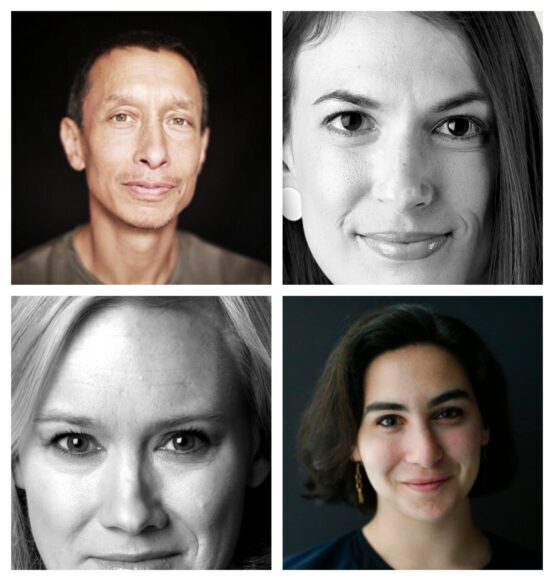
Above, clockwise from top left: Jim Dao, Dana Goldstein, Amelia Nierenberg, and Kate Taylor.
For the time being, the Times’ national coverage “will continue to feel a little bit ad hoc,” says Dao. However, things will continue to change. In particular, the paper plans to expand the team at some point in the near future.
“We’re looking to expand a bit more in other directions on the national desk,” according to Dao. He wouldn’t make any specific staffing announcements, but he envisions “a larger permanent team” in the not-too-distant future.
Related from The Grade
What makes New York Times education reporter Erica Green so good?
8 ways to make education journalism more student-centered
Nikole Hannah-Jones, the Beyoncé of education journalism
Reopening coverage should focus on students’ needs
ABOUT THE AUTHOR

Alexander Russo
Alexander Russo is founder and editor of The Grade, an award-winning effort to help improve media coverage of education issues. He’s also a Spencer Education Journalism Fellowship winner and a book author. You can reach him at @alexanderrusso.
Visit their website at: https://the-grade.org/