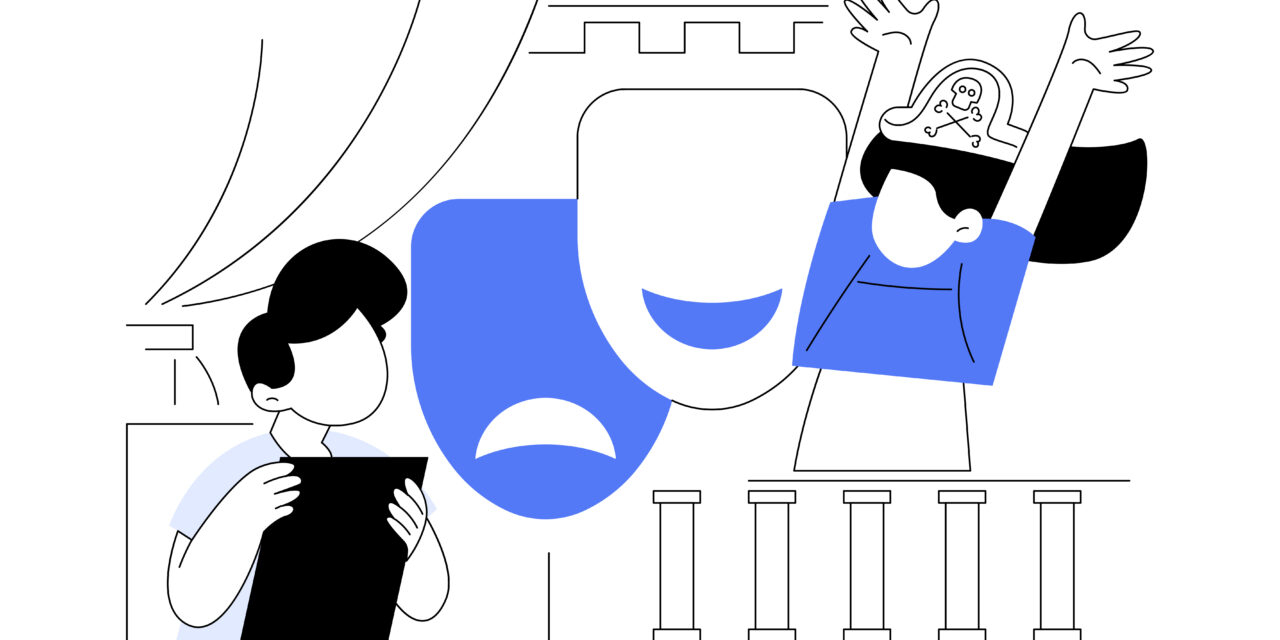
When the curriculum and instruction are boring to students, it’s no surprise they don’t want to learn.
At a Glance
- Education reforms are doomed to fail if they don’t get at the underlying reasons students aren’t learning.
- One hidden barrier to learning is that curriculum and instruction are not presented in engaging or entertaining ways.
- By incorporating dramatic scenarios into lessons, teachers can get students excited about creative problem solving using curriculum content.
- Teacher education programs need to offer instruction in the use of drama, and schools need to give teachers freedom to use these techniques.
Waves of reform over the past several decades have failed to increase academic performance or increase equity. In the spring issue of Kappan, I explained that this phenomenon is a result of key hidden blockages that prevent any reform, regardless of how well thought-out and implemented, from enhancing students’ academic achievement (Pogrow, 2026). I also showed that all students, including those labeled as at risk, are capable of deep learning that enables academic growth in one area to stimulate learning in others as the curriculum becomes more abstract.
The first blockage is an inadequate sense of understanding, and my previous article showed how intensive systematic discussion around four key thinking skills can help students develop a general sense of understanding and engage in deep learning. This is just one part of the solution. We must also make students want to learn. This requires us to eliminate the second key blockage — boring curriculum and instruction.
The problem of boring curriculum and instruction
Why should students be interested in learning anything we teach them? Clearly, a combination of internal motivation to succeed, parental pressure, and genuine interest in the ideas all help. But what if these aren’t present?
For most at-risk students, we have little at our disposal to generate enthusiasm for learning much of what we teach. A Gallup poll found that student engagement drops with every year students are in school, starting in fifth grade (Calderon, 2017). This a phenomenon is known as the “engagement cliff.” The old standby of telling students that they’ll need to know information for an upcoming test holds little sway. Nor does it work to say that they will understand why seemingly arcane ideas are important when they are adults, especially at a time when adolescents are distancing themselves from authority figures. Simply putting the same content on screens does not help. It just increases their screen time.
As the Greeks showed, drama is the most effective technique for developing deep student engagement and is the most important and powerful overlooked pedagogical technique in education.
Creating interest among the students of the YouTube and TikTok generation requires that we recognize the appeal of these videos is not that students view them on screens. Instead, it’s that the material is presented in an entertaining and dynamic fashion. This isn’t new. Entertainment was one of the earliest forms of instruction. Remember the Greek dramas, which were created to teach the populace about the nature and importance of being good citizens.
Deep learning requires that students be deeply interested in at least some of what they are being asked to learn. As the Greeks showed, drama is the most effective technique for developing deep student engagement and is the most important and powerful overlooked pedagogical technique in education.
As the education establishment, we became convinced that simply exposing prospective teachers to theories of learning and giving them classroom experience would make effective teachers. The result, simply stated, is that most teachers have no sense of how to enthrall their students, especially as students get older. Nor is it even a professional expectation that teachers be able to enthrall students.
A view from the classroom
I came face-to-face with the drudgery of being in the typical classroom when I began to supervise student teachers. I was tasked with observing six lessons a semester for seven student teachers. By the second lesson, I was completely bored. As I looked around the classrooms, I could see that the students were as bored as I was and were acting out as a result. (I behaved myself.)
The student teachers were highly capable, and they enthusiastically delivered well-structured lessons in the way they were taught to teach. However, I could see their initial enthusiasm draining as they realized the students weren’t hanging on to their every word, and they were having to spend an increasing amount of time maintaining control. When students didn’t respond to their open-ended questions, they resorted to superficial leading questions with one-word answers — which in turn heightened student boredom.
I knew there was no way I could survive the semester. In desperation, I mandated that each student teacher deliver one dramatic lesson a semester. Their natural reaction was: What is a dramatic lesson? Good question. Taking ideas from how theater uses drama to teach life lessons, I quickly put together a series of methods for the student teachers on how to structure a dramatic lesson.
Bringing drama to lessons
While the student teachers approached the lesson with trepidation, the results were astonishing. Both the students and I were stunned by the amazing creativity with which they transformed the traditional presentation of content into an adventurous exploration of ideas.
The dramatic presentations required that the topic and content of the lesson did not change, but the context of the lesson did. Students would be given a dramatic reason to apply the content to help someone in need. They would arrive in class to find a stranger in front of the room describing some sort of problem. This stranger was sometimes the teacher in disguise or someone covering the class because of the supposed incapacitation of their teacher. Music and low lights were often used to enhance the effect. Only at the end of the performance do the teachers reveal that it was a drama.
For example, in one lesson, a man asked students to help him sell tree stumps to support his family. In another, a woman in rags, covered in soot and coughing pitifully, asked students to help her pressure the owners of the coal mine where she worked to not make her work 80 hours a week.
The first learning drama quickly morphed into a lesson on persuasive speaking and writing. In that single period, the students ended up writing a persuasive essay — something that the other teachers in the school were having little success in accomplishing. The second learning drama quickly morphed into students reading about the beginning of the union movement and then advising the grateful person on how to confront the owners.
Not all lessons involved teachers performing as different characters. I arrived in one class of exceptionally unruly eighth graders to find the student teacher whispering from inside the closet. The students, who had previously refused to read out loud or show interest in literature, were transfixed and obeyed every hushed request to read out loud. The teacher was hiding because she pretended to be afraid that she was being followed. The literature being read was about a sniper seeking a target, and the focus of the lesson was on how writers create a mood in their stories — in this case a mood of dread and fear. The students quickly linked how the author’s words had created a mood just as their teacher’s actions had.
A transformed learning environment
In all the lessons over three semesters, the students were shocked into curiosity and then action. The most passive, ornery students became the most engaged in seeking knowledge or engaging in the learning activity and discussion needed to help the person seeking assistance. Discipline problems were nonexistent.
Once each lesson was completed, both students and the teacher were exhilarated. Rather than running out of the room, the students gathered around their teacher to express their appreciation, and the teachers understood that they had realized their ideal of having students hang on to their every word and gesture. Word quickly spread around the school, and the next class entered hoping for the same lesson.
Dramatic forms of teaching and curriculum stimulate at-risk students’ desire to learn.
Clearly, developing such lessons takes more time and risk. However, the experience was so powerful for the students that a single lesson changed their perception of the teacher. Students interpreted the effort as indicating that the teacher cared deeply about their learning and they remained excited throughout subsequent lessons without any additional theatrics on the part of the teacher. The outrageous lessons were so powerful that even one semester had a lingering impact on the learning environment.
The experience shows that teachers can make even the most mundane content, which they know will be like pulling teeth, into something fascinating, turning it into an outrageous lesson (Pogrow, 2009).
My 2008 book, Teaching Content Outrageously: How to Captivate All Students and Accelerate Learning, Grades 4-12, describes how to create such lessons and provides detailed examples of such lessons across the disciplines. This enables all teachers to construct outrageous lessons. Ashley Lamb-Sinclair, the 2016 Kentucky Teacher of the Year, wrote in her 2017 article in The Atlantic that developing and teaching an outrageous lesson was a liberating experience for her.
Making the seemingly most boring topic fascinating to students requires a higher level of creativity than has been emphasized in many teacher preparation programs. Learning how to make learning fun is as important as being schooled in learning theories. Colleges of education can unleash the creative potential of future and current teachers by:
- Having every student teacher take a theater course in which they learn the principles of creating dramatic content and perform in front of an audience.
- Requiring all students to develop and teach a dramatic approach to a unit that students would otherwise find boring.
Implementing dramatic training requires teacher education programs to be willing to change. Schools also need to be willing to allow teachers to conduct different kinds of lessons, as Lamb-Sinclair explained.
Making space for deep learning
Good education remains one of the most powerful forces of human experience. But will we stop chasing our tails as a profession? The array of reforms we’ve implemented are based on many good ideas, but they do not get at the underlying reasons students are not learning. Understanding these reasons means that failure need not be our destiny. We are not powerless to achieve our goal of increasing equity. We can make schools far more effective for and develop students’ capacity and enthusiasm for deep learning.
We can reduce the key learning blockages and produce deep learning in at-risk students by:
- Developing their sense of understanding through intensive, sophisticated conversation before exposing them to discipline-specific problem solving.
- Training teachers to be far more dramatic in terms of how they approach teaching and curriculum development.
Eliminating these blockages will enable all students, including at-risk students, to benefit from quality teaching and all the other good reform ideas. Developing a sense of understanding enables at-risk students to succeed in problem-solving activities. Dramatic forms of teaching and curriculum stimulate at-risk students’ desire to learn. Together, these two approaches will enable students to learn deeply all forms of content. At-risk students have an immense untapped intellectual capability, and teachers have a tremendous untapped creative capability. We can unleash both capabilities at scale.
References
Calderon, V.J. (2017). How to keep kids excited about school. Gallup.
Lamb-Sinclair, A. (2017, November 13). Why teachers need their freedom: Educators must remain engaged and autonomous in order to do their jobs well and avoid burnout. The Atlantic.
Pogrow, S. (2008). Teaching content outrageously: How to captivate all students and accelerate learning, Grades 4-12. Jossey Bass.
Pogrow, S. (2009). Teaching content outrageously: Instruction in the era of on-demand entertainment. Phi Delta Kappan, 90 (5), 379-383.
Pogrow, S. (2026). Developing deep learning in students at risk: Enhancing understanding. Phi Delta Kappan, 107 (5-6), 61-65.
This article appears in the Summer 2026 issue of Kappan, Vol. 107, No. 7-8.

ABOUT THE AUTHOR

Stanley Pogrow
Stanley Pogrow is a professor of educational leadership and equity at San Francisco State University and and professor emeritus at the University of Arizona.