According to a Ballotpedia expert, reporters should try to produce stories that depict the ballot measure process accurately, provide a strong sense of the policy context, and focus on the real-world effects (rather than which side appears more likely to win).
By Ryan Byrne, Ballotpedia
Part of a new series from The Grade.
At Ballotpedia, we read a lot of news about ballot measures.
This provides crucial information for our comprehensive ballot measure coverage, including endorsements, supporting and opposing arguments, polling, and updates on related litigation.
Through tracking ballot coverage, we’ve noticed two aspects are sometimes missed or misunderstood: (1) the ballot measure process and (2) the broader policy context. And, like much election coverage, reporting on ballot measures often focuses on the horse-race aspects of an issue (i.e., which side appears most likely to prevail).
While this competition-driven approach isn’t necessarily incompatible with discussing policy context, it can sometimes overshadow it.
If media coverage of state ballot initiatives accurately and clearly explained the process, offered essential context, and balanced policy outcomes with political dynamics, it would help voters make more informed decisions.
If media coverage of state ballot initiatives accurately and clearly explained the process, offered essential context, and balanced policy outcomes with political dynamics, it would help voters make more informed decisions.
You can find Ballotpedia’s 2024 state ballot measure info here and its local ballot measure info here.
Ballot Process:
Covering ballot measures presents different challenges for those who typically cover candidate elections. The rules and regulations for getting a measure on the ballot vary across the country — much more than they do for candidates. These differences affect everything from how signatures are gathered to the requirements for ballot certification.
Understanding the processes is important for accurate reporting. For instance, a measure isn’t officially “on the ballot” just because signatures have been submitted. After submission, signatures must be verified, and some may be disqualified. Measures can even fail due to incomplete paperwork or procedural requirements.
Misreporting often stems not from an intentional oversight but from a lack of understanding of these state-specific processes. For example, reporters may prematurely declare a measure qualified when, in reality it is still undergoing verification or legal scrutiny. It’s not uncommon for us to see coverage indicating a measure will be on the ballot under these circumstances.
This isn’t surprising because a campaign may issue a press release indicating they’ve submitted signatures, which can easily be conflated with being on the ballot. That’s an important distinction for reporters to keep an eye out for.
Well-funded campaigns are looking for every bit of coverage they can get and may issue press releases related to passing a step in the ballot measure qualification process. When reporters know and understand the process, they can better identify which qualification inflection points are most meaningful and cut through campaign hype.
When reporters know and understand the process, they can better identify which qualification inflection points are most meaningful and cut through campaign hype.
Policy context:
The broader policy context of a ballot measure is important but often overlooked.
Voters want to understand how a particular measure compares to similar laws in other states. Has this been tried before? If so, how did it turn out? Is the proposal unique, or are there lessons to be learned from elsewhere?
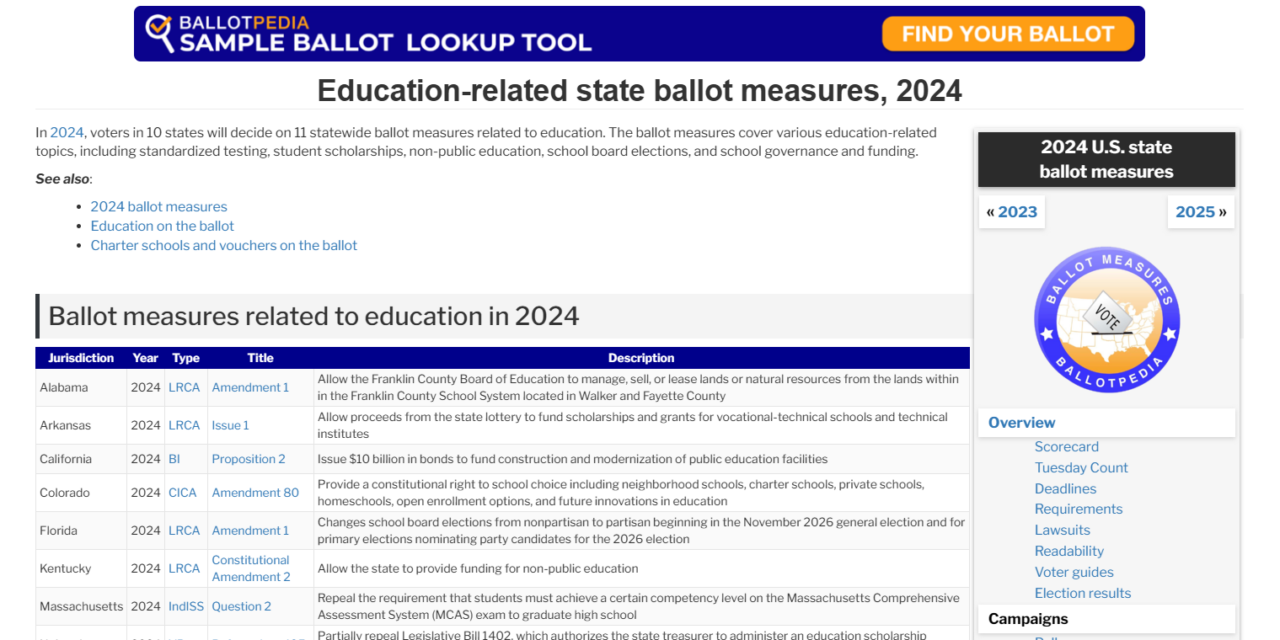
A recent example is Florida’s Amendment 1, which would make school board elections partisan starting in 2026. Media coverage has largely focused on Florida’s internal dynamics, such as the political climate and campaign efforts. While understanding the in-state context is important, seeing how Florida’s proposal fits within the national landscape is equally important.
Four other states — Alabama, Connecticut, Louisiana, and Pennsylvania — already have partisan school board elections, while five additional states allow districts to choose between partisan and nonpartisan systems. How would Florida’s approach compare to those? This broader context helps voters understand the measure’s implications beyond campaign rhetoric.
This broader context helps voters understand the measure’s implications beyond campaign rhetoric.
Accurately covering ballot measures requires understanding the specific processes, rules, and broader policy implications.
Ballot measures are not simply contests to be won. They are opportunities for voters to shape policy directly.
Ryan Byrne is the Managing Editor of the Ballot Measures Project at Ballotpedia.
Previously from The Grade
How to cover state education initiatives (Christine Vestal)
Praise & criticism for coverage of MA’s $41M charter school ballot debate
What if school board races don’t really matter the way we think they do?