In this week’s newsletter: Cookie-cutter Sandy Hook coverage. When even the valedictorian isn’t going to college. Dismal news in the annual KIDS COUNT report. A former ed reporter’s family history with corporal punishment. A new documentary on the Houston schools takeover. What happens when districts lay teachers off based on seniority? And the New York Times’ Nikole Hannah-Jones celebrates the 8th grade graduation of her daughter — yes, that one! — from a neighborhood school.
(DO) KIDS COUNT?
The big story of the week
The big education story of the week is the release of the annual Annie E. Casey Foundation KIDS COUNT report, which finds that students today are “ill-prepared for the high-level reading, math, and problem-solving skills required in a competitive global economy” — and the startling lack of national media attention it has received.
This year’s report focuses heavily on reading and math scores and chronic absenteeism, along with health, racial inequities, parents’ level of schooling, household income, and more. In Ohio, 71% of 8th graders are not proficient in math, while in Wyoming that number is 69% — not great, but still better than most states (Ohio Capital Journal, Wyoming Public Media). Other states, like Minnesota, Michigan, Delaware, and Iowa, saw drops in their education ranking compared to last year’s report (MinnPost, Michigan Advance, Delaware Online, We Are Iowa). Rhode Island, which had a high overall ranking, lagged behind other New England states (Rhode Island Current). New Mexico came in dead last — again — in the overall child welfare ranking (Source NM).
However, the report seems to have attracted much more state and local coverage than national attention — perhaps because of its mixed findings. Parents’ economic security has improved, and the child poverty rate has decreased. Mississippi reported their highest education ranking ever (Clarion Ledger). And Kentucky saw improvements in 4th-grade reading proficiency and high schoolers graduating on time (Louisville Public Media). The only national story I’ve seen is from NPR’s news show (Marketplace).
Other big education stories of the week include graduation for Sandy Hook shooting survivors, absenteeism worries, and two states that are getting closer to ending high school exit exams. Check out @thegrade_ for daily headlines!

EVEN THE VALEDICTORIAN ISN’T GOING TO COLLEGE
The best education journalism of the week
The best education journalism of the week is In rural Oregon, boys are not choosing college. That’s widening the urban-rural divide by The Oregonian’s Sami Edge.
Part of an impressive package on Oregon’s lower college-going rates overall, the rural boys piece digs into the fact that just 35% of Oregon’s rural male high schoolers go on to two- or four-year colleges the fall after they graduate. At one Oregon school, even the valedictorian isn’t planning on going.
In this piece, Edge methodically pulls apart the strands of this particular problem, balancing a big-picture perspective with revealing interviews of young men. “Most of the guys are just kind of content here,” says one. “All of their friends are here and their family business is here.”
What’s most noteworthy about Edge’s reporting is two memorable students she finds to help her tell the story: Wesley Ince, a class valedictorian, and his pal Shawn Whinery, who just graduated with a 3.7 GPA. They plan to kick around, get jobs, play video games, and think about what’s next. Ince worries about the mental health toll college might take, while Whinery says his family can’t afford the $37,000 cost of the University of Oregon. And he wants “a breather.” He didn’t even bother to finish the FAFSA application.
Other education stories we liked this week: What happened when a highly regarded Philly high school banned cell phones (Philadelphia Inquirer), anxious students missing months of school in Massachusetts (Boston Globe), Michigan districts going door-to-door to fight chronic absenteeism (The Detroit News), and a former Providence mayor rethinks the state’s takeover of his city’s schools (Providence Journal).
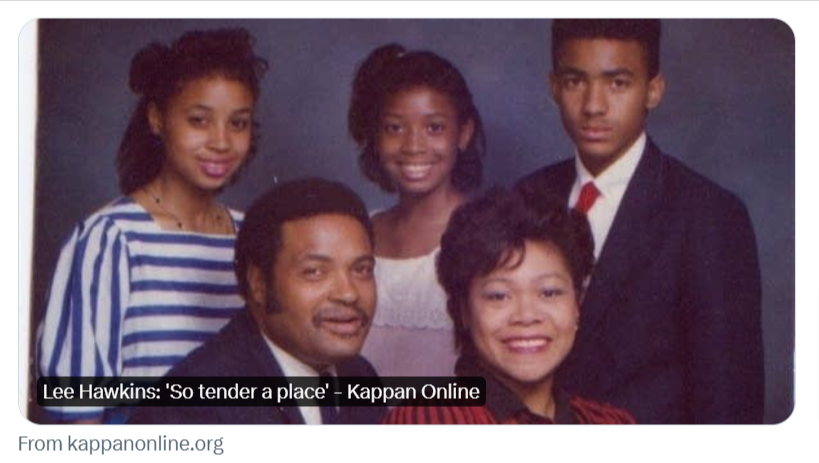
Above: Journalist Lee Hawkins (top right) and his family, whose history moving from Alabama to Minnesota is told in Hawkins’ new APM Studios podcast series “What Happened In Alabama?”
CORPORAL PUNISHMENT ‘TOO TENDER A PLACE’
Our latest columns and commentary
“Can you really be an education reporter if you’re not comfortable moving across the margins of society with ease?”
That’s just one of the insights and reflections former Wall Street Journal education reporter Lee Hawkins shares in a new interview about his experience covering schools, his family’s story, and the long history of corporal punishment administered to Black children by educators and their parents.
Some media organizations downplay the systemic mistreatment of Black and brown kids because newsroom leaders can’t relate, says Hawkins. But that’s not the whole story. “Some of these realities touch people in so tender a place that they almost don’t want to report on it.”
💡 Bonus: On Monday, we published a new essay from Chalkbeat Colorado bureau chief Melanie Asmar reminding journalists covering school closures to visit the schools slated for closure, ask district leaders about their own experiences with schools closing, and — perhaps most importantly — compare the process to other districts. This is the fourth in our series on covering school closures, which many districts are now facing (Boston Globe, Seattle Times, Chalkbeat Colorado).

Above: We may never get to hear the mysteriously canned Houston Public Media podcast about the state takeover of Houston schools, but KPRC Channel 2 recently produced an impressive full-length documentary that’s worth checking out.
PEOPLE, JOBS, & EVENTS
Who’s going where and what’s happening
📰 Cookie-cutter coverage: More than 11 years after the worst K-12 school shooting in American history, the media were there to mark the high school graduation of the first-graders who survived (AP, Hartford Courant, GMA, Daily Mail, People, CNN, NYT). What a shame the coverage I’ve seen (other than the Hartford Courant) consisted mostly of a set of five or so kids who sat for basically the same interview again and again.
📰 Jobs & career moves: Former Hechinger Report Western Bureau editor Lillian Mongeau Hughes is the interim editor of The Seattle Times Ed Lab, taking over temporarily for retired editor Katherine Long. Politico’s Jessica Meyerswill lead the education team for the next six months. Education reporter Laura Testino is taking on her third Memphis-based role, this time as an enterprise reporter for The Daily Memphian. Former Green Bay Press-Gazette education reporter Danielle DuClosstarted her new job as an enterprise and investigative reporter for The Capital Times. Wrapping up her fellowship at The 74, Sierra Lyons is looking for her next role. Meanwhile, the Hechinger Report is looking for an investigative reporter. The Houston Chronicle is looking for a K-12 reporter. And The Worcester Telegram & Gazette is hiring an education outreach reporter.
📰 Segments, podcasts, & appearances: The Wall Street Journal’s Matt Barnum was on NPR’s “All Things Considered” talking about the end of pandemic recovery funds. Washington Post climate reporter (and former LA Times ed reporter) Anna Phillips appeared on PBS NewsHour to discuss her recent feature on how schools without AC are faring as temps rise. Oregon Public Broadcasting released a 25-minute audio feature on the Class of 2025, featuring education reporter Elizabeth Miller. USA Today’s Alia Wong dissected the forces driving chronic absenteeism for the outlet’s daily news podcast “The Excerpt.” And for WBUR Boston, Carrie Jung reported on a new report showing that 60% of public school students in Massachusetts attend a racially segregated school. (See also Boston Globe and Boston Herald.)
📰 Events: Former LA Times education reporter Sonali Kohli will be at Epicenter NYC’s youth block party to discuss and sign copies of her book — today! On June 25, the Boston Globe will host a live conversation on the 50th anniversary of Boston’s busing legacy. In case you missed it, IRE’s Francisco Vara-Orta (a former ed reporter) and Diana Fuentes led a webinar about reporting on immigration. And The 74 and PPI hosted a discussion on how HBCUs are bolstering America’s Black teacher pipeline.
📰 Research: The 74 has written up a new study showing wide disparities in the amount of class time students receive from state to state. And the Hechinger Report’s Jill Barshay has rounded up the research showing that school district teacher seniority protections shield veteran teachers (often white) during layoffs but hurt vulnerable students (and their younger teachers).
THE KICKER
Saving the best for last
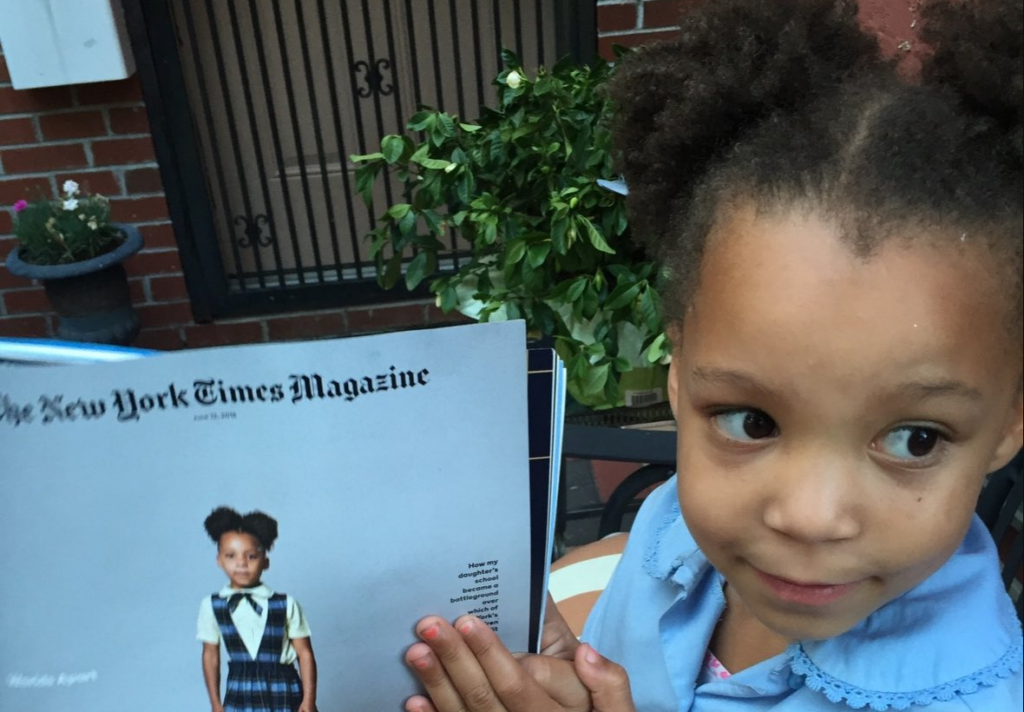
Eight years later, the New York Times Nikole Hannah-Jones tells us that her “sweet baby girl” is now an honor roll student graduating 8th grade from a neighborhood middle school. Congrats!
That’s all, folks. Thanks for reading!
Reply to this email to send us questions, comments or tips. Know someone else who should be reading Best of the Week? Send them this link to sign up.
Using Feedly or FlipBoard or any other kind of news reader? You can subscribe to The Grade’s “feed” by plugging in this web address: http://www.kappanonline.org/category/the-grade/feed/.
Read more about The Grade here. You can read all the back issues of The Grade’s newsletter, Best of the Week, here.
By Alexander Russo with additional writing from Colleen Connolly.