Seven trends that will make you feel excited and optimistic about education journalism in 2020-21.
By Alexander Russo
Being an education reporter may be tougher now than ever, with layoffs, furloughs, and all the COVID-related challenges to reporting stories.
It’s a testament to the excellence in the field, though, that there are also somewhat unexpected pockets of success, expansion, and really admirable work.
Last year’s roundup of bright spots in education journalism included newsroom expansions like the one at the Boston Globe, new faces at outlets like the Charlotte Observer and the LA Times, the return of education books and a renewed focus on opportunity hoarding.
Here’s this year’s roundup:
THE RETURN OF PODCASTS
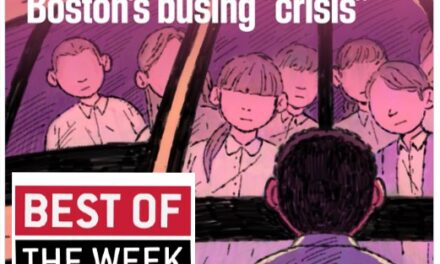
 There’s something about a podcast, and podcasts about schools can be amazing. At least two big podcast series focused on education issues, the New York Times’ Nice White Parents and Luminary’s Battle Over Boston. But that’s not all. Other segments and series include WNYC’s United States of Anxiety’s Two Schools in Marin County, which will hopefully get a follow-up sometime soon, This American Life’s Long-Awaited Asteroid Finally Hits Earth, which featured a segment from Chalkbeat, and Season 2 of Nashville Public Radio’s The Promise.
Related content from The Grade: Nice White Parents: a different way of covering school inequality; Nice white journalist
STANDOUT COVID COVERAGE
 Despite the challenges of the pandemic, reporters and outlets have produced memorable, powerful stories that are sure to be recognized more formally for their excellence. We feature them every week in the newsletter, and we’re working on a roundup of the best examples from the past six months, but some memorable examples include Nikita Stewart’s New York Times story about a homeless kid who just wants to learn, Casey Parks’ recent New Yorker story about the educators who volunteered to keep schools open for the kids of essential workers, and Ariel Gilreath’s Greenville News story about students ‘ghosting’ remote learning.
Related content from The Grade: Top reporters share pandemic reporting tips; Writing great profiles in the age of remote reporting
THE NY TIMES’ POP-UP COVID SCHOOLS NEWSLETTER
 The New York Times’ pop-up Coronavirus Schools newsletter came from nowhere and has been one of the biggest delights of the past few weeks. Produced by Amelia Nierenberg and Adam Pasick, it provides valuable roundups of education coverage, including stories produced by other outlets. It helps readers make sense of what’s going on in a very complicated, fast-moving environment. And it complements the education coverage produced by the paper. Crossed fingers that the Wall Street Journal’s new education newsletter will do the same when it launches.
Related content from The Grade: 15 newsletters you need to know about if you really love education journalism
RISING STARS
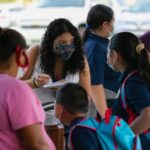 Every few years, it seems, there is new talent coming into the education beat and showing us what energy, ambition, and a fresh eye can do. Some of the more recent arrivals who’ve done great work include the Washington Post’s Hannah Natanson, who covers Washington DC’s Virginia suburbs, the Seattle Times’ Hannah Furfaro, the Chicago Sun-Times’ Nader Issa, and the Miami Herald’s Colleen Wright (pictured), who’s been covering the meltdown of the district’s online learning system. Other standouts who are not as new to the beat but whose work continues to get better include the Arizona Republic’s Lily Altavena, Chalkbeat Chicago’s Mila Koumpilova, and the LA Times’ Sonali Kohli.
Related content from The Grade: How Bethany Barnes became a star education reporter; What makes New York Times education reporter Erica Green so good?
EXPANDED EDUCATION TEAMS & OUTLETS
 The “Education Lab” model, which creates a beat-focused team within an existing newsroom, now operates in Seattle, Boston, Fresno, California, and Dallas. A national version has been up and running at USA Today. More such teams are on the way, many of them paid for by local foundations. Meanwhile, Chalkbeat and the Philadelphia Public School Notebook managed a successful merger/expansion. And the Wall Street Journal has hired Chastity Pratt as national education editor to help coordinate its education coverage, and rolled out a new education page as well.
Related content from The Grade: The case for the Ed Lab model; Chalkbeat adds a new focus on storytelling to its ongoing expansion
SCHOOL-BASED COVERAGE
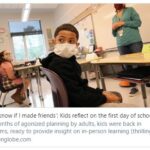 After months of remote learning, the return of in-person instruction in many parts of the country means that reporters can go back into schools and classrooms and tell us about them firsthand. Colorado Public Radio’s Jenny Brundin, the Wall Street Journal’s Tawnell Hobbs, the Denver Post’s Meg Wingerter, and Chalkbeat Indiana’s Stephanie Wang — are among those doing just that.
Related content from The Grade: In-person learning’s tentative successes deserve more coverage
MOMENTS OF VALOR/PROTEST COVERAGE
 I’ve never been so proud to be part of this community as when I watched education reporters go out and document the Black Lives Matter protests against police violence and social injustice. Some, such as the Philadelphia Inquirer’s Kristen Graham, were arrested. Others, like WHYY’s Avi Wolfman-Arent, were tear-gassed. At least one, KPCC’s Adolfo Guzman-Lopez, was injured. A few, like the Washington Post’s Hannah Natanson, provided invaluable coverage of events that deepened my understanding of what was going on.
Special mention: The New York Times’ Nikole Hannah-Jones continues to set an example, pushing for stronger coverage of remote learning and urging improved classroom coverage of the United States’ long history of racism. We’re still waiting for her long-awaited book on school segregation, but the 1619 Project is a remarkable contribution.
Related content from The Grade: ‘Report what you know.’ 4 key takeaways for education journalists covering police violence protests
Related coverage
Unsung heroes of education journalism
Favorite bylines, outlets, & education teams for spring 2019
What makes New York Times education reporter Erica Green so good?
11 amazing education stories from 2018
ABOUT THE AUTHOR

Alexander Russo
Alexander Russo is founder and editor of The Grade, an award-winning effort to help improve media coverage of education issues. He’s also a Spencer Education Journalism Fellowship winner and a book author. You can reach him at @alexanderrusso.
Visit their website at: https://the-grade.org/