Reaching out to ensure that parents and community members understand the why and how of what schools do has never been more important.
When I was 16 years old, I had an experience that stained me for life: My father showed up at my high school and talked to a teacher.
In my home, my dad was the go-to parent when it came to math and science. A civil engineer by training and a teacher by nature, he would happily explain the science of anything and help me noodle through any math quandaries. So in my sophomore year of high school when I asked him for help with some math problems, we both were stupefied when he was stumped. He could figure out the answers, but he didn’t understand the teacher’s directions for how I was supposed to do the work.
The next day, unbeknownst to me, he called my math teacher and made an appointment to visit the school that night to have the teacher walk him through this newfangled math.
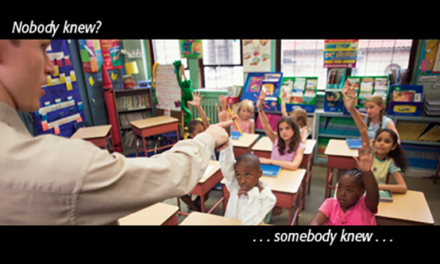
I smile now as I imagine my tall, lanky, and very gregarious father sitting politely at one of the desks in my high school math class and listening while my teacher stood at the blackboard and explained the math to him.
My teacher was so amazed by this experience that he did not keep this visit a secret: By the time I arrived at school the following morning, the principal and every teacher in the building seemed to know that a parent — and not just any parent but a father — had shown up at school to learn from a teacher.
As a teenager, I really didn’t appreciate the instant celebrity that this visit conferred on me. Then, as now, I was much happier staying under the radar. But it is hard to hide from teachers after an act like that!
As an adult, I took other lessons from my dad’s example. The most important lesson was this: Teachers are smart so if you want to learn something, listen to a teacher.
The full weight of that lesson didn’t sink in until my own children were enrolled in school, and I began to experience how teachers and other adults interact. Often I have felt that teachers hide behind their school doors, comfortable with children but not so comfortable with other adults. When teachers do talk about their work with other adults, they talk primarily to other teachers.
If teacher preparation programs spend any time preparing teachers to work with parents, the focus is almost always on talking to them as part of back-to-school nights or parent-teacher conferences — and those are pretty superficial conversations. At the schoolhouse, school leaders haven’t done a very good job of promoting the knowledge that teachers possess and trying to level the playing field between teachers and parents. Precious little attention is given to preparing or encouraging teachers to talk about how they do their work.
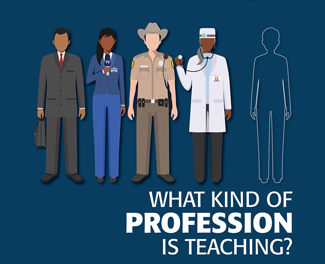
This matters more than ever now because of the way that teachers and the business of education are being attacked. If parents don’t value the knowledge of teachers, they may believe that proximity should be the sole reason for choosing a school for their child. If they don’t understand the complexities of education in an era of standards, assessments, and data, they may believe that just anyone can be a teacher or principal.
We all lose when parents and communities don’t value the knowledge that resides in the professionals in every school. Beyond respecting the significant relationship between parent and child, educators must remember that parents and community members give schools the right to be in business in the first place. Reaching out to ensure that parents and community members understand the why and how of what schools do has never been more important for ensuring that public schools get to stay in the business of educating.
Not every parent will pick himself up and head to school to insist that a teacher help him understand the new math or the new language arts scheme. So educators have to step up and reach out to ensure that parents know what’s happening and why in an ever-changing landscape.
Citation: Richardson, J. (2015). The editor’s note: Teachers know best. Phi Delta Kappan, 96 (7), 4.
ABOUT THE AUTHOR

Joan Richardson
Joan Richardson is the former director of the PDK Poll of the Public’s Attitudes Toward the Public Schools and the former editor-in-chief of Phi Delta Kappan magazine.